
Human Waste in Concrete
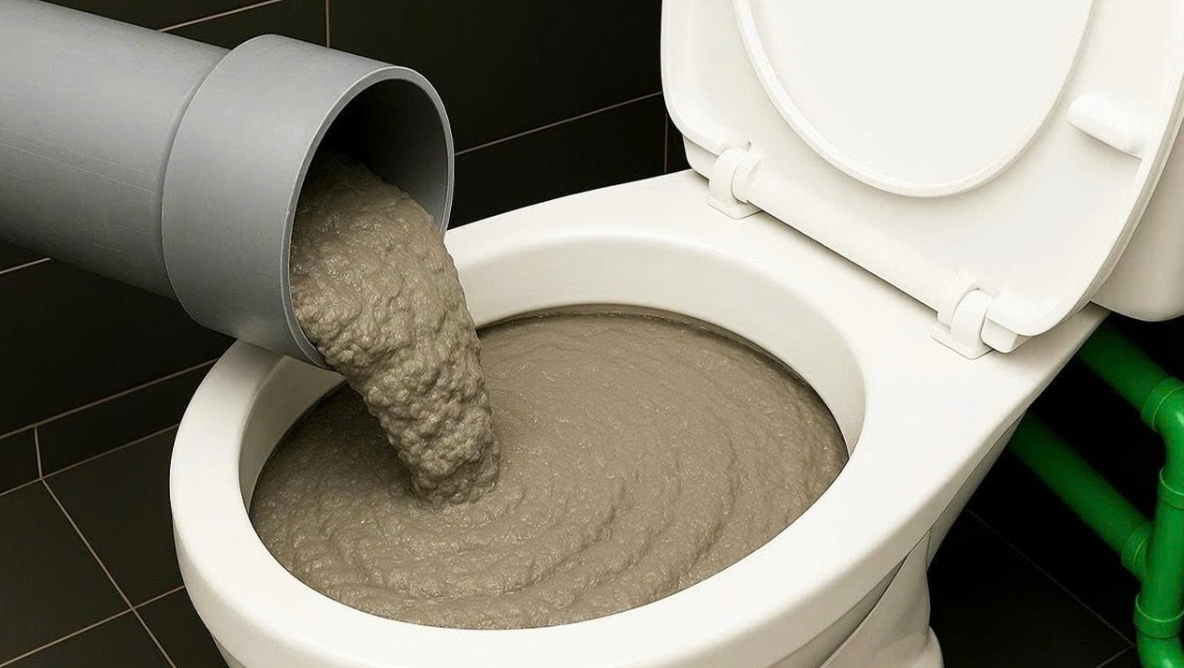
Concrete is one of the most widely used materials in the world because of its strength and ability to create durable foundations and structures. However, one of its main ingredients, cement, has a major environmental impact. Producing cement requires heating and processing limestone, which releases large amounts of carbon dioxide into the atmosphere. Civil engineer Raghuvesh Tiwari has been researching a possible way to reduce the amount of cement needed in concrete by replacing some of it with biochar made from human fecal waste.
Biochar is a carbon-rich material created by heating organic matter without oxygen. Researchers found that when biochar made from human fecal matter was added to concrete, it could improve some of the material’s properties. When 5% of the concrete was replaced with fecal-matter biochar, the compressive strength increased by up to 21% and the flexural strength increased by up to 42% as the concrete continued to cure. However, increasing the amount to 15% caused the structure to deteriorate, with more cracks and pores appearing. If the process can be developed safely, this research could turn a resource that humans constantly produce into a useful material while potentially reducing the amount of cement needed in concrete.
(Cement) It's usually made from a few things in specific quantities: sand, gravel, water, and the cement itself – which is primarily made using limestone. One increasingly promising cement substitute is biochar, a carbon-rich material made by heating organic matter in an oxygen-poor environment. - Science Alert
At 5 percent, it generally absorbed less water and had lower porosity than conventional concrete, while its drying shrinkage was also lower. At 10 percent, its performance remained broadly comparable to ordinary concrete.At 15 percent cement replacement, the concrete still grew stronger as it cured, but its overall strength lagged behind the 5- and 10-percent version - Science Alert
Overall, the strongest concrete was generally produced when 5 percent of the cement was replaced with poop biochar. But the poopcrete had another interesting trick: It continued to gain substantial strength as it cured. The researchers report that after 91 days, the 5 percent mix had recorded average increases of 20 percent in compressive strength and 36 percent in flexural strength. - Science Alert
My first reaction to this technology was that it sounded like a health hazard. Even though the research shows that human fecal waste can improve some properties of concrete, there are still many things that need to be understood before this could be used on a larger scale. There is not enough research yet on its' effect on carbon emissions, and because the material is still being studied, it is unclear how it will react to different conditions such as extreme heat, cold, or long-term exposure. There is also a concern about potentially trapping harmful heavy metals from human waste inside the concrete.
I think the idea behind this research is interesting. Human waste is something that we will always produce, so finding a useful purpose for it could be beneficial if it can be done safely. I also like that the research is not simply trying to replace a material with another material, but is looking at waste as a potential resource. However, I think the environmental benefits need to be studied alongside the possible health and structural risks. The idea has potential, but it also shows why sustainable design needs to consider what happens to a material throughout its entire life, not just whether we are able to reuse it.
References
Michelle Starr Science Alert (2026, September 9) "Scientists Are Making Concrete With Human Poop – And It Gets 42% Stronger." Science Alert. https://www.sciencealert.com/scientists-are-making-concrete-with-human-poop-and-it-gets-42-stronger



