
HydroControl Drone
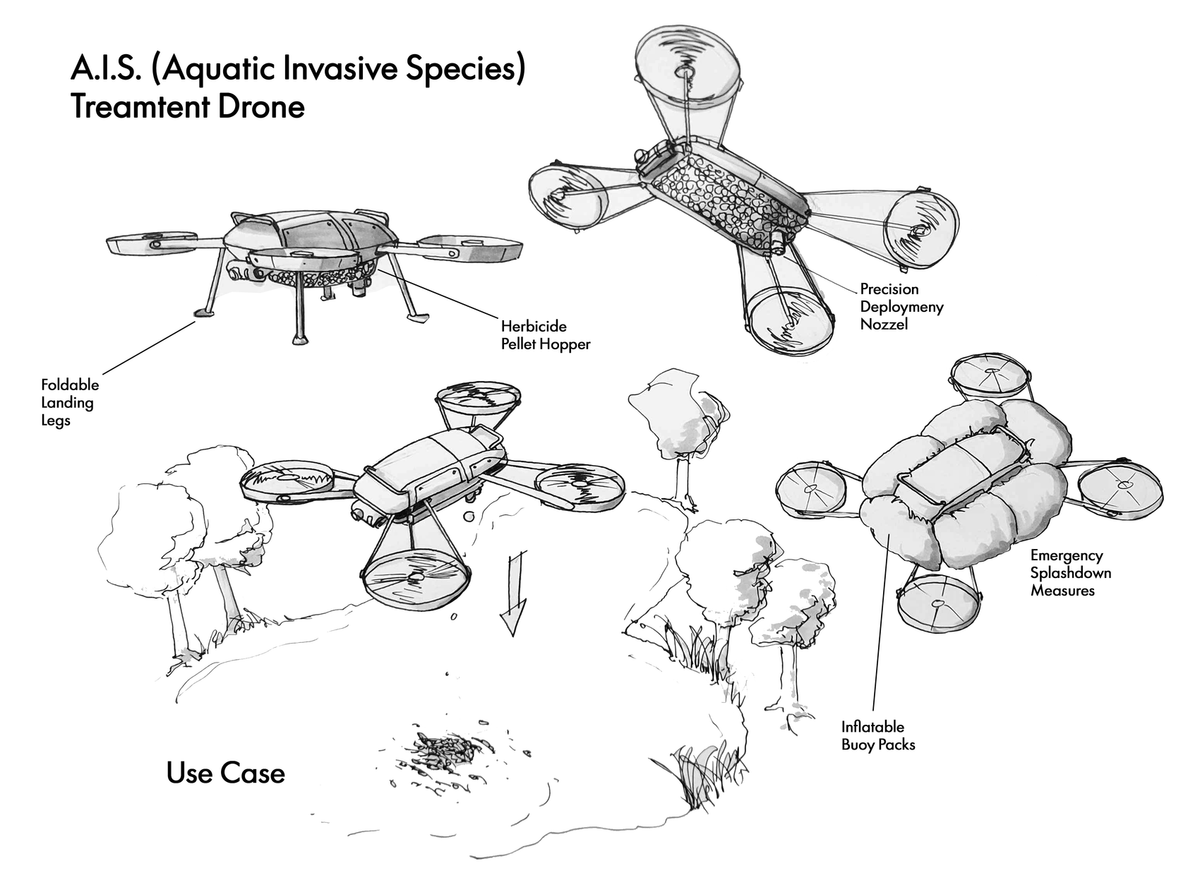
This conjecture looks at how technology can directly benefit efforts towards remedying aquatic invasive species issues. Part of the issue with herbicide administration, specifically in the context of hydrilla, is the matter of cost. Herbicide pellets for hydrilla can cost up to $10.00 a pound, which adds up incredibly quickly when treating large bodies of water. Using automation and remote implements, maintenance crews can much more efficiently and accurately distribute herbicides in bodies of water, dispensing only what is needed and with pinpoint accuracy. This style of treatment could greatly improve department resource usage, reduce collateral poisoning, and let control operations be much more thorough. Distribution boats often have to worry about avoiding hydrilla itself due to its proclivity to jam boat motors, making treatment of severely infested areas particularly difficult. By going airborne, this obstacle is circumvented.
There are limitations to this solution, particularly in the context of ODNR. Per my survey results, one of the largest issues keeping the department from working on these issues is the lack of funding available. Drones such as these are not cheap, and neither are maintenance or operation. Because of these conflicts, this concept could be effective during limited trials, but would most likely run into logistical issues if the initiative were to be made widespread.



