
Hyundai's Rear Occupant Alert Reduces Child Heat Hazards

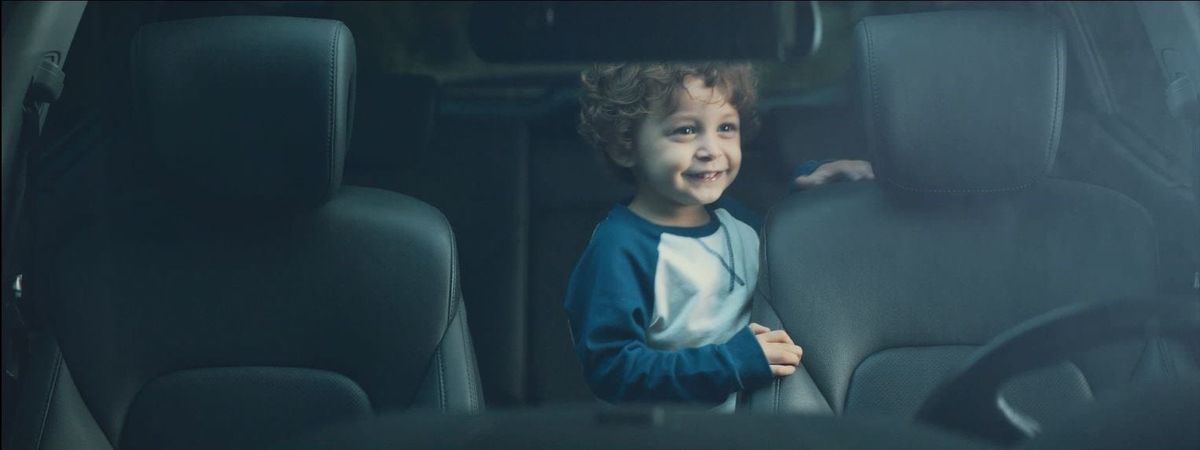
One of the most direct and obvious examples of the disconnect between the front row and the back row is incidents of leaving children in the back of the car, particularly when conditions are unideal. Since the launch of their 2019 family of cars, Hyundai has implemented a feature into all of their vehicles that helps those in the driver's seat to be aware of passengers in the back row.
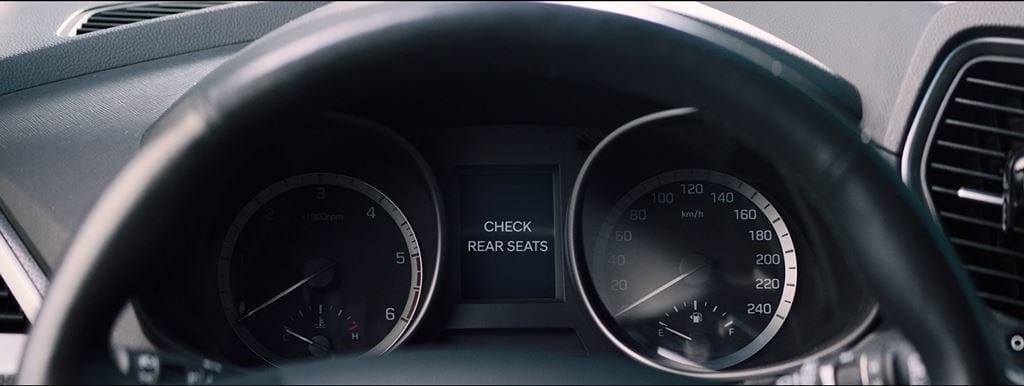
The system monitors the rear seats using an ultrasonic sensor that helps to detect the movements of children. The system first reminds drivers to check the rear seats when exiting the vehicle with a message on the center instrument cluster display. If the system detects movement in the rear seats after the driver leaves the vehicle it will honk the horn, flash the lights and send a Blue Link alert to the driver’s smartphone via Hyundai’s Blue Link connected car system ("Hyundai Motor Announces," 2017).
In addition to being forgotten in the car, tragedies have also occurred in cases where children accidentally lock themselves in a car. To prevent issues like these, the rear occupant alert technology will be adopted in future 2019 model year Hyundai vehicles ("Hyundai Motor Announces," 2017).
In the United States, 38 children have died from heatstroke in hot cars so far this year. More than 800 children have died from heat-related illnesses in vehicles since 1994 and in 55 percent of these cases, the parent was unaware their child was even in the vehicle. Experts say it only takes a matter of minutes before the heat can overwhelm a child’s ability to regulate his or her internal temperature. Their core temperature can increase three to five times faster than that of an adult ("Hyundai Motor Announces," 2017).
Hyundai's most recent version of the feature is slightly more sophisticated, goes beyond its original intention, and considers what else can be detected in the back seat and alerted to the driver.
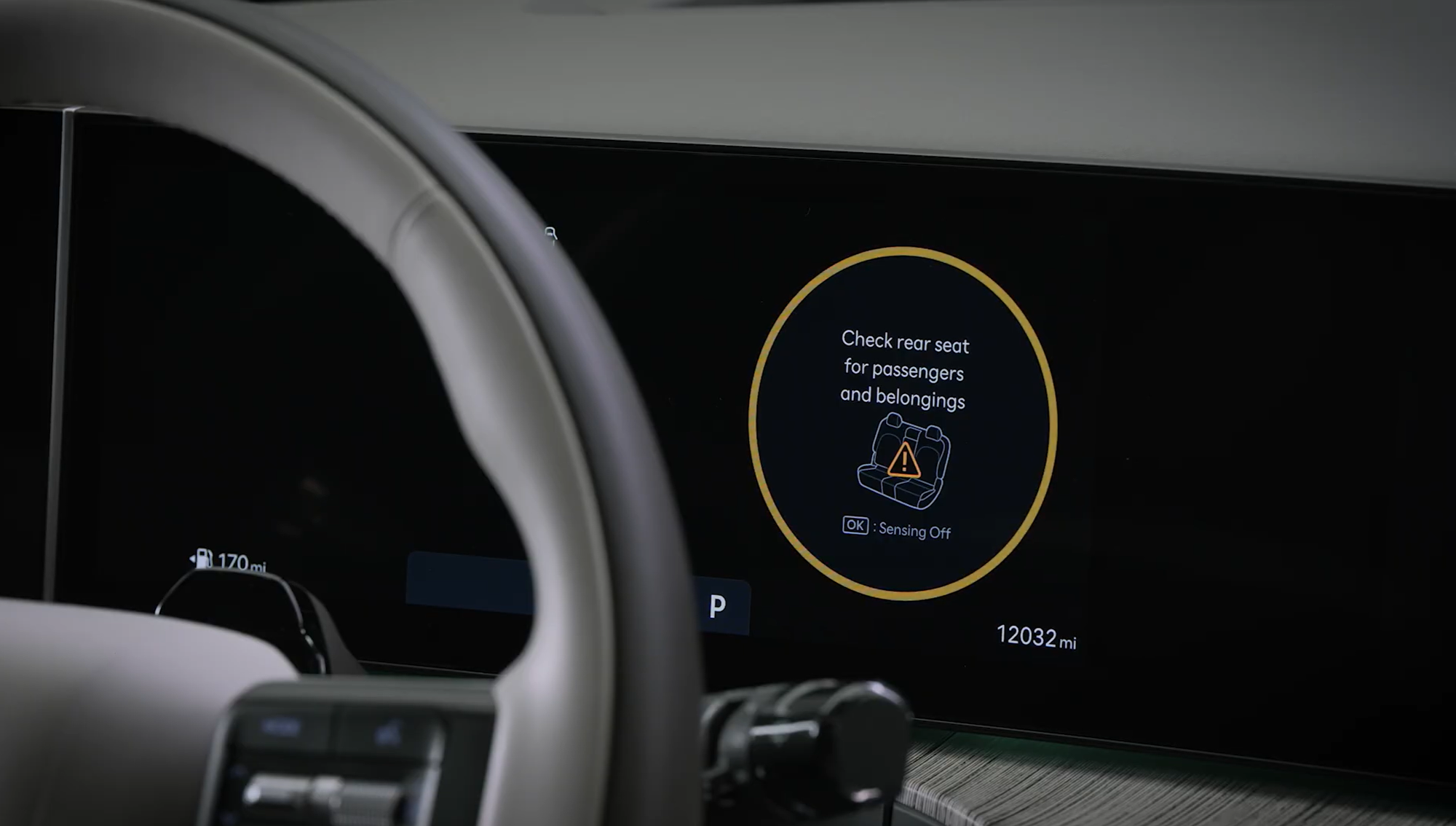
Hyundai's Rear Occupant Alert systems are designed to help prevent the driver from leaving the vehicle with a passenger or packages in the rear seat ("Rear Occupant Alert | Hyundai," 2025).
It uses what is referred to as Door Logic. If it detects the opening and closing of one of the rear doors or lift gate, it will remind you to check the rear seat area after you turn off the vehicle and open the driver's door ("Rear Occupant Alert | Hyundai," 2025).
While this is maybe not the best example of bridging the first and second row as it reflects stories of children’s deaths in cars, what it does highlight is a feature that makes the driver aware of something in backseat or trunk which is one of the very few features in cars that does such a thing. Technology like this can easily be expanded to not only notify the driver of the rear occupant’s presence but also to can and should be used to give the back row notifications of things like trip length or things that they might be leaving behind as well.
References
Hyundai Motor Announces New Rear Occupant Alert Reducing Child Heat Hazards. hyundainews.com. (2017, October 3). https://www.hyundainews.com/releases/2383
Rear Occupant Alert | Hyundai. youtube.com. (2025, March 7). https://www.youtube.com/watch?v=MyHrzbzNI6k



