
IKEA's Circular Agenda
As is the case with many companies that make material goods, IKEA views circularity as a way to lessen its impact on nature, reduce pollution, and tackle climate change.
Transitioning towards a circular business is a fundamental, system-wide shift that affects every aspect of the IKEA business. This includes the products and services we develop and offer, the materials we source, and how we enable our customers to prolong the life of IKEA products and materials (IKEA, n.d.).
We need to adapt our own processes and ways of working to transitioning towards a circular business, and the IKEA value chain is part of a bigger system where significant change needs to take place. We will take the lead and join forces with others through advocacy, collaboration, and business partnership, and share knowledge and experience to advance the transitioning towards the circular economy (IKEA, n.d.).
IKEA is implementing a circular business model in multiple aspects, including reducing waste by making long-lasting and adaptable products.
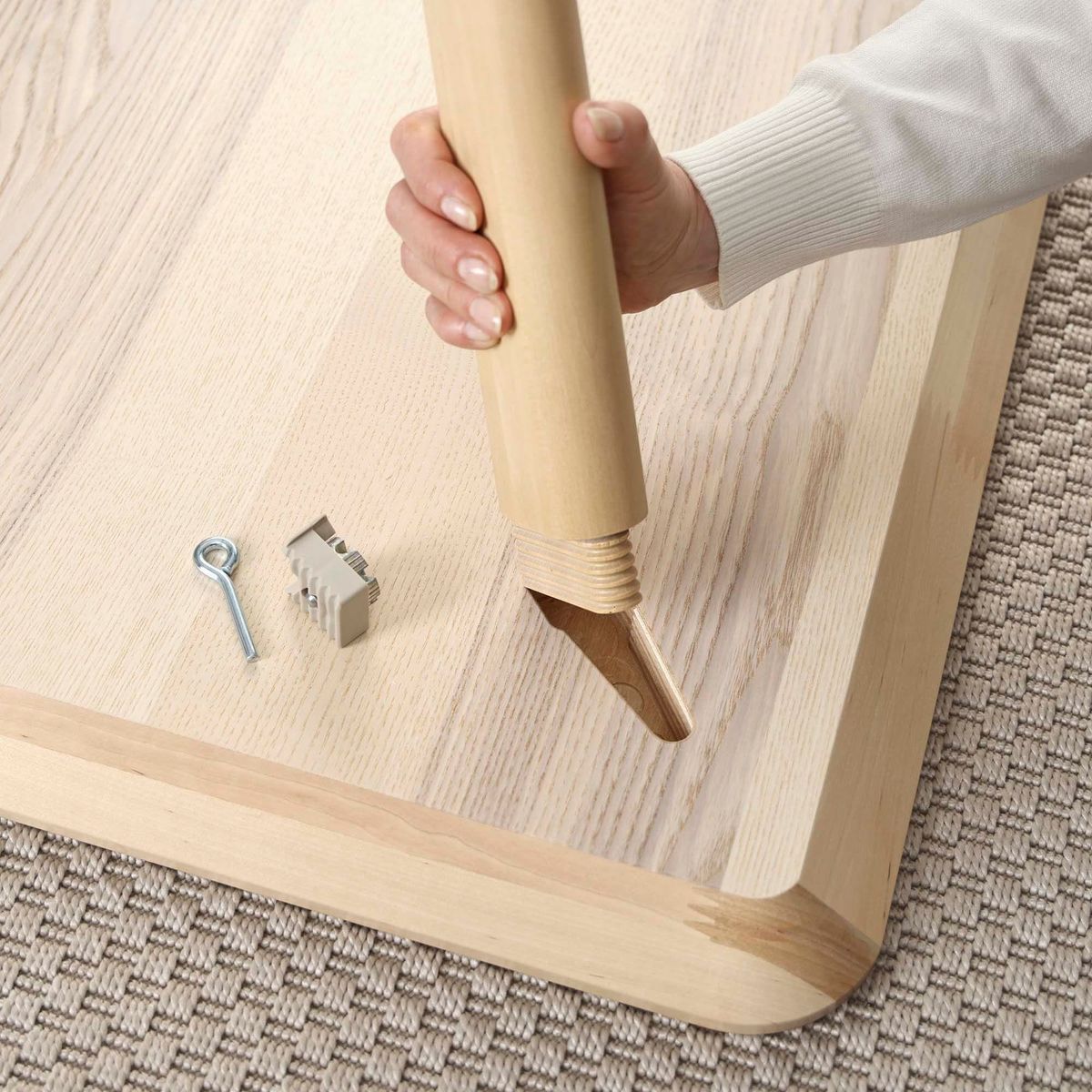
A key enabler to prolonging the life of products is through design, building in the flexibility to disassemble, reassemble or adapt the product. One example is the wedge dowel, a click-technique that eases the assembly, disassembly and eventual reassembly of IKEA furniture so the customer can take it with them when they move (IKEA, n.d.).
Materials used in IKEA products make up the biggest share of the IKEA climate footprint. The materials we choose for our products play an important role in our transition towards a circular business (IKEA, n.d.).
We’ve already phased out single-use plastic products from our home furnishing range, and we’re actively working to eliminate plastic from our product packaging (IKEA, n.d.).
A key part for us is to increase the share of recycled plastics in our products, and we work closely with our partners and suppliers to speed up progress. So, we’re turning the idea of waste on its head and reimagining it as a valuable resource that can be reused (IKEA, n.d.).
IKEA, as a furniture and home goods producer, utilizes many different materials to fit its wide range of products. These materials are all considered when thinking of creating a circular economy to reduce waste. Some of the plastic, cotton, and polyester products that IKEA produces rely on recycled materials, taking scraps from waste streams to create something new. IKEA also utilizes waste streams when creating glass products, with glass being infinitely recyclable. In the future, as technology continues to evolve, they hope to further utilize polyurethane foam as a renewable resource. An interesting point that IKEA brings up that is important to remember is that creating a circular economy not only entails using recycled material, but also requires taking steps to reduce waste in the first place. All of their products are made with this in mind, allowing consumers to find spare parts and utilize repair services instead of trashing an item if it breaks. They have also created a second-hand economy, with a buy-back system and an "as-is" storefront.
References
Our circular agenda. IKEA.
https://www.ikea.com/global/en/our-business/sustainability/our-circular-agenda/



