
Interview with Tiago Jesus

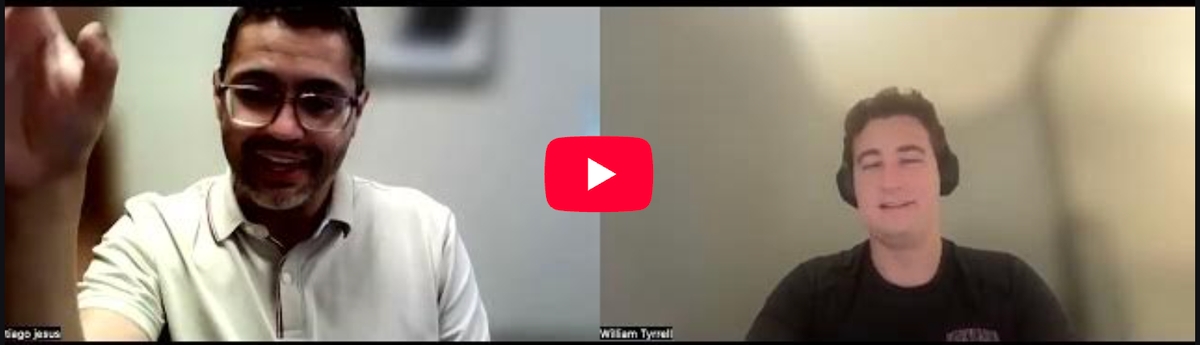
Tiago Jesus is an Assistant Professor at Ohio State, in the School of Health and Rehabilitation Sciences. He focuses on Health Systems & Services Research and both global and local (e.g., rural) disability & rehabilitation disparities (The Ohio State University School of Health and Rehabilitation Sciences, n.d.). I reached out to him to hear his perspective on rural healthcare issues. Here are some excerpts from our conversation:
“I use kind of the same approaches that I use in global health… because essentially [it’s] the same problem. It’s under-resourced, low number of healthcare providers, hard to recruit and retain them” (Jesus, 2026, 2:24–2:56).
“If you’re going to look for rural north of Ohio or if you’re going to look for rural Appalachian area, there is then, on top of that, a number of factors that also play out” (Jesus, 2026, 5:15–5:34).
“There is a low-density issue and there’s, of course, economies of scale… you need to be spread along longer mileage for a lower amount of people that live there, and you still have to operate an outpatient facility. So the math doesn’t work pretty well” (Jesus, 2026, 4:13–4:47).
“It’s not only a technical problem. It’s a social-technical problem… I think the technical part of it is easier to address. The social one, it’s not so much” (Jesus, 2026, 7:31–7:37).
“They are not very happy with telehealth as a kind of solo or replacement solution” (Jesus, 2026, 7:37–8:13).
“If you think that these older adults that live around here are going to pick up their smartphone, make login, do the double authentication factor… forget about it. It’s not [going to] work” (Jesus, 2026, 8:45–9:58).
“This might work essentially as kind of follow-up procedures when you already have established patient relationship or healthcare relationship, and may work when there is a mediating person” (Jesus, 2026, 9:58–10:22).
“If you have one person that is a mediator… that does this for person A, that does that for person B, person C and so on, that level of interaction will be a little bit more standardized and a lot less frustrating for both ends” (Jesus, 2026, 12:08–12:28).
“We developed a series of very direct instructions… how you should position the camera, and all those instructions in very plain English” (Jesus, 2026, 13:48–14:05).
“Just because it’s something that was standardized [and] developed… not during a telehealth environment or for those circumstances, it may not work the same way” (Jesus, 2026, 14:49–15:14).
“The co-design element is very important. So have end users trying to co-design, or provide very important hints for what they want in that type of product, before it’s even designed” (Jesus, 2026, 16:33–16:58).
“Rather than to have a first prototype and then look, ‘How can we adapt this?’ Because maybe it was designed in a way that by design it’s not applicable” (Jesus, 2026, 16:58–17:14).
“Even if we’re developing a product or a concept of a product… the way it’s going to be delivered, the how and so on, and who is going to deliver it—those are important questions” (Jesus, 2026, 16:17–16:33).
I found this conversation to be very insightful on how I can narrow down my scope to actually provide an impactful solution. He spoke about how impactful just creating specific instructions can be to making an impact on rural areas. Creating a better solution to mediating care within smaller communities, could make a large impact simply as a service design. I hope to incorporate his lessons on how healthcare is a social problem more than a product problem into my final design.
References
Jesus, T. (2026, September 21). Interview with Tiago Jesus (W. Tyrrell, Interviewer) [Interview transcript].
The Ohio State University School of Health and Rehabilitation Sciences. (n.d.). Tiago Jesus. https://hrs.osu.edu/faculty-and-staff/faculty-directory/jesus-tiago
No generative AI was used in writing this post.



