
Invasive Footwear: How Companies are Making the Most of Invasive Species Situations
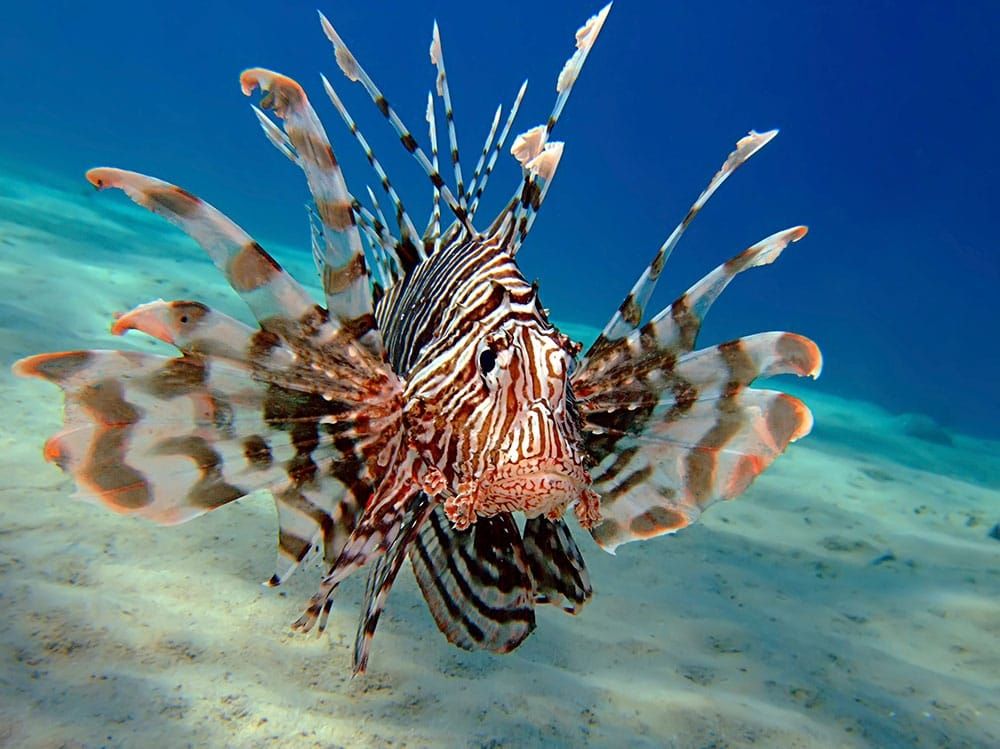
This article takes a look at how some companies are making the most of the invasive species situation in Florida. By harvesting “leather” from the invasive lionfish, companies are making sandals from a natural byproduct to support conservation efforts to eliminate lionfish.
“A clothing and gear company called Grundéns is now selling flip-flops with a “panel” of scaly lionfish leather. The leather itself is made by a Miami-based startup called Inversa that produces the material from a number of invasive species, including Burmese pythons, lionfish, and iguanas in Florida, where these non-native and very prolific animals are known to damage the state’s native ecosystems” (Jones, 2026)
“It’s this tandem goal — to achieve both financial and ecological returns — that is the driving force behind a new venture capital firm that backs Inversa. The firm, known as Superorganism, calls itself the first VC firm dedicated to biodiversity” (Jones, 2026)
“Earlier this year, Superorganism announced that it raised nearly $26 million from funders, including the Cisco Foundation and Builders Vision, an investment firm founded by a Walmart heir. Superorganism has so far invested those funds in 21 startups, according to Kevin Webb, who cofounded the firm with Tom Quigley, an expert in technology for conservation” (Jones, 2026)
In addition to Inversa, the invasive leather-maker, Webb shared three of the other 21 companies in Superorganism’s portfolio that he’s especially excited about.
- Spoor builds technology to monitor birds and bats around wind turbines to help energy companies and their regulators measure the risk of collision. Powered by cameras and artificial intelligence, the tech helps those companies assess and limit — such as by lowering the speed of the blades — the environmental impact of their energy production. The company counts Orsted, Equinor, and other large energy companies as its customers, Spoor co-founder Ask Helseth told Vox.
- Ulysses builds and operates autonomous underwater vehicles — basically, mini non-piloted submarines — that can, among other things, efficiently plant meadows of seagrass, according to the company. That’s useful when, say, governments or companies are trying to restore critical undersea habitats harmed by their activities, which can be a costly endeavor. The technology will help “displace human-powered scuba divers,” Webb said, “which are just cost-prohibitive.”
- Funga reintroduces native fungi into forests used for timber production, which the company says help trees grow faster and absorb more planet-warming carbon dioxide. Webb says the company is basically “rewilding” soils. “When native, biodiverse communities of fungal microbes are reintroduced to the forest soil, forest health improves and growth can accelerate,” Funga says on its website.
“Over the next two years, Superorganism expects to back another 14 or so companies, Webb says. Yet it will likely be a while for any of Webb’s wagers to win out — typically, VC firms want the companies they back to be bought by a bigger firm or go public within 10 years, he said. In the meantime, for better or worse, it looks like those lionfish sandals are on sale” (Jones, 2026)
Review
The most important aspect of this article is the fact that conservation efforts against invasive species do not have to be a negative money sink. Depending on the species and how they are being handled, valuable resources can be harvested from the process, creating a new line of business and potentially offsetting the conservation costs. This concept is not limited to animal products either. Other papers have shown how hydrilla weed can be mass composted to create fertilizer, and autumn olive plant berries can be harvested for their sweet flavor. For every major species that needs to be controlled, it is very worthwhile to investigate how we can take advantage of the potential resources that come from the process, making these efforts more appealing and more sustainable.
References
Jones, B. (2026, April 21). Can you profit off nature without destroying it? these venture capitalists are betting on it. Vox. https://www.vox.com/climate/486020/superorganism-vc-fund-biodiversity



