
Just One More Box...
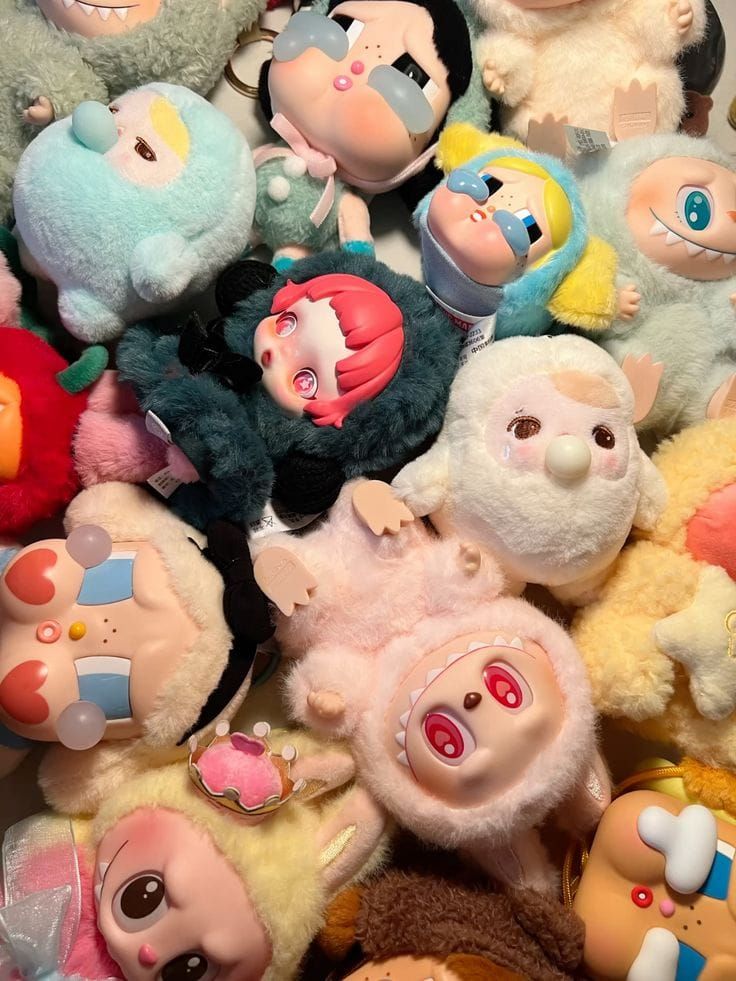
The blind/mystery box economy has recently skyrocketed in popularity. Consumers only find out what is inside the box after they have paid for it and opened it, and many will spend hundreds of dollars trying to get the exact trinket they want. The concept of buying “blind boxes” to get the exact Sonny Angel, Pop Mart, or Labubu you want is not new. We have seen similar behavior with Pokémon and sports cards for years. But what is the psychology behind buying something when you don’t know what it is? And could this psychology be used for Marble Plastics?
When I first picked up a Labubu blind box, it was supposed to be a quick purchase for my kid. She wanted a blue one. I pulled a gray. So I went back for another. Got green. Then another. Cream. Then another. Another green. And at that point, I wasn’t just buying the toy; I was chasing the outcome. (Hartoonian, 2026)
By the time I finally pulled the right color, I was well past “collecting” and deep in reinforcement loop territory. That’s when it clicked: the same psychological machinery that powers casinos, TikTok scrolling, and sports card breaks was operating in my nervous system—through a toy the size of my palm. This isn’t about self-control or personality. It’s behavioral neuroscience. (Hartoonian, 2026)
Narineh Hartoonian explains exactly how this Blind Box economy got to her, but this isn't always the case, How does this happen to adults?
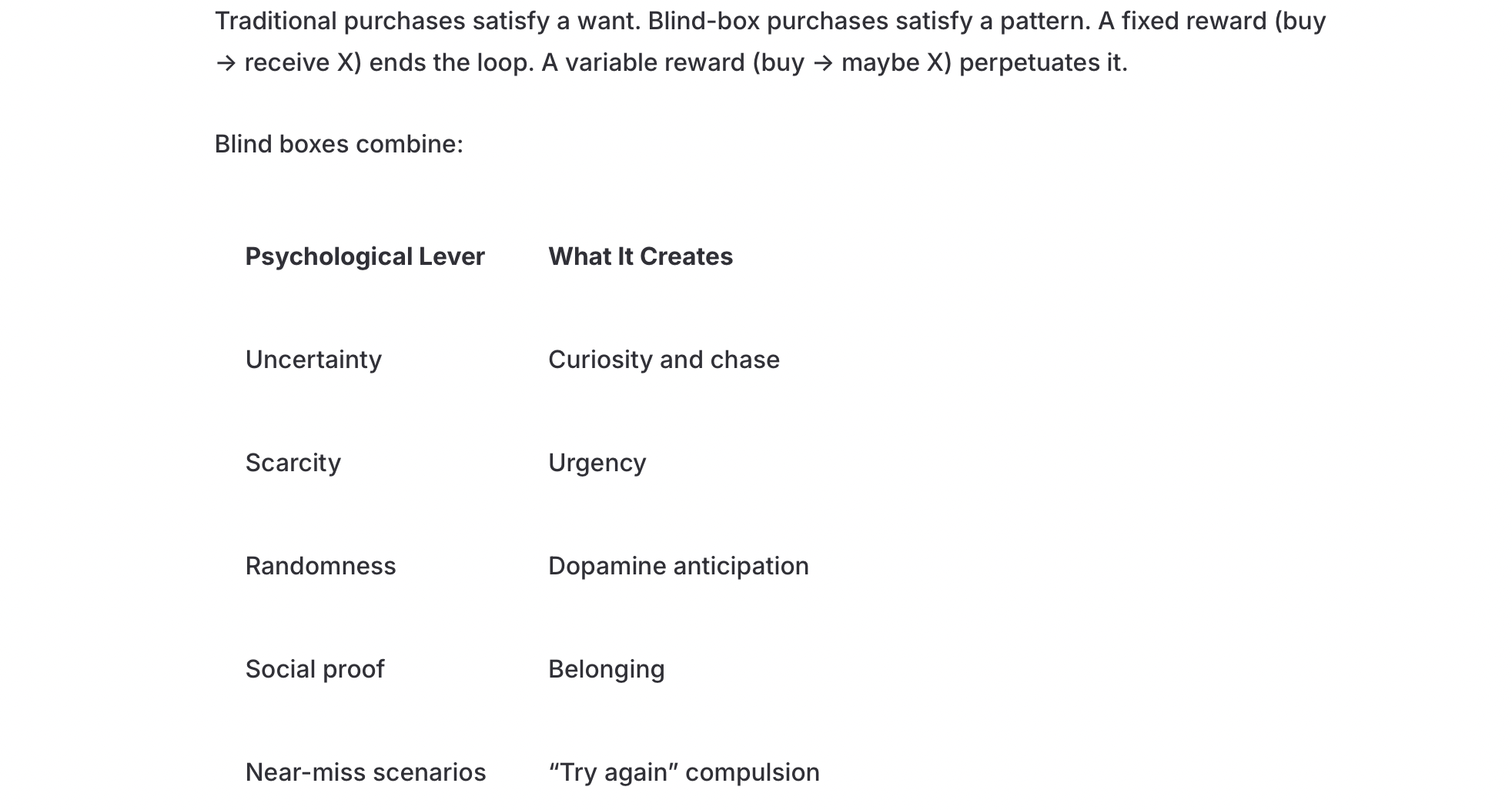
Mystery-box collectibles psychology operate on the most powerful reinforcement system ever studied in behavioral psychology: variable ratio reinforcement.
In a variable ratio schedule: The reward is unpredictable You never know which attempt will succeed The uncertainty itself fuels persistence
The Labubu Craze uses the exact same “it might be the next one” feeling we have seen with gamblers or collectors.
Slot machines run on this formula. So do Pokémon booster packs. So do “shiny pull” mechanics in video games. So do TikTok “infinite scroll” feeds. It is the least extinguishable reinforcement system ever discovered — meaning once your brain locks onto it, it is incredibly difficult to walk away from. Your nervous system gets trained to keep going, because the next pull could be the win. Not guaranteed—just possible. (Hartoonian, 2026)
Although I think Marble Plastics could indirectly use some of the psychology behind blind boxes, I do not like the way these brands use it to encourage overconsumption. The idea of buying something repeatedly because you might finally get the one you want goes against the idea of sustainability. It can also take advantage of people who are more sensitive to rewards or uncertainty, which can make the cycle harder to stop.
However, I do not think this would apply to Marble Plastics in the same way. People would be buying a material rather than a small collectible, and the material is much more expensive, making repeated impulse purchases less realistic. Marble Plastics also would not need to create a “super rare” pattern that people have to keep buying to find. Instead, I like the idea of using uncertainty to inspire designers. A customer could buy a sheet without knowing exactly what its colors or patterns will look like, making the material itself part of the creative process rather than buying a finished design.
References
Narineh Hartoonian. (2026, January 20). The Psychology of the Collectible Craze: Why Blind Boxes, Labubu, and Pokémon Cards Hook Our Brains. Rowan Center. https://rowancenterla.com/psychology-collectibles-blind-boxes-labubu-pokemon-cards/



