
Let Waste Lead the Way
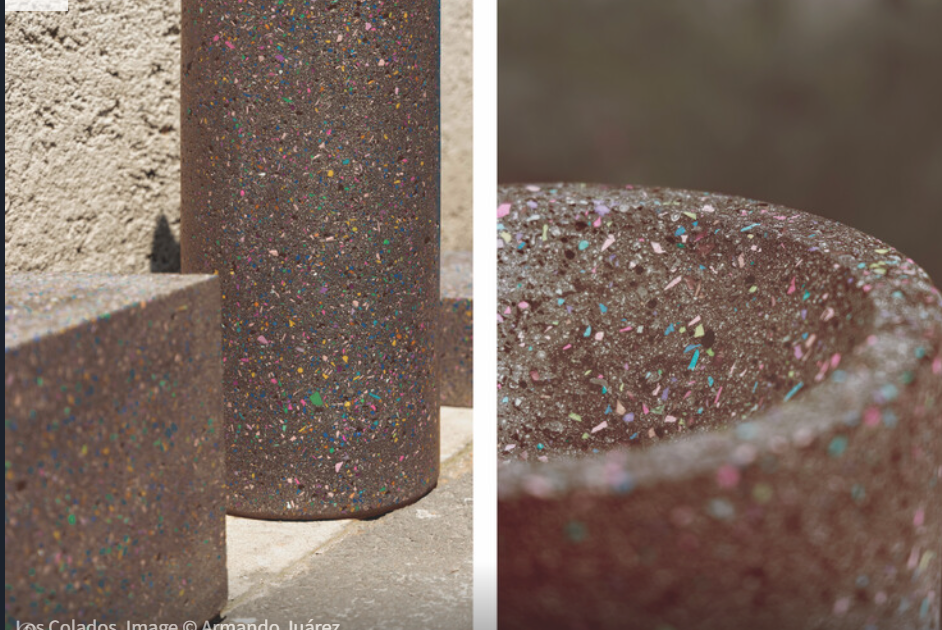
“For decades, our society and the development of our built environment have been strongly associated with intensive extractive processes. While these methods were fundamental to the growth of urban areas, they also laid the groundwork for significant challenges that contemporary generations face today. Nowadays, construction debris accumulates on the peripheries of our cities, and plastic waste floats in the oceans.
In this context, and similarly to the idea expressed by Alvar Aalto, who stated that "modern architecture does not imply the use of new materials, but rather employing existing materials more humanely," it is crucial to reconsider how we manage our resources and waste. This shift in direction provides us with new opportunities to address the challenges that the ongoing climate crisis has brought. In response, various actions are now being taken, using materials such as food waste, recycled wood, and plastic debris, among others, exploring innovations in a context where raw materials are becoming increasingly scarce.”
“The design team proposed an approach that suggests replacing traditional aggregates in casting methods, such as marble or stone. In this context, the manufacture of the sink started with an analysis and inventory of the available resources in the surroundings. This involved collecting SIM cards, remnants of refrigerators, plastic bottles, plates, and computer casings, which were mixed and incorporated as aggregates for creating the concrete piece.”
“The design team proposed an approach that suggests replacing traditional aggregates in casting methods, such as marble or stone. In this context, the manufacture of the sink started with an analysis and inventory of the available resources in the surroundings. This involved collecting SIM cards, remnants of refrigerators, plastic bottles, plates, and computer casings, which were mixed and incorporated as aggregates for creating the concrete piece.”(Tovar, 2024)
The problem space for Local Loops has a direct connection to the early stages of the design process. This article gives a unique perspective on how designers can start with the waste material and use that to influence the design process. One of the key ideas present throughout the article is that as designers, we need to reconsider how we manage our resources and waste. This directly ties into what we are doing with Marble Plastics, as going forward we need to consider how we manage the manufacturing scraps and how the current manufacturing stream can be changed to become more streamlined. An interesting concept that is present throughout the article and can be applied to the problem space of Local Loops is that rather than asking if the waste can be applied to a predetermined product, we begin by further understanding the material characteristics and then seeing how it can be applied to the design process. One of the examples shown in the article is how multiple different recycled materials can be used as a casting aggregate, becoming more deliberate in the design process.
References:
Tovar, E. (2024, February 27). Casting furniture with upcycled plastics and urban debris: Los Colados Project. ArchDaily



