
Lighting the Past: Using Technology to Preserve Memory
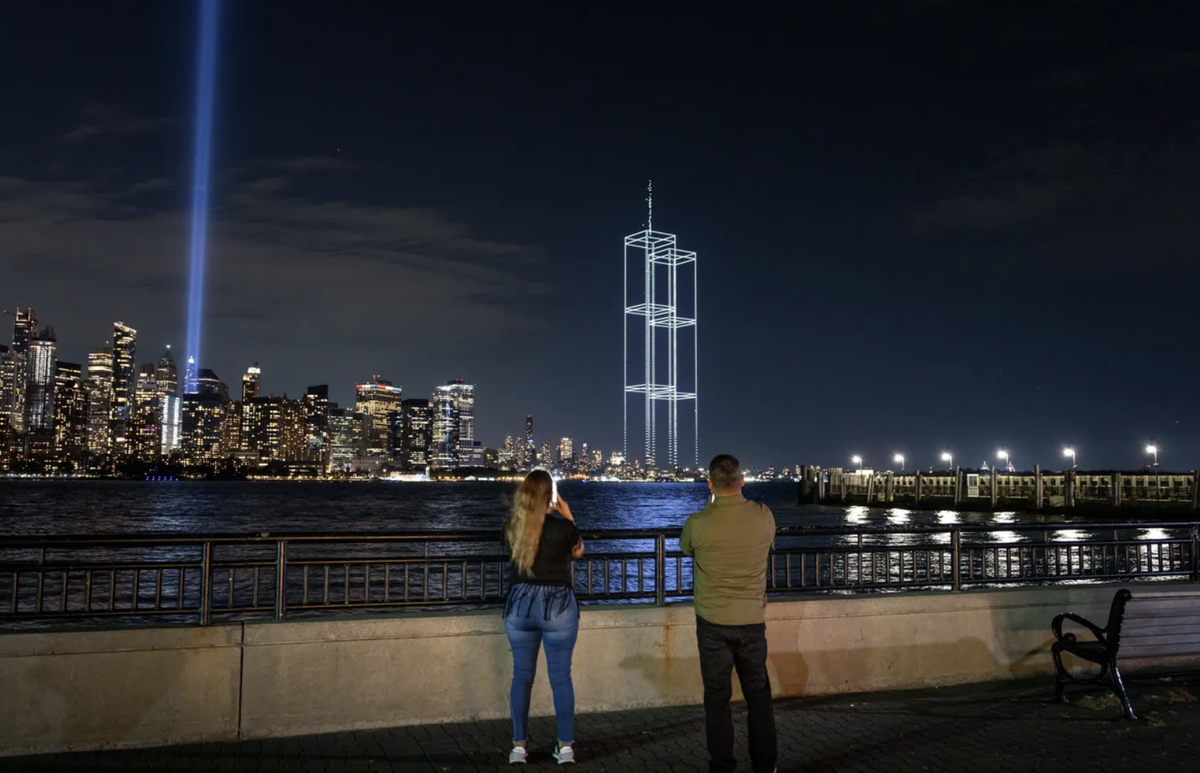
The article “Watch 2,977 Lights Honor 9/11 Victims by Recreating the Twin Towers” by Anthony Tompson discusses a drone light installation that was created to commemorate the people who lost their lives during the September 11, 2001, terrorist attacks. The display was called “2,977 Lights Over New York Harbor” which took place on September 9, 2026, for the 25th anniversary of 9/11. The installation used exactly 2,977 individual lights. The meaning behind this exact number was to represent each person who tragically lost their life during the attacks. During the show the drones were separate floating in the sky which slowly came together to form an image of the original Twin Towers. This was created to honor the individual who were lost and the larger event that changed the country and affected people around the world.
"The public art installation was designed not just to recreate the Twin Towers; organizers said the lights were meant to represent individual lives, gathering together as a constellation before forming a larger memorial."
"The project was developed with members of 9/11 victims' families, survivors and responder communities, including the New York City Fire Department (FDNY)."
"The display was also paired with music chosen for reflection, featuring works by Philip Glass, Max Richter and John Adams' "On the Transmigration of Souls."
"The number of lights represents the 2,977 people killed in the Sept. 11 attacks. The total includes people killed at the World Trade Center, the Pentagon and in Pennsylvania, as well as passengers and crew members aboard the four hijacked planes. It does not include the 19 hijackers."
"For everyone involved in the installation, it offers another way to remember those who died by honoring them in the night sky above the New York Harbor."
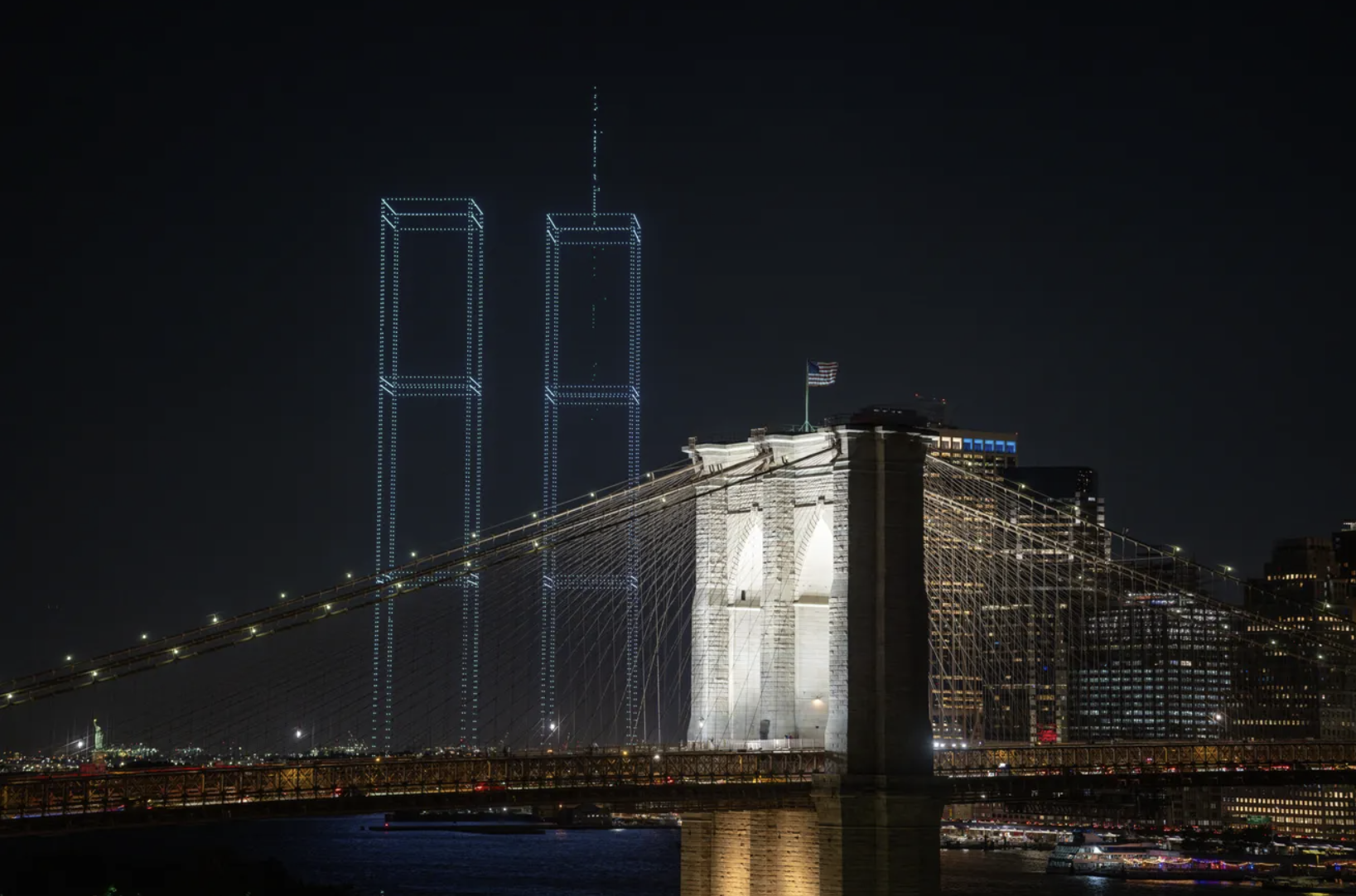
One of the most meaningful aspects of the installation is the way it uses technology and design to communicate history. Instead of creating a traditional physical memorial, the designers used drones and light to create something temporary that could be seen across the New York skyline. Music was also incorporated into the experience to create a vibe and atmosphere for people to acknowledge, morn, and reflect the events that brought us where we are today. The featured works were produced by Philip Glass and Max Richter and John Adams’ “On the Transmigration of Souls”. Combining light, movement, architecture, and sound demonstrates how different forms of design can work together to communicate an emotional message.
"Like the landscape of New York City, memory and understanding of history are also shaped by and reflect constant change, but art can help convey information, feelings and understanding of past events from one generation to the next," Brenda Berkman, an artist who worked as a FDNY first responder in 2001, said in a statement.
One message that Anthony mentions within the article which is very important to acknowledge is there are millions of Americans that were or are too young to remember 9/11 firsthand. This installation was a way to bring the different generational gaps together. a way to honor and teach people of the significance of the day on 9/11. This shows how temporary and interactive forms of design can communicate information, create emotional connections, and help keep important memories present even as time passes. As technology and design grow this gives us an instance of how we can bring these connections into other areas of our life. and think about how we can make use these to our advantage to get other people to care and learn about other events/problems going on.
References
Grammarly. (n.d.). https://www.grammarly.com/
Thompson, A. (2026, September 11). Thousands of drones form Twin Towers in moving 9/11 memorial. USA Today. https://www.usatoday.com/picture-gallery/news/nation/2026/09/10/twin-towers-drone-memorial-new-york-911-tribute-photos/91693520007/



