
Making Light Pollution Understandable
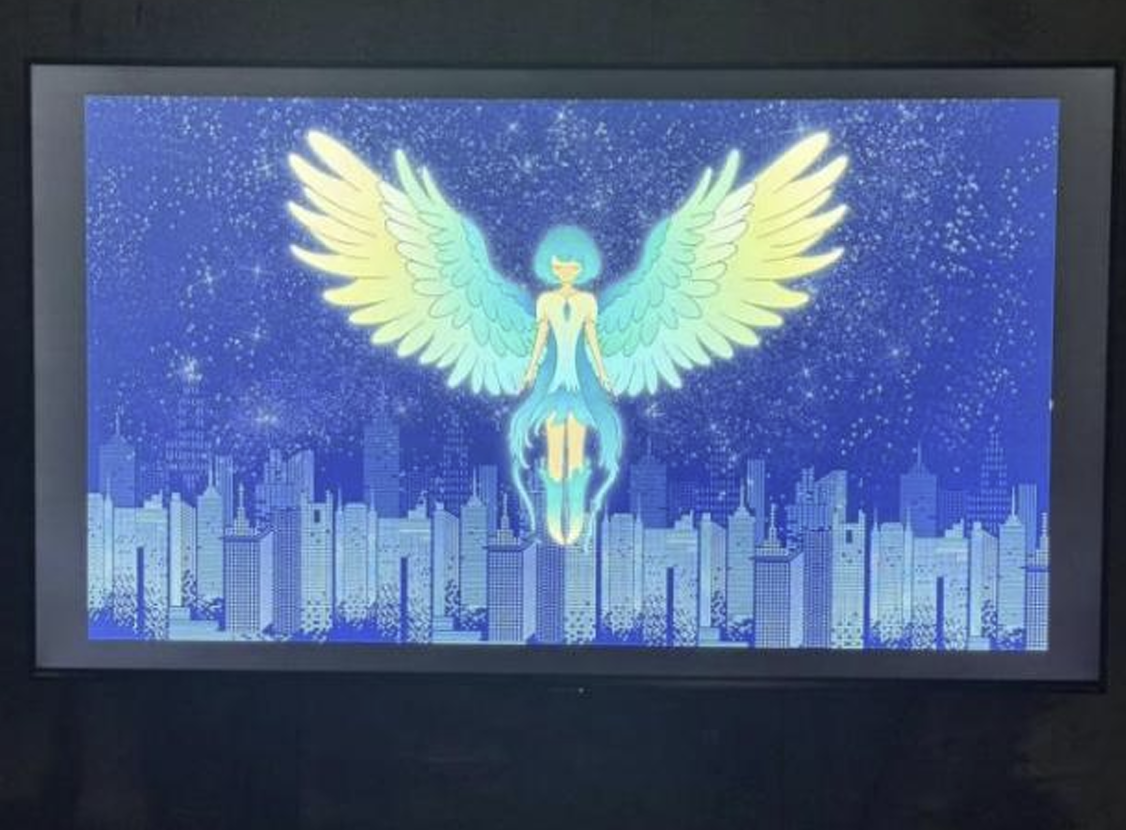
The research study "Interactive Installation Design for Light Pollution Based on Data Narrative Theory" by Xintong Dai presents an interactive art installation that helps people understand the effects of artificial light on the environment. The main focus is the relationship between excessive nighttime lighting and migratory birds. Instead of communicating the problem through a traditional poster or presentation, Dai created an experience where visitors can actually watch the environmental effects develop. This approach is interesting because light pollution can be difficult to understand visually. People can easily see a building, road, or lamp that produces light, but the effects that this light has on animals are less obvious. The installation attempts to make those consequences easier for people to recognize by incorporating data storytelling.
The negative impact of light pollution on the natural environment has become increasingly significant due to the widespread use of artificial lighting globally, particularly for migratory birds, which rely on natural light in the night sky to guide their migration.
When light pollution causes these birds to become disoriented, they are easily attracted to tall buildings and other artificial structures in cities, leading to bird collisions. Artificial lights also disrupt the magnetic orientation system of migratory birds, who rely on sensing Earth's magnetic field to maintain the correct direction during long migrations.
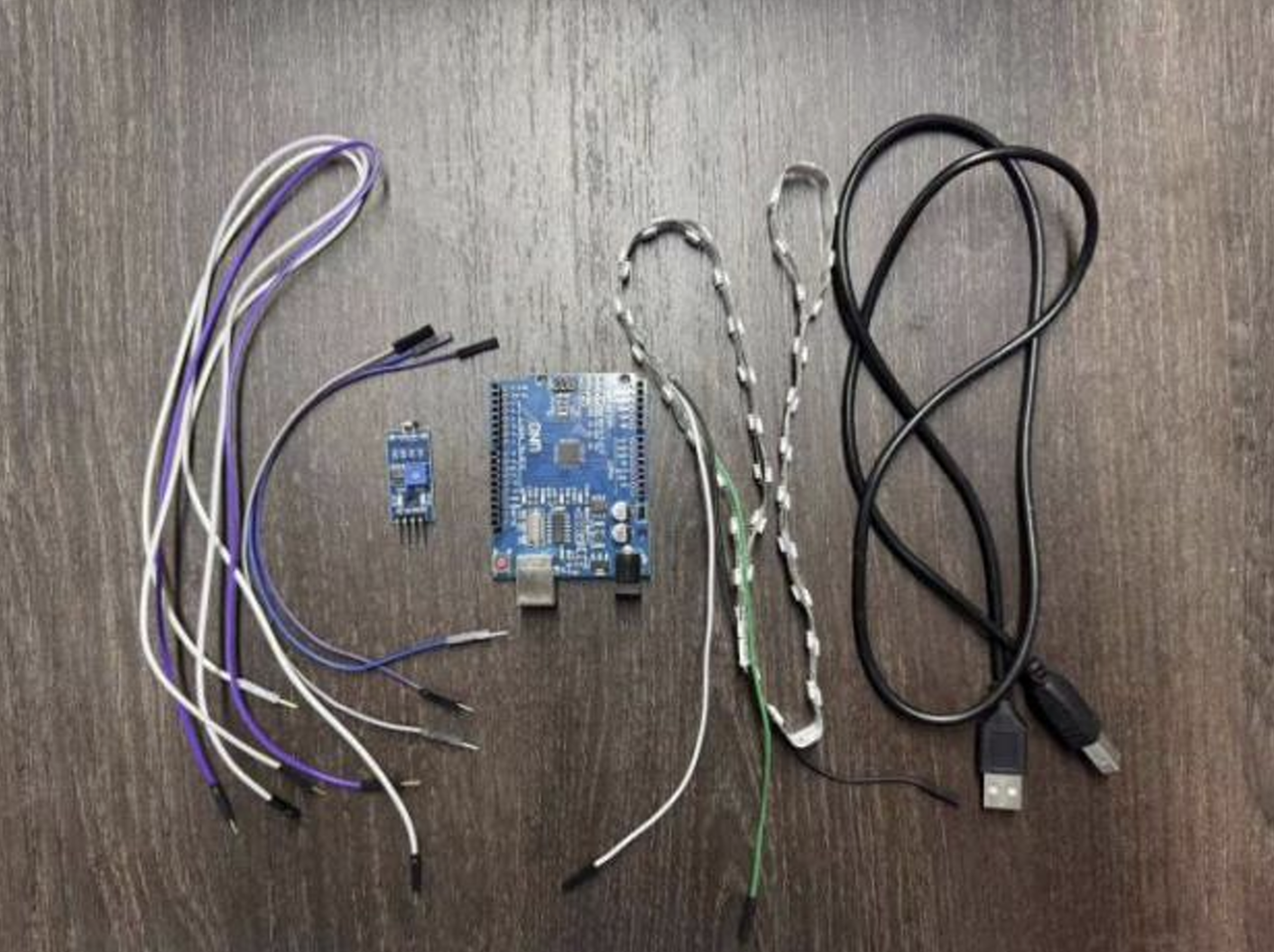
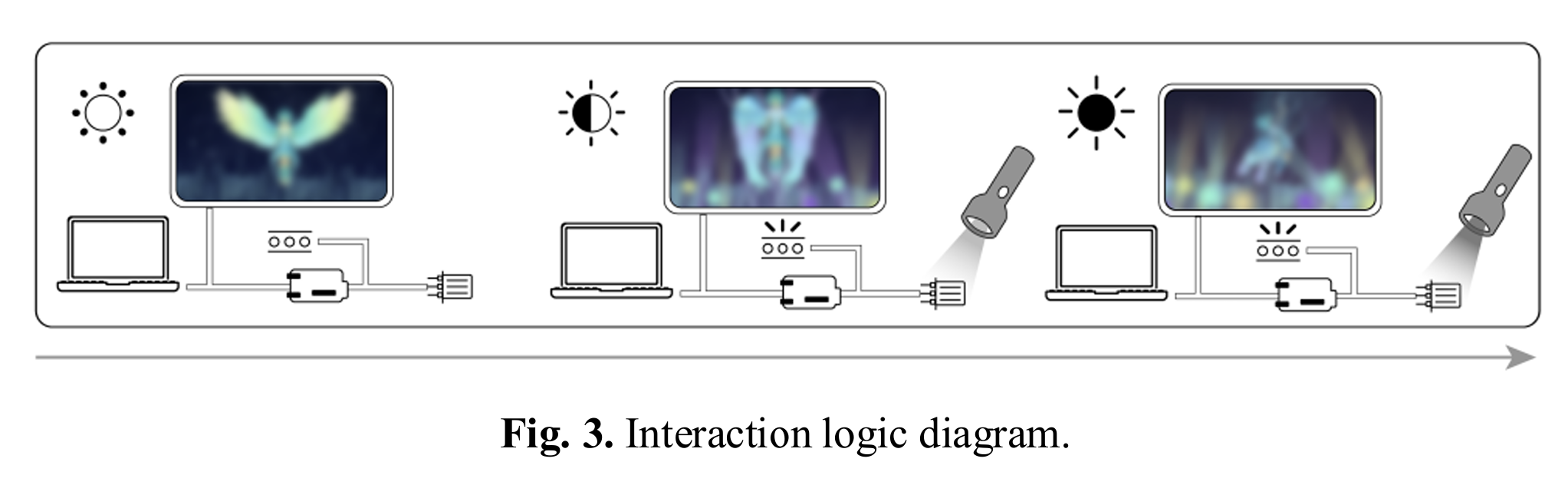
A light sensor detects changes in the amount of illumination around the device. That information is then processed through an Arduino system and used to control lighting and visual effects. The city imagery becomes more dominant, the stars become less visible, and the bird representation begins to change. Eventually, the bird disappears from the visual environment.
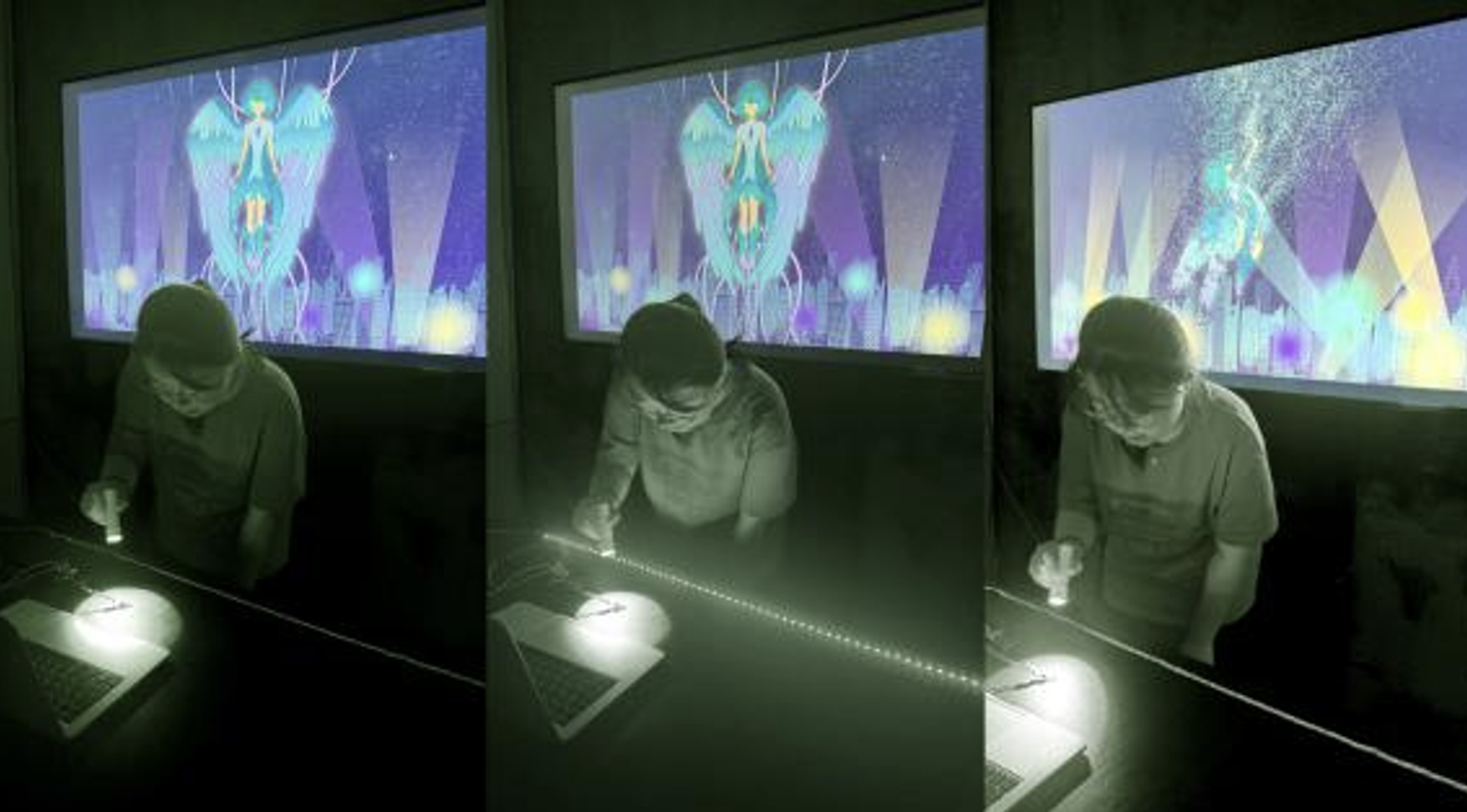
The anthropomorphic image of migratory birds shows changes in wing color and becomes increasingly restrained by shackles. As the light intensity increases, the form of the migratory bird further transforms until it dissipates, indicating the harmful effects of light pollution on migratory birds and the natural environment.
When the light-dependent resistor sensor detects changes in light intensity, it converts this into an electrical signal output. The Arduino controller then transmits this signal to the connected processing platform. If the light source begins to increase, the city lights in the image gradually brighten and spread, the stars slowly fade away, and the wings of the migratory birds change color, indicating that their physiological state starts to deteriorate.
I think the most valuable design idea from this project is its use of interaction as a form of communication. The article describes data storytelling as a way of turning information into a narrative that people can understand and emotionally connect with. This concept could also help us create new possibilities for environmental education in our parks. I think that this is a very effects way for us to teach the users of the park rather than posters and signs because it makes the people viewing the installation feel more emotional about the topic. It's hard for designers to change the way people think and patterns they are accustomed to. Because of this we need to find way to make people actually care.
References
Dai, X. (2025, August 13). Interactive Installation Design for Light Pollution Based on Data Narrative Theory. Bing. https://www.bing.com/search?pglt=171&q=Interactive%2BInstallation%2BDesign%2Bfor%2BLight%2BPollution%2BBased%2Bon%2BData%2BNarrative%2BTheory%2BXintong%2BDai&cvid=537a763f50b84433937663e9290383bd&gs_lcrp=EgRlZGdlKgYIABBFGDsyBggAEEUYOzIICAEQ6QcY_FUyBwgCEOsHGEDSAQc0OTRqMGo3qAIAsAIA&FORM=ANNAB1&adppc=EDGEINJP&PC=ASTS
Grammarly. (n.d.). https://www.grammarly.com/



