
Manufacturing Design*
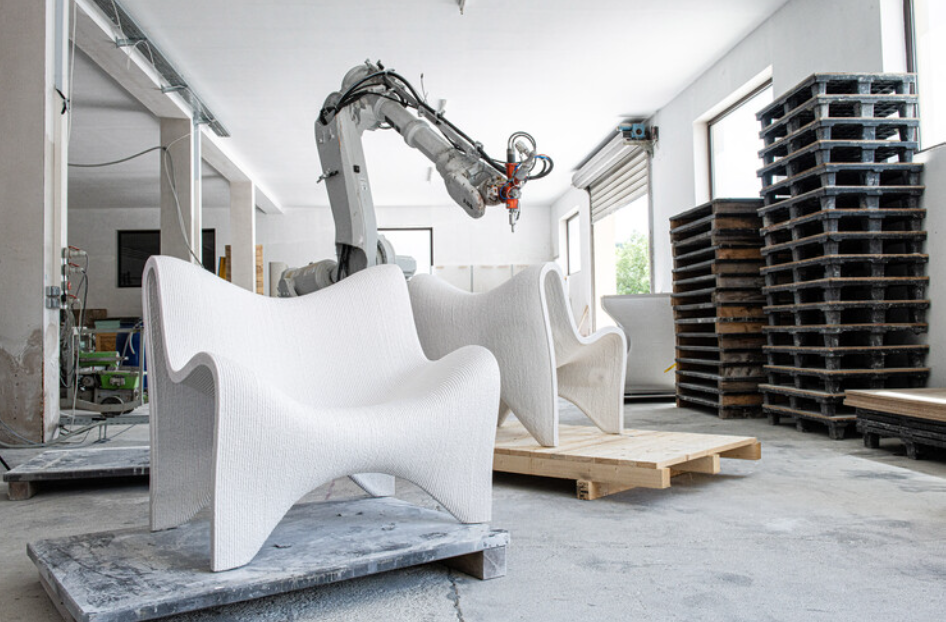
“Can you imagine being able to prototype a piece of furniture at the touch of a button and testing it in just a few hours? This might become a common practice sooner than we may think. Fueled by material innovation, automation and cutting-edge technology, a new era in home decor is emerging; one where 3D printing opens up a world of creative possibilities that transcend the bounds of traditional design. Yes, furniture is still mass-produced using conventional methods –molding, cutting, bending–, but 3D printing continues to disrupt the industry. As the revolutionary technology evolves and becomes more accessible, it has unleashed an unparalleled level of creative expression and efficiency. The concept is simple: a digital design is created using 3D modeling software and then printed, layer by layer, in the form of a physical object, bringing complex geometries to life. It’s a whole new kind of digital craftsmanship.” (Montjoy, 2023)
One of the problems that we are faced with in the Local Loops project is deciding what manufacturing techniques can be used throughout the design process. The emerging manufacturing techniques change what is actually possible when reusing materials. In the article in mentions how 3D printing has opened up a whole new world of opportunities and how digital designs can become physical products people interact with. Another aspect of the article that I thought is relevant to the Local Loops project is the idea that designers are no longer only choosing the materials, but they are now designing the manufacturing process and looking at how these recycled materials can be designed around. It raises questions about what process could be used on the manufacturing scrap in order to transform the characteristics of the material so that it can be used in whatever manufacturing process is most reasonable for what is being designed from the scraps.
References:
Montjoy, V. (2023, February 9). 3D printed furniture: 12 designs that explore digital craftsmanship. ArchDaily.



