
Mapping The Park Experience
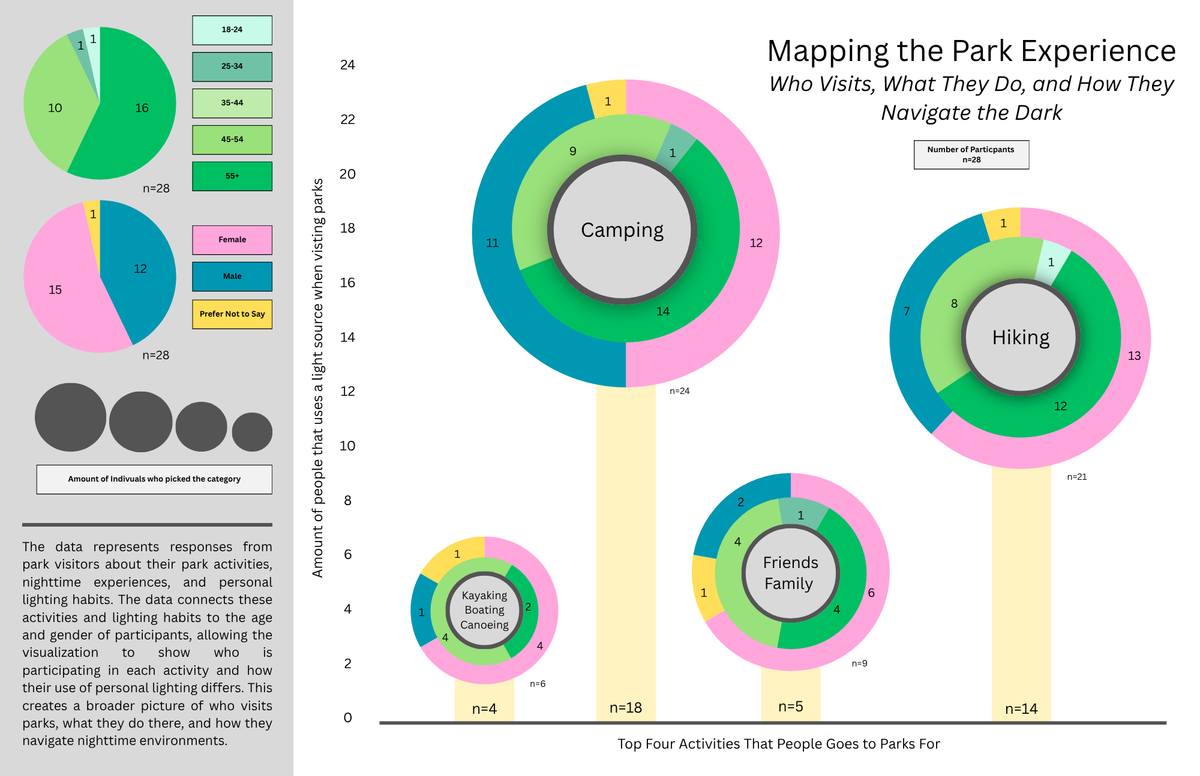
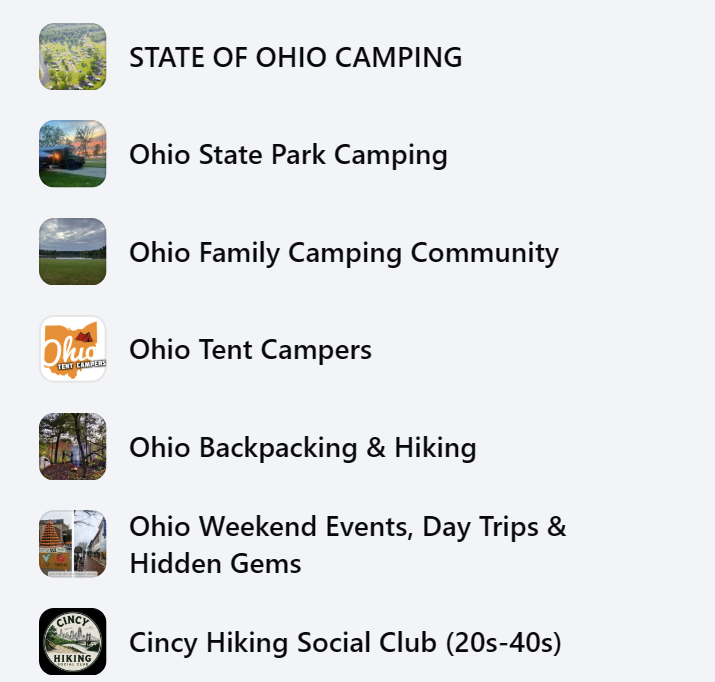
I attended seven different events across Ohio, including visits to Caesar Creek, Deer Creek, A.W. Marion, and Buck Creek State Parks to gather my sampling strategy. My sampling strategy was intended to specifically gather surveys from park visitors who attend ODNR events. Unfortunately, not one park visitor ended up attended the events I planned to visit, making in-person recruitment difficult and costly due to the time and gas required to travel. After discussing my concerns with Heather and Tracey, they suggested sharing my survey in Ohio State Park Facebook groups. For my actual recruitment strategy, I posted the survey in six groups and received 28 responses.
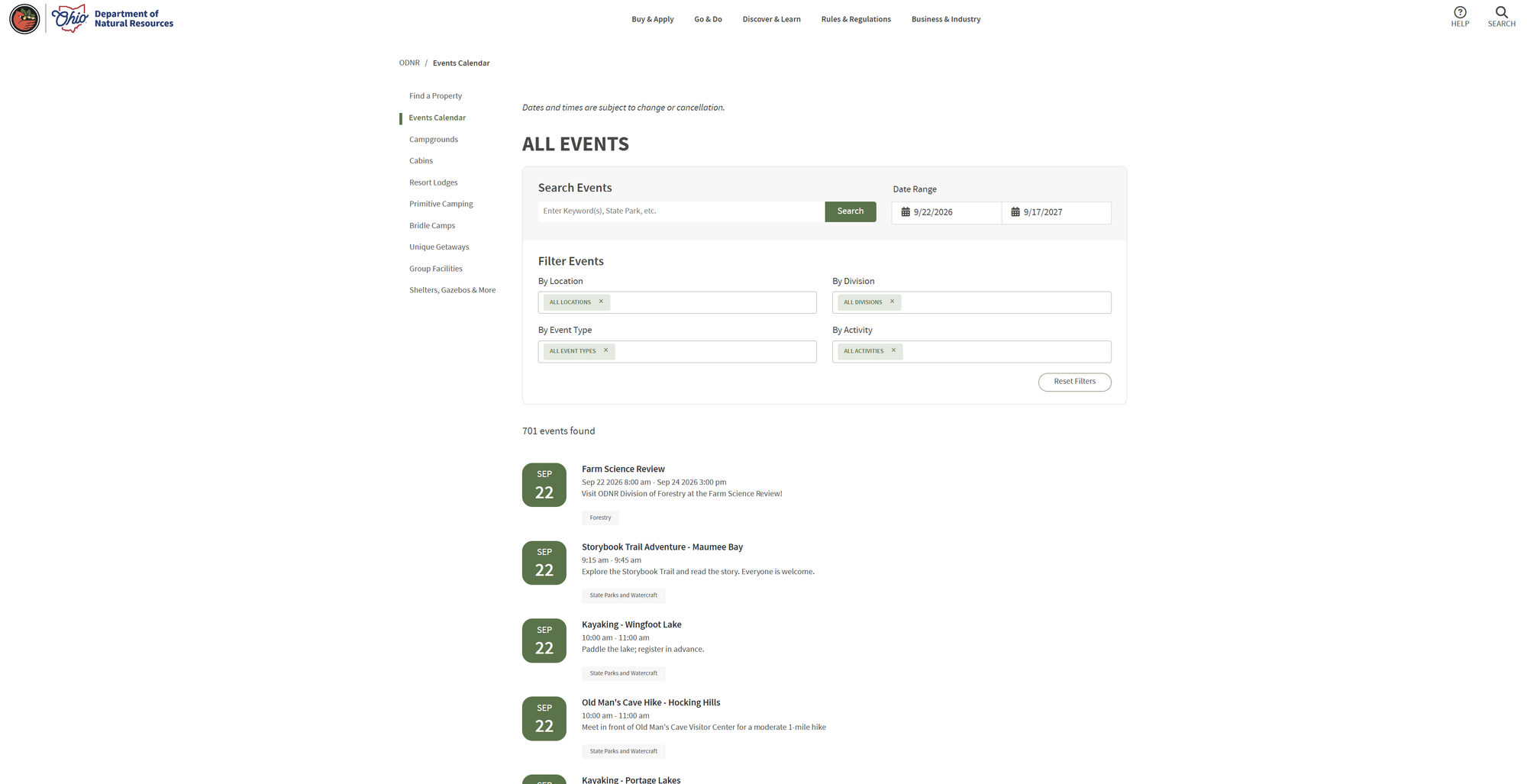
My survey results provide insight into how state park visitors experience parks during different times of the day, particularly at night. At the time of me analyzing my data I collected 28 responses with most participants being older adults. Twenty-six respondents were age 45 or older, while only two respondents were under 35. The gender distribution was surprisingly balanced, with 15 female respondents and 12 male respondents and one person who preferred not to say.
This demographic represented in the survey more so reflects the needs and concerns of an older park-visiting population. The survey shows that hiking/walking, camping and hanging out with friends/family were the most common reasons people visit state parks. Suggesting that visitors use parks for both active recreation and quieter experiences, meaning lighting needs may vary depending on the activity.
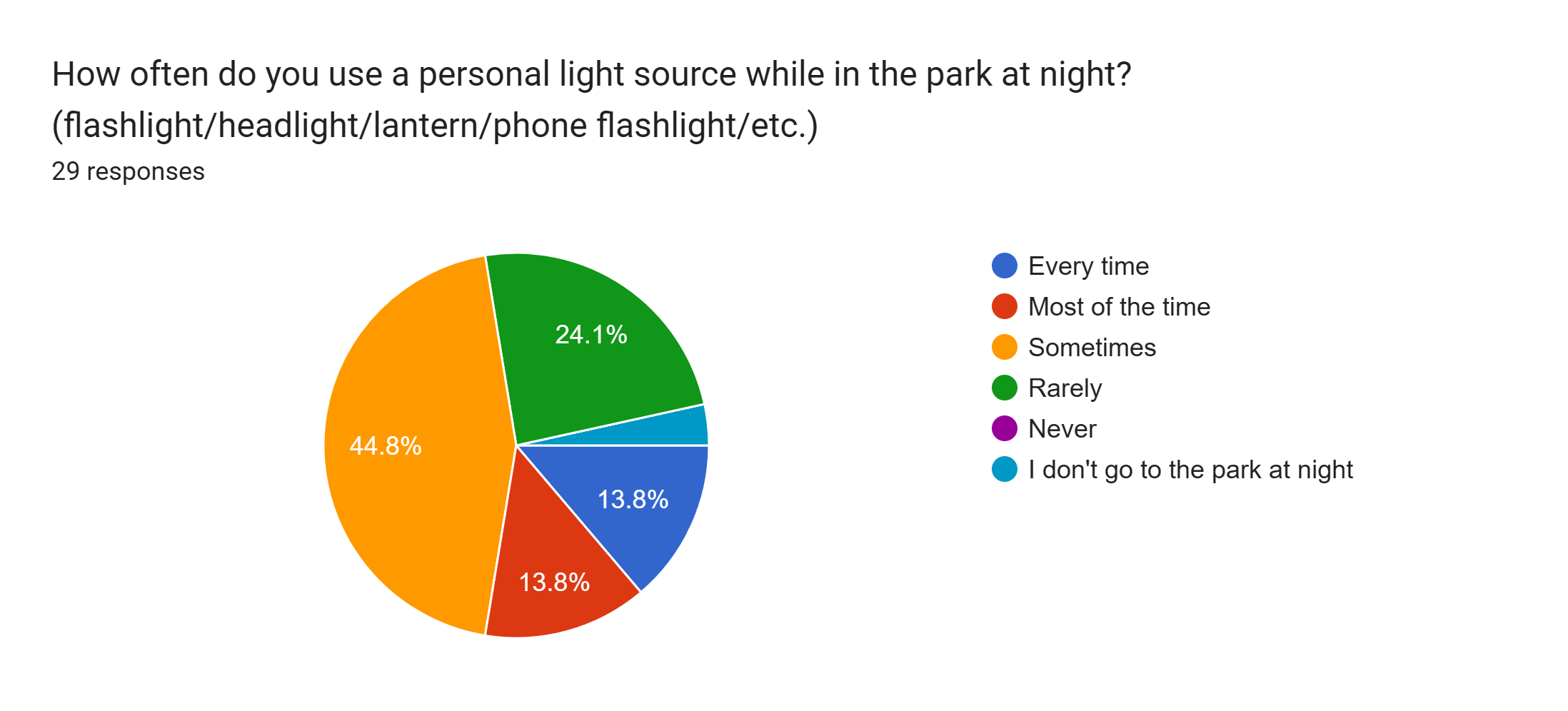
How I showcased "How often do you use a personal light source while in the park at night?" is grouping all the responses to being "yes they use a personal light source" besides rarely, never, and not going to parks. I looked at all the people who chose the specific categories that they go to the park for and marked wither or not they used a light. This showcases that most people that go camping, 18 respondents out of 24 people who chose that category bring a flashlight.
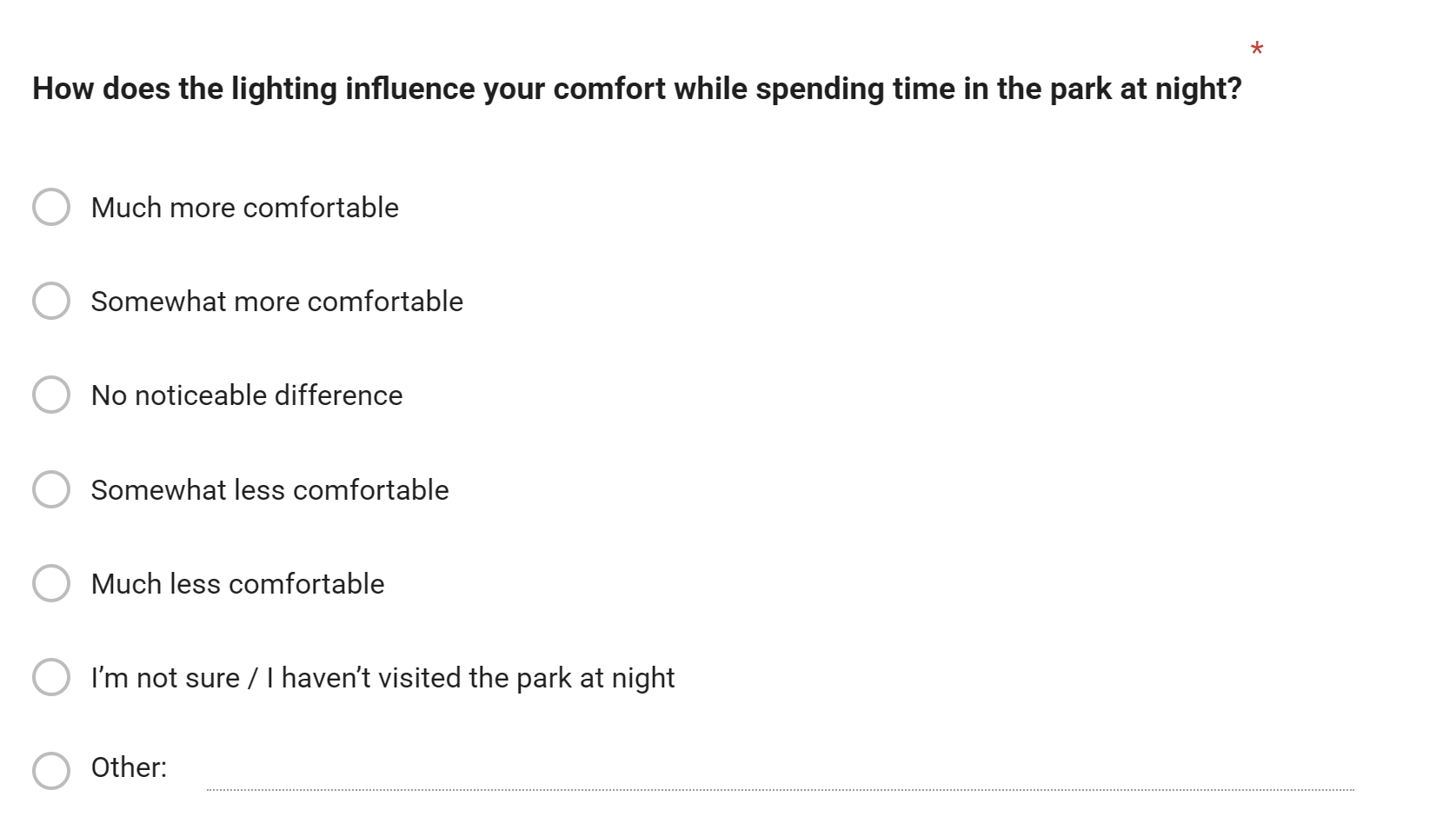
Another issue I saw while analyzing my survey was with the question, “How does lighting influence your comfort while spending time in the park at night?” (Figure 2). As I began analyzing the results, I realized that the question and response options could be interpreted in several different ways. For example, someone could interpret the question as asking whether the presence of lighting makes them feel more comfortable because it provides a greater sense of safety. On the other hand, someone else could interpret it as asking how they feel when there is a lack of lighting in the park, which could make them feel less comfortable. Both interpretations address comfort, but they approach the question from different perspectives.
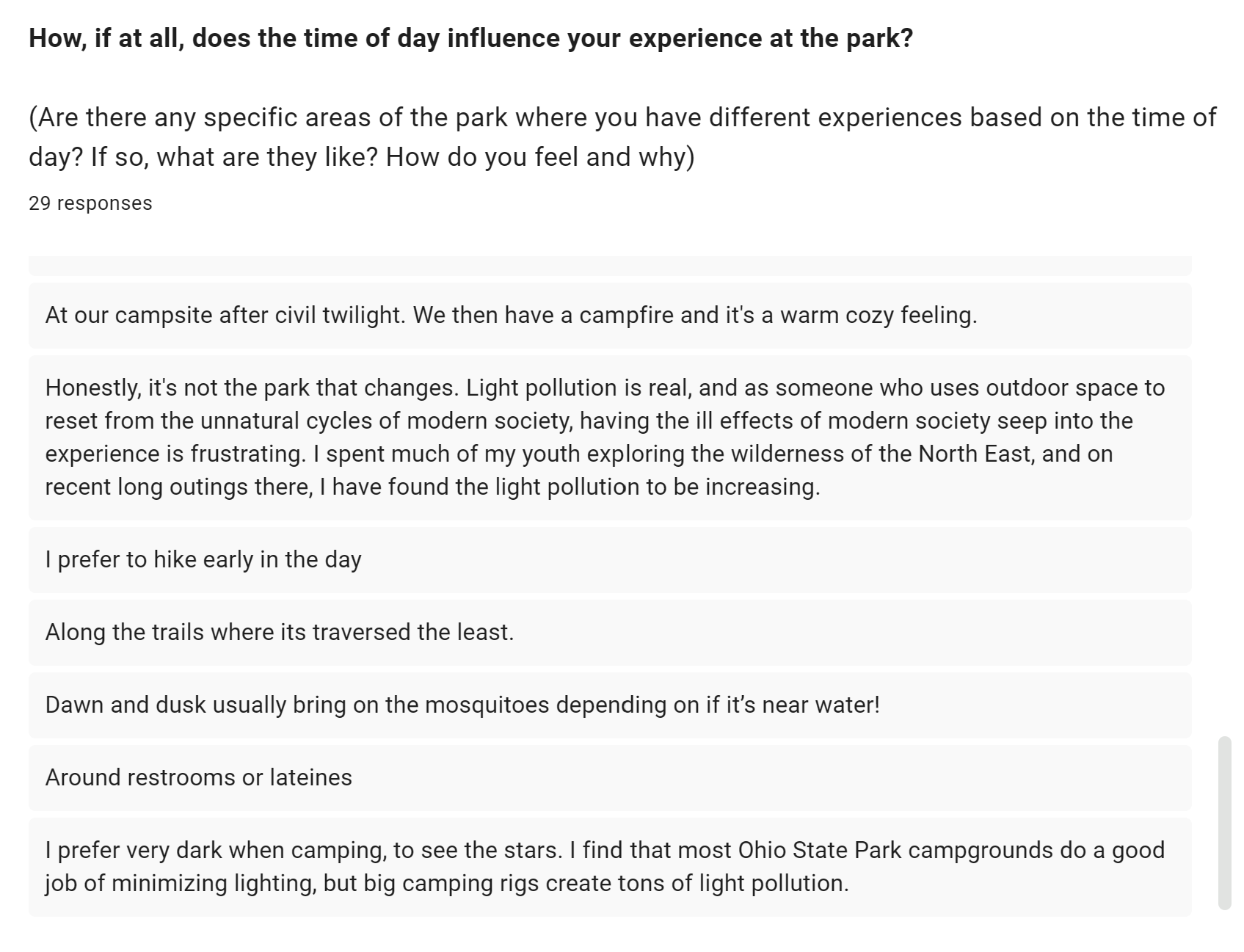
The open-ended responses showcase wanting darker environments for stargazing, camping, and experiencing nature, while others specifically mentioned safety concerns around restrooms, parking lots, trails, and being alone. Overall, the survey suggests that visitors value safety and visibility while also wanting to preserve the darkness and natural atmosphere of parks. This creates an opportunity to explore lighting solutions that provide visibility when needed without unnecessarily illuminating the entire park. Having a larger portion of my respondents fall within the older age ranges makes me question whether they have been actively visiting parks for many years. If so, their previous experiences with nighttime park activities may influence their comfort level when surrounded by darkness compared to someone who is new to nighttime park activities.



