
Mutant Weeds: Using Art to Expose Light Pollution
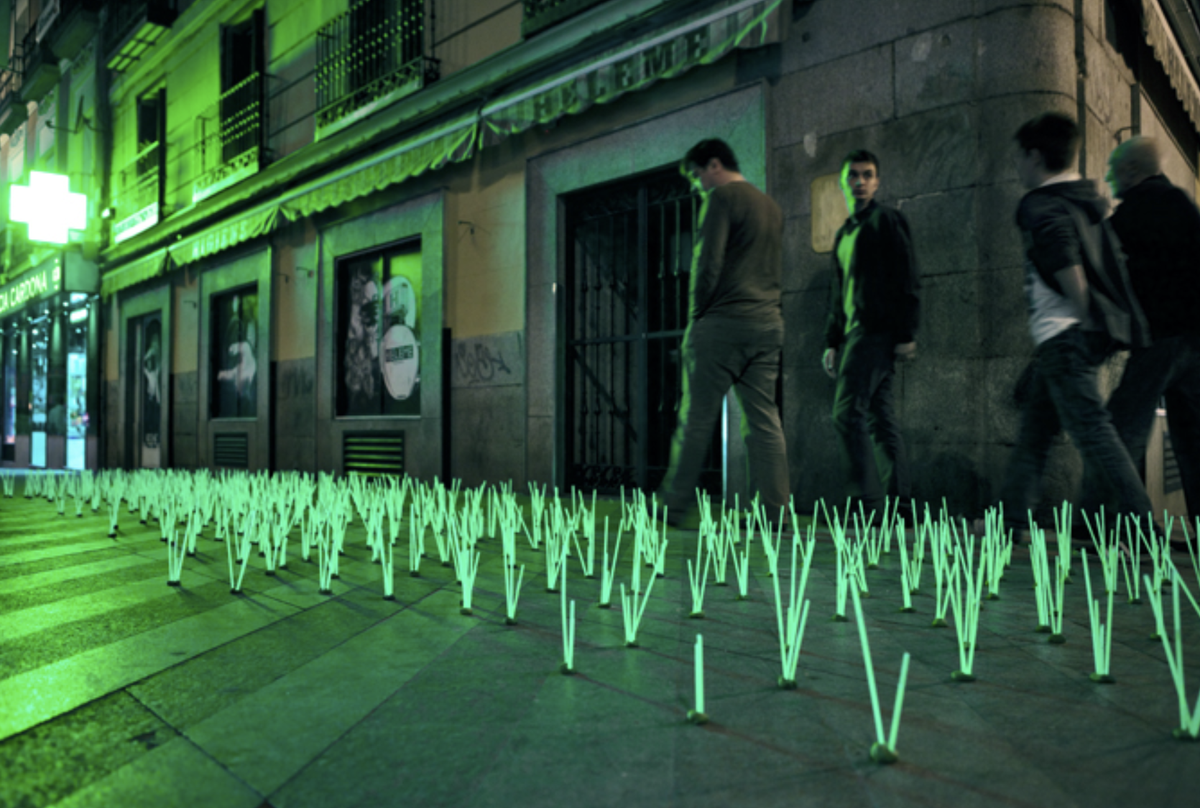
I found a artist that goes by the name luzinterruptus who focused on the growing problem of artificial light within Madrid and how it has changed the city’s nighttime environment. Madrid produces so much artificial light that residents have very limited opportunities to see stars or the Milky Way. Most people when they hear pollution they immediately think of things that can be seen by their eyes like trash, smoke, or chemicals, light pollution is often overlooked. The concept of light it has always been seen as normal and necessary part of modern cities. However, excessive lighting can change how people experience their surroundings and can also interfere with natural environments.
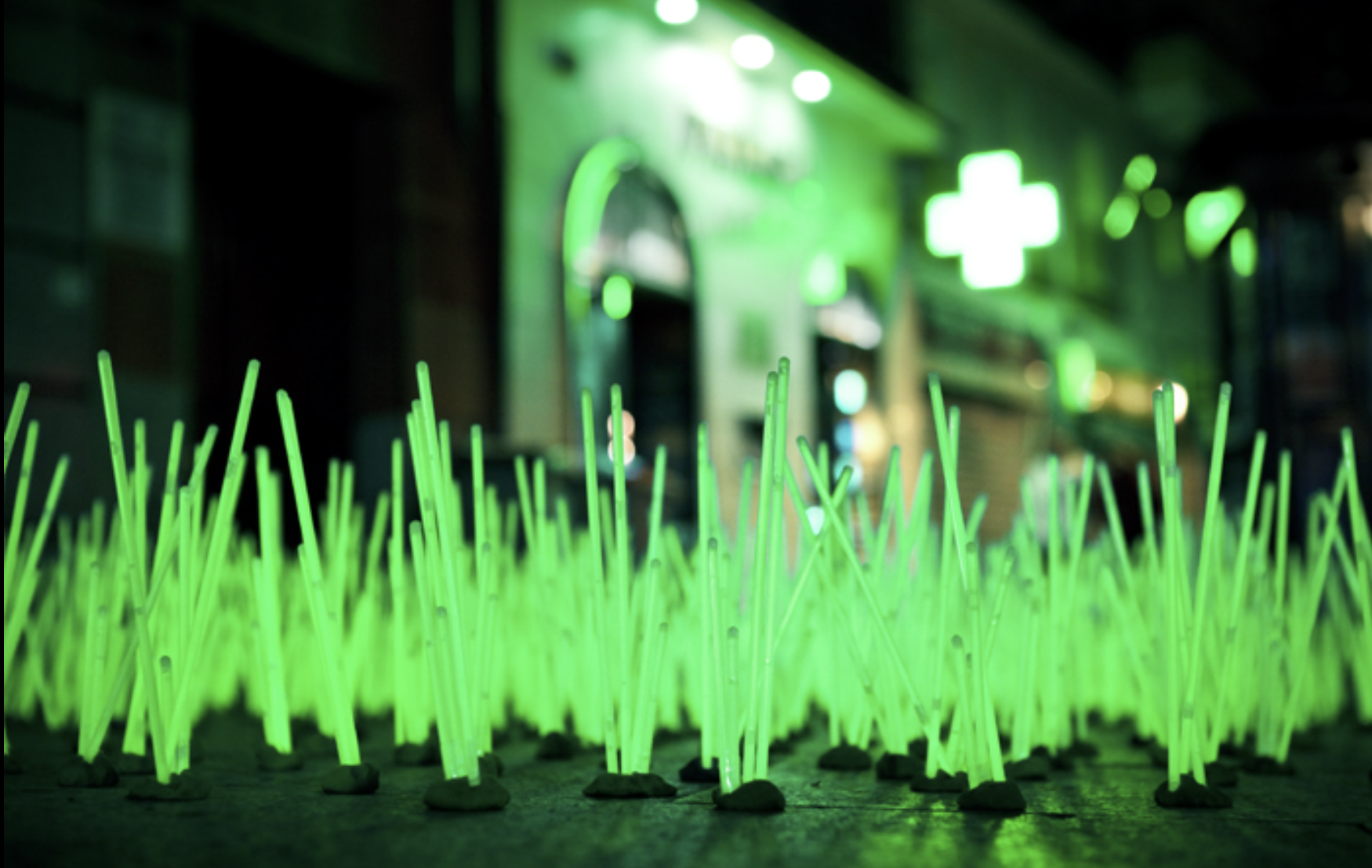
luzinterruptus installation called “Mutant Weeds” was a concept of creating a fictional scenario in which plants had adapted to the unnatural light. It was a way to create meaning in a "humorous" way without just blasting information to someone about the negative effects of light pollution. Fluorescent materials were used and shaped them to resemble grass, then placed these glowing forms on sidewalks near pharmacies. The result made it appear as though strange plants were growing from the pavement and using the artificial light as a source of energy.
"Of all the environmental pollution that can be found in the city of Madrid, the most evident is light pollution, so much so that in our sky we can never see the Milky Way and hardly any stars. This over illumination is evident to the naked eye at a distance of more than 200 kms and produces a glow that can be seen with a medium-size telescope for more than 700 kms."
The European Union is so careful with issues of environmental pollution, the Dept. of the Environment of the City Council of Madrid rules for illuminated signs, adopted a couple of years ago, changed the rules for pharmacy signs, to allow them to be replaced with much more powerful ones.
So much light emanates from the new crosses that the environment that surrounds each pharmacy, is permanently tinted a deep, vibrant and unnatural green color.
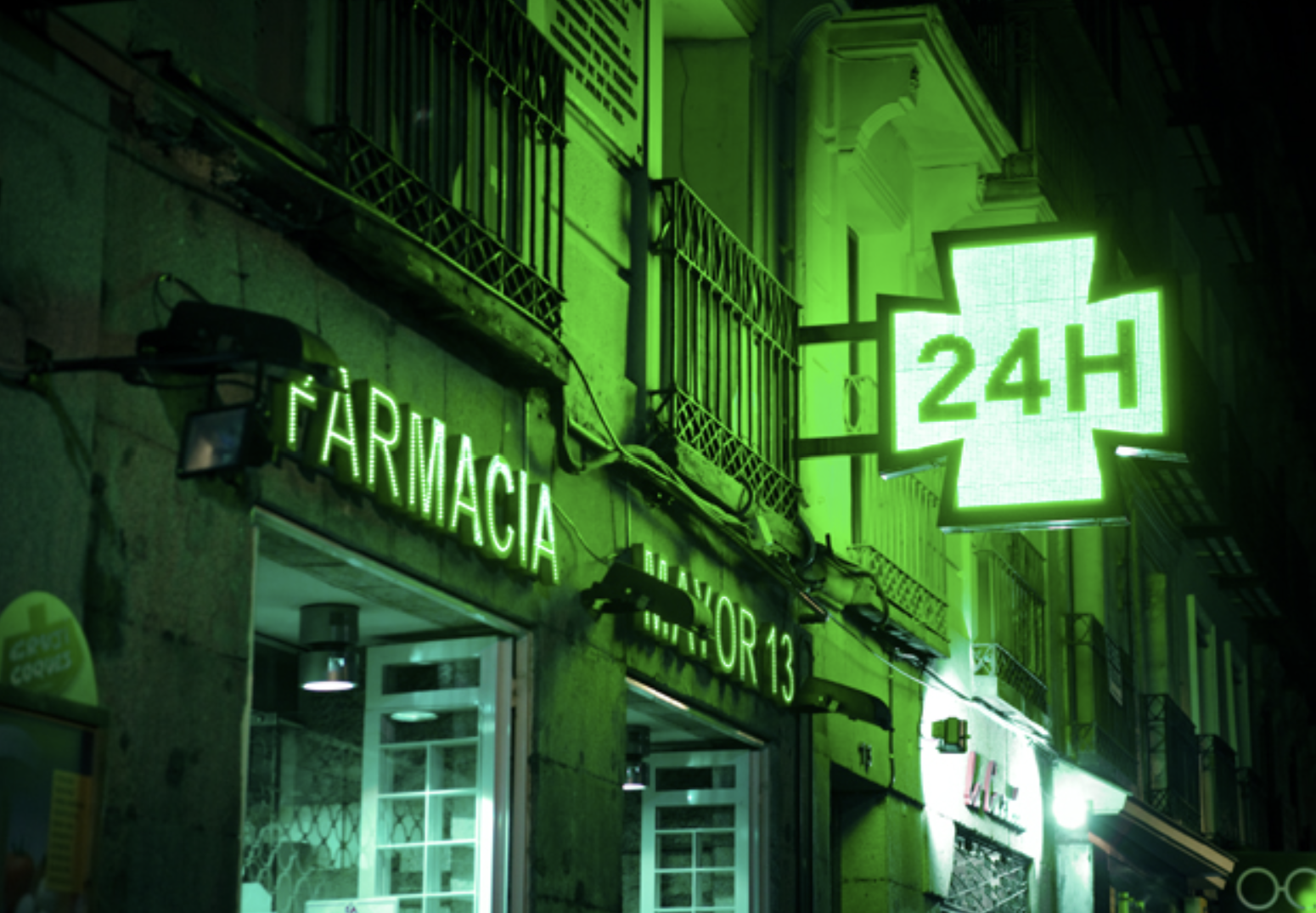
luzinterruptus discuss pharmacy signs as one example of unnecessary artificial lighting. Regulations have been put in place that allow pharmacies to install brighter illuminated signs so that they would be easier for people to recognize. This concept is conflicting because at the same time when you think about it. Wanting to make places accessible to people while these signs serve a useful purpose, their intensity can create problems for the areas surrounding them. This demonstrates how a design choice can be made in good faith to provide information, convenience, accessibility but can also create unintended consequences for the surrounding community.
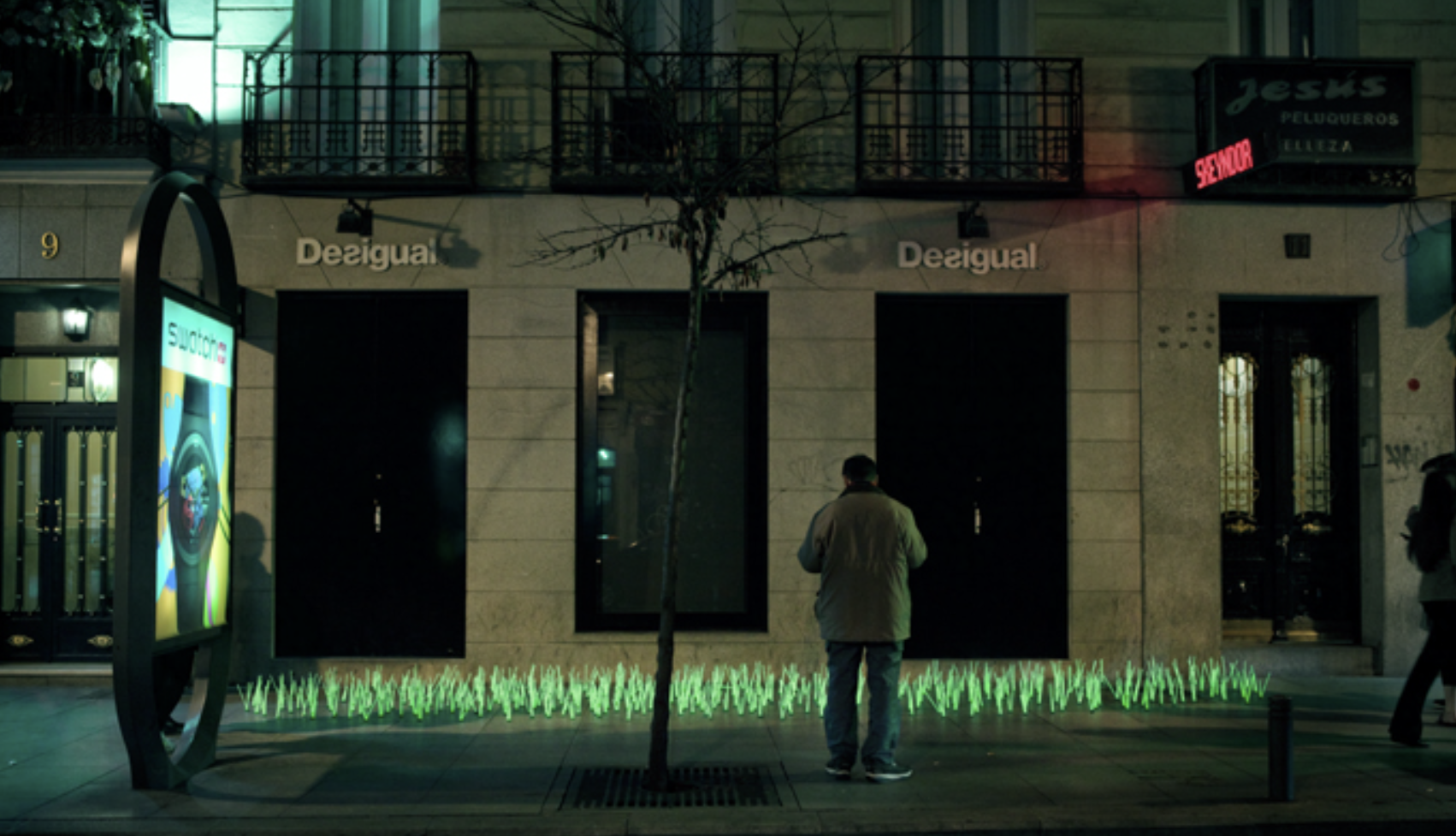
The installation was intentionally playful and unusual, which encouraged people walking through the city to stop and think about why the environment was glowing in the first place. The project demonstrates how art and design can be used to communicate environmental issues in ways that are easier for the public to notice and understand. Instead of presenting people with statistics or simply telling them that light pollution is harmful, the installation created a physical experience that represented the problem. I think this is an important part of design because designers can make the invisible or overlooked issues more noticeable. The “Mutant Weeds” project also shows that environmental design does not always have to involve creating a permanent product or structure.
References
Grammarly. (n.d.). https://www.grammarly.com/
luzinterruptus. (n.d.). Pharmacy herbs / hierbas de botica. https://www.luzinterruptus.com/?p=1057



