
Nature, Preserved
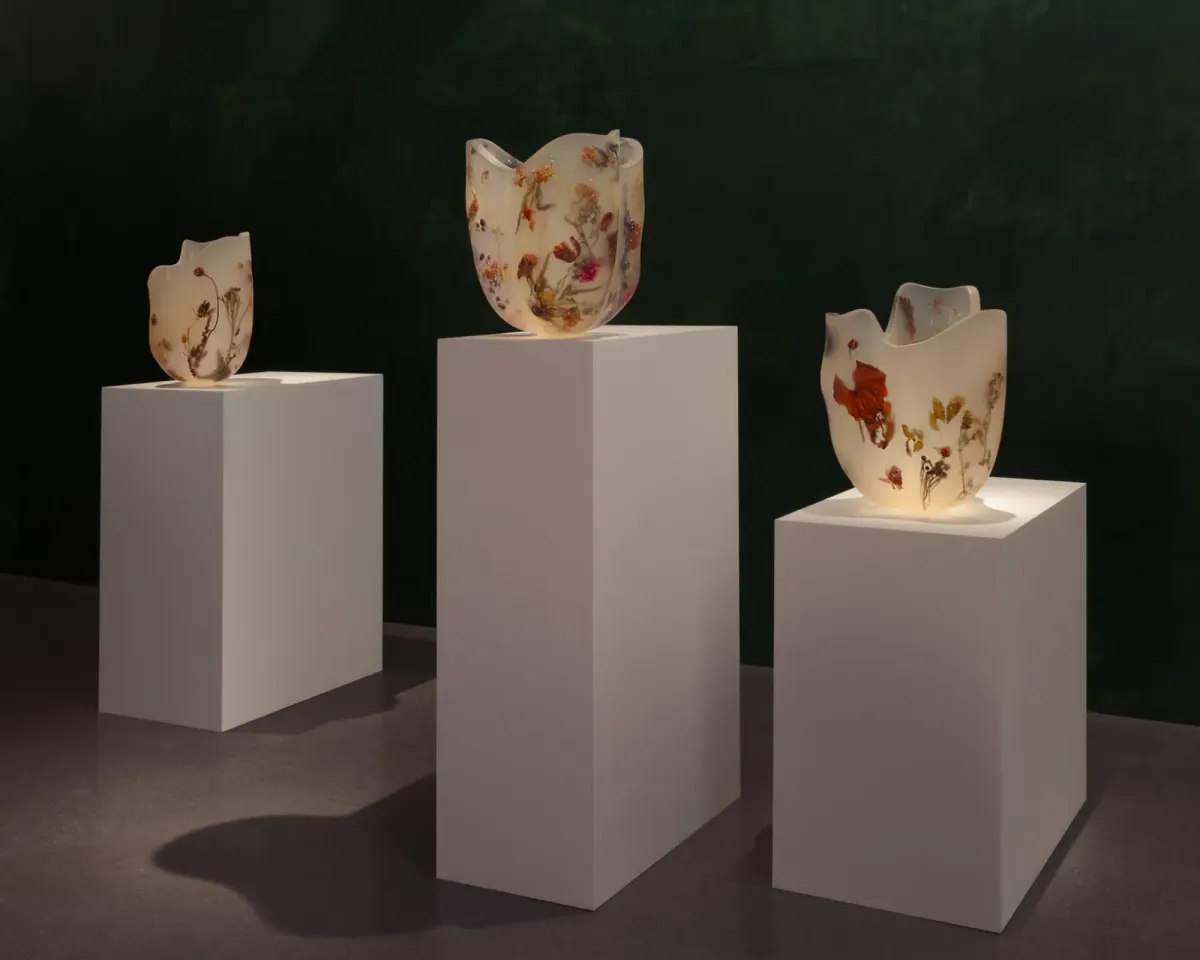
Flowers have been a part of Marcin Rusak’s family for generations, with his family working as florists and selling flowers as a business. But during a visit to London, Rusak encountered a side of the flower industry he had never seen so closely. At the city’s famous flower markets, he was struck by the amount of waste produced by an industry centered around something so beautiful and temporary. Inspired by this, Rusak began creating vases and other works of art by encasing discarded flowers in resin. His work transforms this waste into something beautiful while asking us to consider the flower industry itself and the patterns of consumption that allow it to thrive.
Rusak’s artworks explore the connections between beauty, permanence, and decay, embedding flowers and plants within bio-resin sculptures.
Raised in a family of flower growers, Rusak has long been captivated by the fleeting nature of flowers—how they bloom, wither, and ultimately vanish. This awareness of time and transience informs both his creative process and conceptual explorations. (David, 2025)
What began as an experiment in repurposing floral waste evolved into a signature practice where organic matter is transformed into extraordinary sculptures, furniture pieces and installations that challenge our perceptions of value, consumption, and time, as well as attempt to redefine our relationship with nature—not as something to simply admire, but as something to embrace in all its imperfection and transformation. (David, 2025)
His hybrid approach—merging traditional crafts, industrial techniques, and digital fabrication—results in one-of-a-kind pieces that blur the boundaries between art, design, and material research. (David, 2025)
In this series, Rusak reinvents the idea of the vase, an item inextricably linked with flowers and their display. Conceived as 'time capsules', each bio-resin sculpture contains flowers that resonate with individual and collective memories.
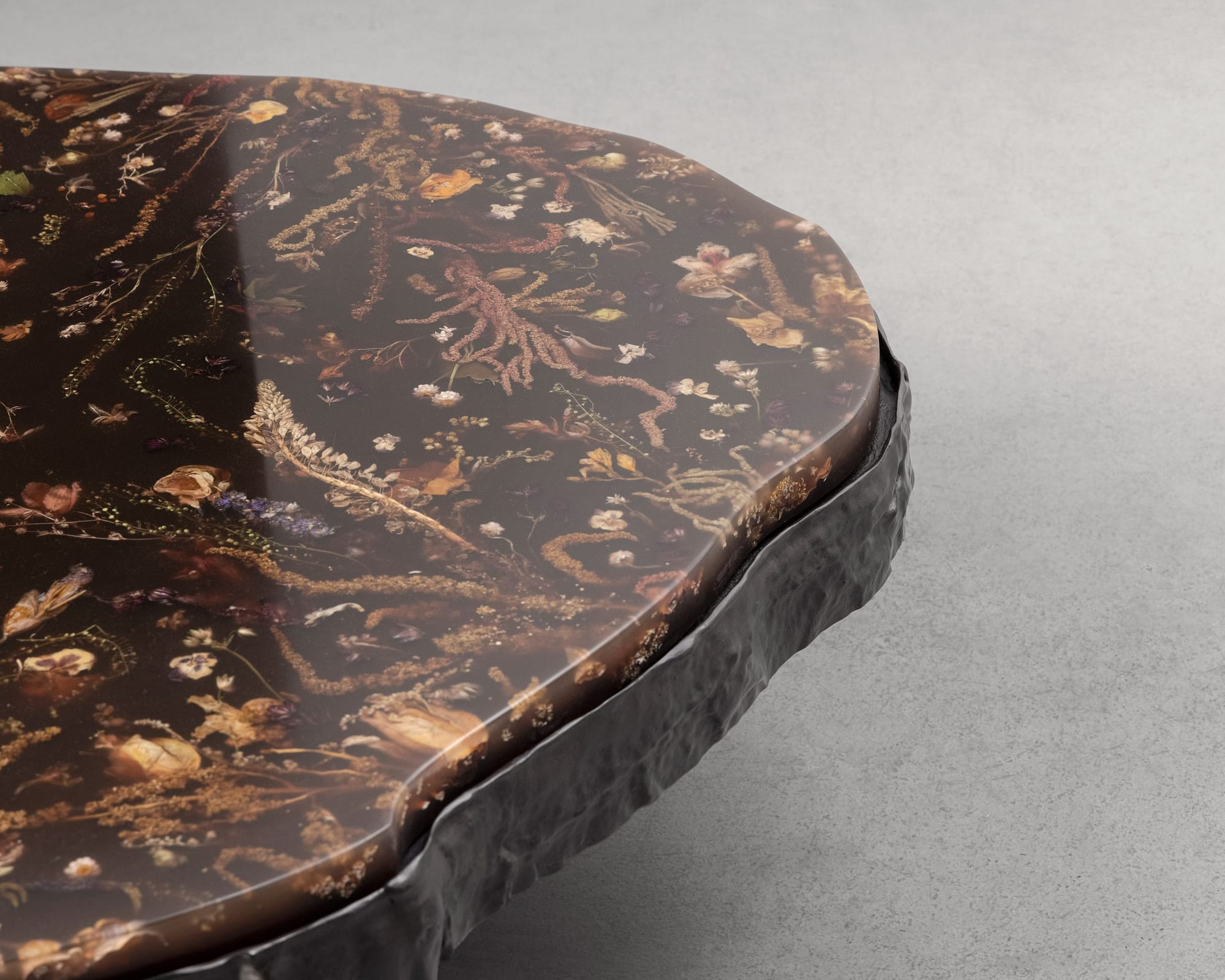
I saw some of his work at the High Museum of Art in Atlanta, Georgia, and Marcin Rusak’s ability to capture the relationship between nature and consumption immediately stood out to me. It is one of those works that makes you stop and reconsider something as ordinary as buying flowers. We cut flowers from the earth, package them beautifully, and give them as gifts knowing that they will eventually wilt and be thrown away. Rusak takes that cycle of beauty, consumption, and waste and preserves it within resin, forcing us to look at what we might otherwise overlook. To me, the work speaks to a larger question about how human consumption transforms even the most natural and beautiful things into products, and the waste that follows.
References
Carpenters. (2023). Marcin Rusak: Vas Florum. Carpenters. https://carpenters.art/exhibitions/vas-florum-paris-2023
David, E. (2025, April 27). A conversation with Marcin Rusak: An alchemist of time, material and memory. Yatzer. https://www.yatzer.com/marcin-rusak



