
Networking in the Woods: When and Why Technology Belongs Outside
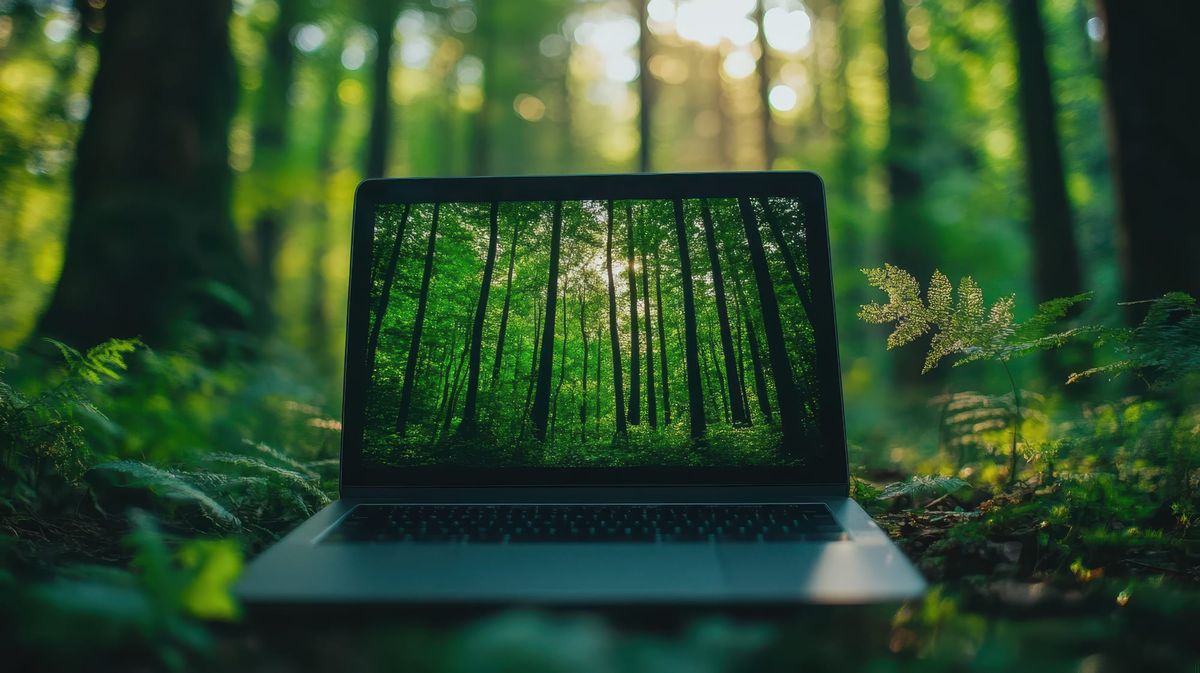
This article explores the relationship between the rapid spread of modern technology and the impact its integration is having on national parks within the United States. While many people hold the belief that nature and screen time are a disingenuous combination, there are actually a surprising number of benefits, ranging from better accessibility to parks and nature to vastly improving the capabilities of environmentalists and their studies.
“The question is not whether technology is good or bad, or appropriate or inappropriate — it’s all those things,” says Gary Machlis, science advisor to the director of the National Park Service. “It can do amazing things, and it can cause unintended consequences and harm. What we’ve gotta do is be very thoughtful.” (Urry, 2021)
“when it comes to collecting usable data, traditional fieldwork like this is slow and often unreliable. You know that saying: “If a tree falls in the forest and no one hears it, does it make a sound?” Well, for a long time, scientists have needed to be in the right place at the right time to be able to hear what’s going on in the forest. But sending field researchers out to count seabirds or listen for frog calls is expensive and limited — a human scientist needs to sleep at some point. A microphone, on the other hand, needs nothing but a fresh set of batteries and an empty memory card. Scientists are beginning to figure out how to use new durable, affordable cameras and microphones to take bigger, more detailed pictures of the species and ecosystems they study" (Urry, 2021)
“Although using audio recordings to track hard-to-spot species isn’t new, the amount of information that companies and scientists can collect is unprecedented. Last year, Conservation Metrics’ largest project collected 83,000 hours of data. “You can’t work with 80,000 hours of data in an Excel file,” Earl says. “You can’t even open that Excel file” (Urry, 2021)
“the computers can chew through 83,000 hours of data and count, say, every time a spotted owl calls versus the number of barred owls that called. The results tell scientists and managers a lot that they might not otherwise ever know about the activity of a certain species, the interactions between species, and the health of the overall ecosystem” (Urry, 2021)
“Embracing new technology could help turn casual visitors into passionate conservationists. Virtual reality is emerging as a powerful way to immerse people in exotic settings, and services like Snapchat and Facebook Live give people an opportunity to share experiences with others around the world" (Urry, 2021)
Review
While many people believe that nature and technology are on opposite sides of an arbitrary spectrum, the introduction of new tech into the realm of outdoors is opening many opportunities for connection. Ecological work is progressing leaps and bounds due to new applications of data processing, and patterns that would have taken thousands of hours to observe are being mapped and assembled in a matter of hours. There are hundreds of applications where these capabilities are relevant, and many of them have the opportunity to produce positive outcomes, such as invasive species surveillance, population estimations, and geographical mapping for national parks to aid visitors and researchers alike.
References
Urry, A. (2021, April 7). If you think technology has no place in the national parks, think again. Grist. https://grist.org/business-technology/if-you-think-technology-has-no-place-in-the-national-parks-think-again/



