
The Future of Car Interiors

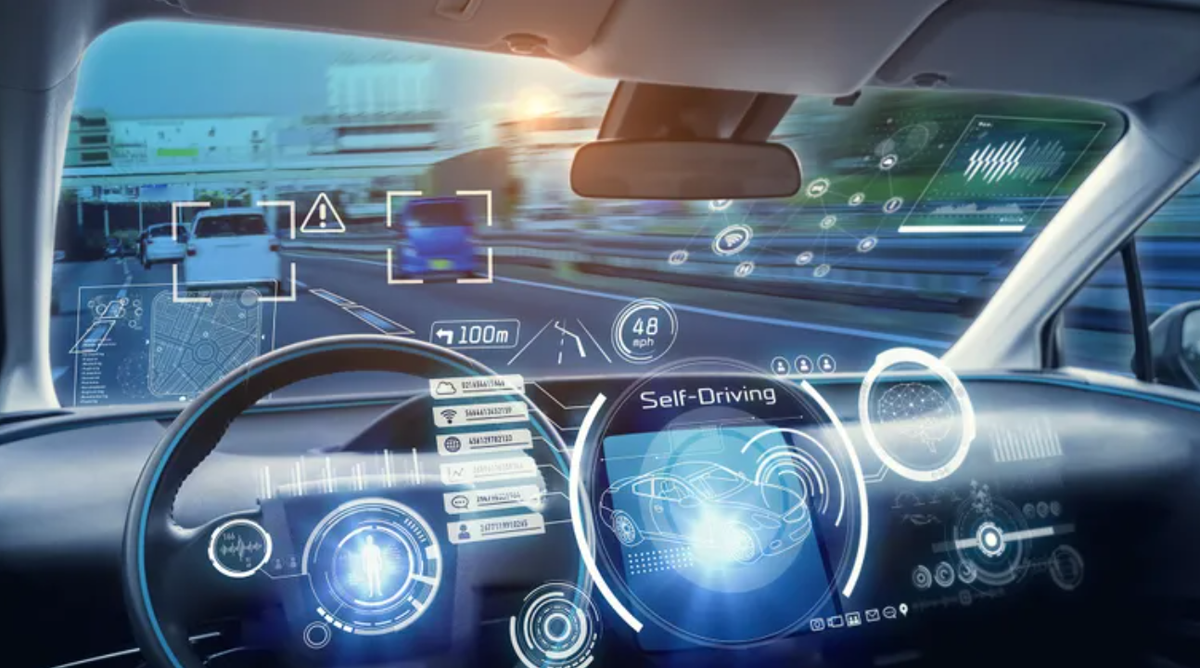
Many companies work with cutting edge technologies to develop features that often do not make it into production vehicles but help showcase the extreme ends of what could be possible with car manufacturing. This article identifies several proposals for the interior of cars that innovate on their interfaces, arrangements, and safety features.
Emerging trends in cockpit design and augmented reality include software-defined cabins where differing surfaces become the display and where personal devices are integrated into the human-machine interface architecture. And augmented reality focus is advancing from floating arrows to explaining what the vehicle sees and intends to do—visualizing lane change intent, emphasizing pedestrians and other obstacles, and guidance through intersections, to either help drivers maneuver or build their trust in what the autonomous system is doing.
Garmin Unified Cabin
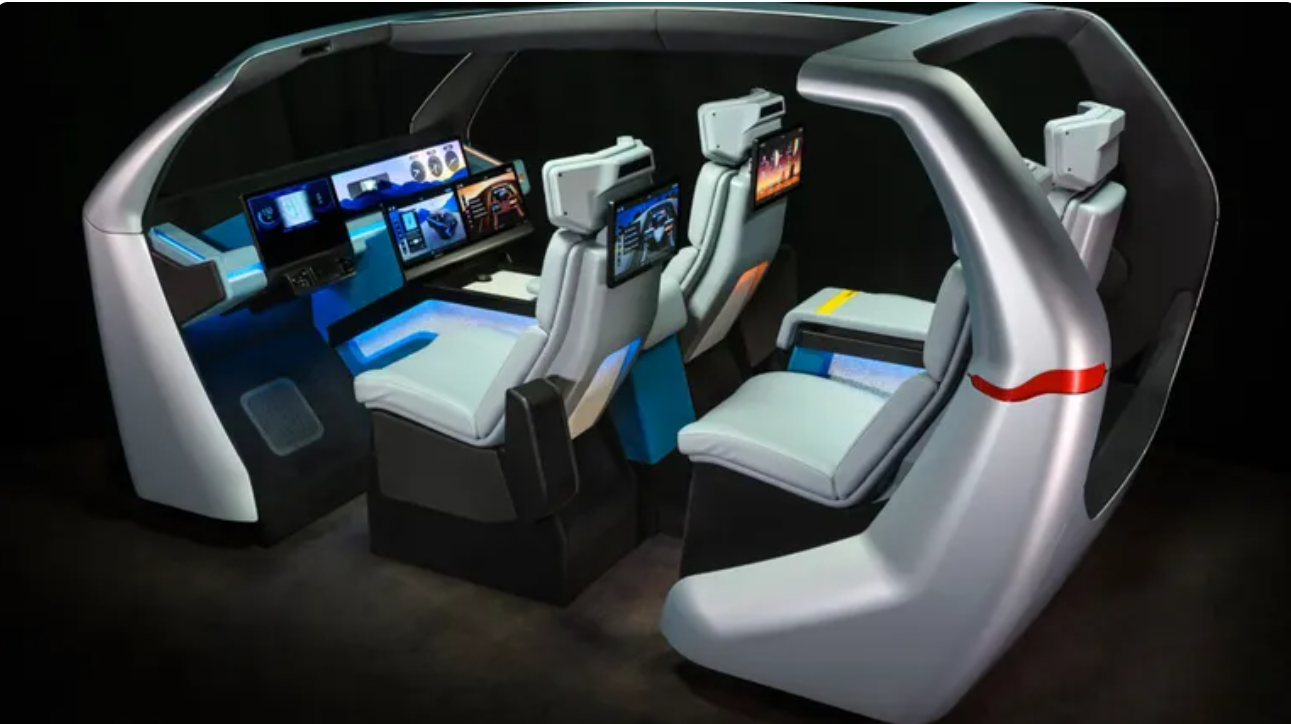
Garmin Unified Cabin powers up to six screens from a single Qualcomm chip, while four ultrawideband antennas can detect what screen a Bluetooth headset is nearest and play audio from that screen. Onboard video chat lets one passenger interrupt programming to communicate directly with another. Garmin also imagines using Meta Neural Band wearables—another brought-in, not built-in technology—to drive gesture control.
Hyundai Mobis Holographic HUD
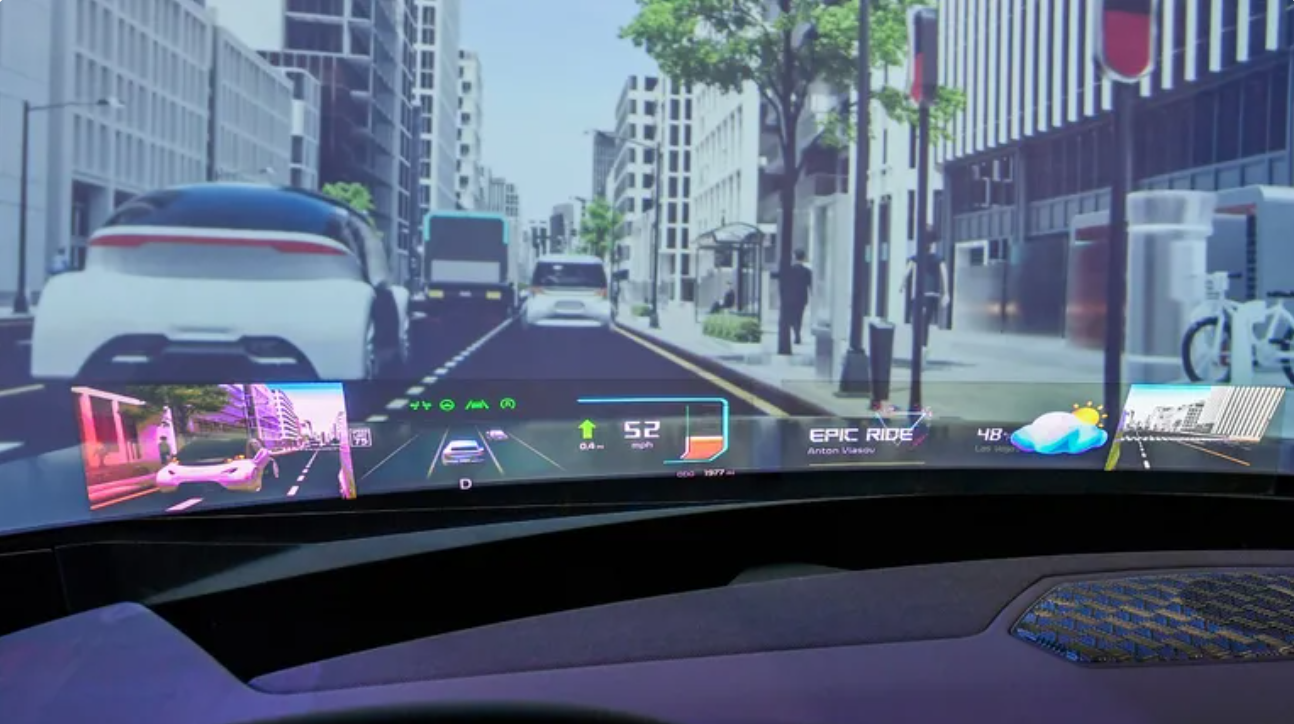
Hyundai Mobis teamed with German optical company Zeiss to develop a holographic optical element (HOE) capable of turning the entire windshield into a high-brightness (10,000 nits) head-up display with separated viewing—the driver sees only useful navigation and vehicle data, while the passenger can enjoy AR/VR content. We’re told to expect production in the 2027–29 timeframe.
Projections and holographic displays are a lot of what these featured concepts include and they pose many benefits to passengers and drivers. Head-up displays exist in very minimal forms in current models of cars but there's still so much information that the driver needs in order to proficiently operate the car.
A piece of information that might be useful to include in a head-up display might be a view of the drivers child or dog maybe in the backseat. Information like this is all in the name of giving the driver the peace of mind that that can easily check levels in speed, fuel, and entertainment systems without putting themselves in danger.
References
Markus, F. (2026, August 4). The Future of Car Interiors: AR Windshields, Smart Cabins, and Screens Everywhere. motortrend.com. https://www.motortrend.com/features/car-interior-technology-future-cars



