
Numbers
Overview
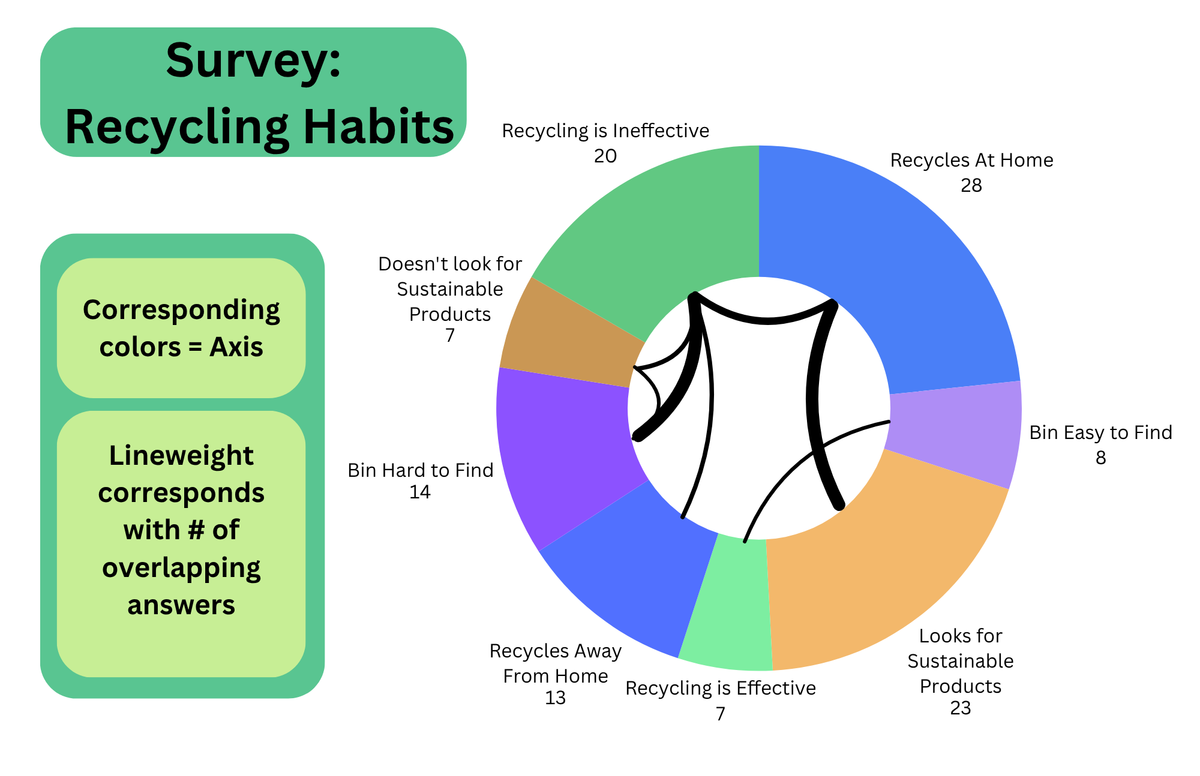
My survery included 32 individual responses, among them, 27 were gathered via in person interviews, and an additional 5 were gathered via online survey. Of the survey results, 87.5% showed atleast some interest in sustainability, and of that 87.5%, another ~71% indicated they expirienced some sort of barrier that prevented further sustainability practices.
Survey Creation
In line with my project’s scope of being intentionally local, I decided for my survey that I wanted to focus on this local aspect. I chose Weinland Park as my area of choice because of not only previously living and working in this area, this area is also home to one of the Local Loops stakeholders in the Neighborhood Design Center.
In the conduction and creation of my survey, I chose to focus on personal recycling habits, especially concerning the issue of knowledge and access to recycling. In the number of stakeholders I conclude exist within circular economies, focusing on the “Individual” as a stakeholder warranted the most attention when it came to survey style primary research.
Sampling and Recruitment Strategies
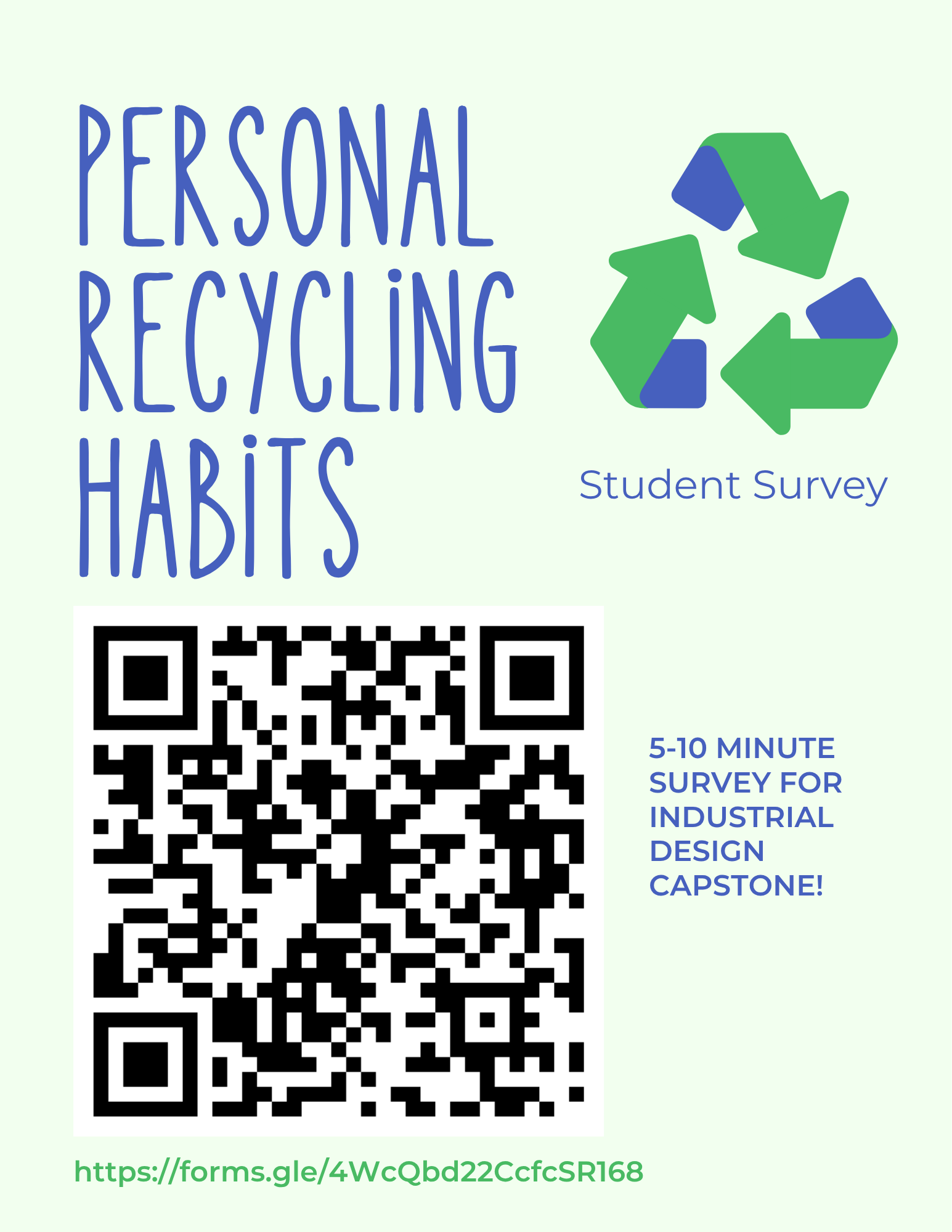
In order to get an effective sample of my population, I decided that I was going to narrow my sample to adults living in the Weinland Park Neighborhood nearby to campus. To recruit and further refine my sample, I recruited the participants by canvassing individuals in the community. On September 9th, 11th, and 16th, I went to Weinland Park. I spoke to individuals on the street as well as in driveways, on porches, etc. The majority of responses were gathered via an in person interview. Additional responses were gathered via online survey. The flier I created with a QR code to the online survey is also pictured below.
Synthesis
From the results, I can synthesize two primary observations.
- Most individuals expressed some sort of vested interest in recycling and sustainability as a whole.
- Of those who have an interest in recycling, most also expressed significant barriers kept them from living as sustainably as they would aspire to.
These findings are in line with secondary research previously conducted in other articles.



