
OP-ED: What Happens When We Lose the Night?
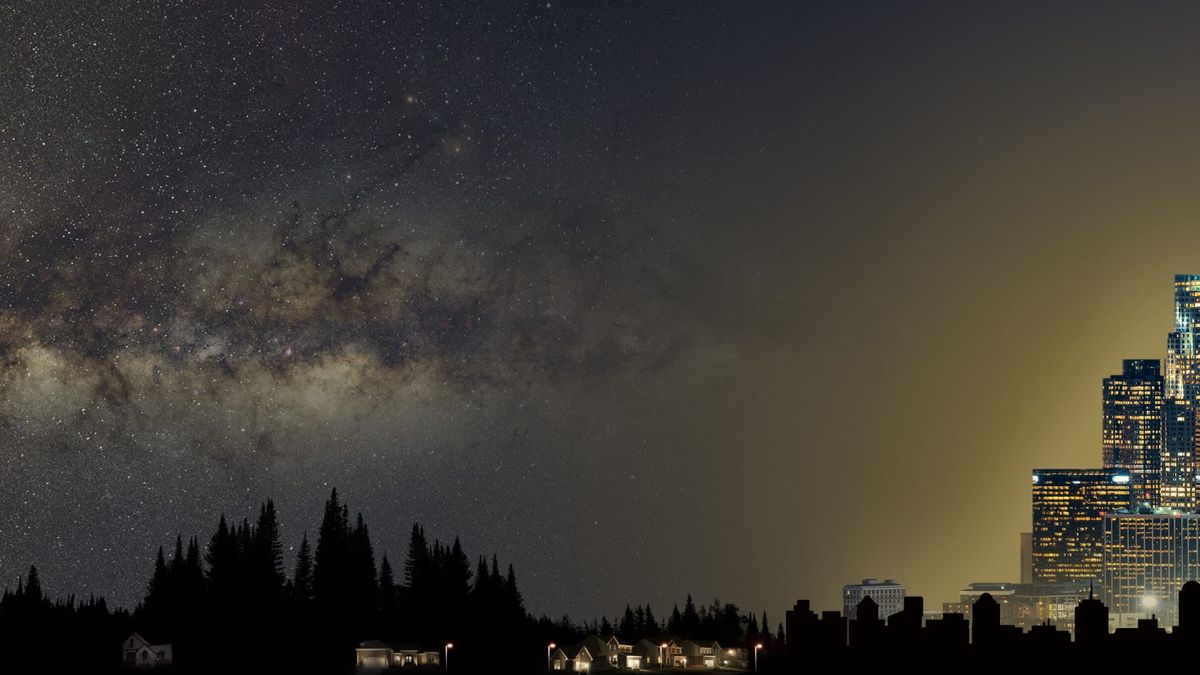
Imagine a night where you look up at the sky and mistake an airplane for a star, or where the glow of city lights makes the Milky Way almost impossible to see. Modern infrastructure has made our lives safer, easier, and more connected, but what happens when that infrastructure begins to overwhelm the natural environments around us? What happens when light is everywhere, all the time, and darkness becomes something we rarely experience?
For my Capstone project I am working with four other Industrial Design students in collaboration with the Ohio Department of Natural Resources (ODNR). With the guidance of Heather Bokman, Sustainability Coordinator for ODNR Parks and Watercraft, and Tracey Coe, Clean Marina Coordinator for the Ohio River Basin, we began exploring sustainability challenges within Ohio’s public parks. We were introduced to invasive species prevention and the Dark Sky initiative.
My goal is to explore how design can create a relationship between people and the nighttime environment rather than treating them as competing needs. Through my research, conversations, and surveying I can start identifying opportunities where design can help people experience darkness of Ohio’s parks without taking it away.
Our research traveled over multiple different themes such as Arts & Lifestyle, Business, Science & Technology, and Special Interest. Each of these areas allowed us to explore a wide range of possibilities to help us become knowledgeable and think about possible concepts.
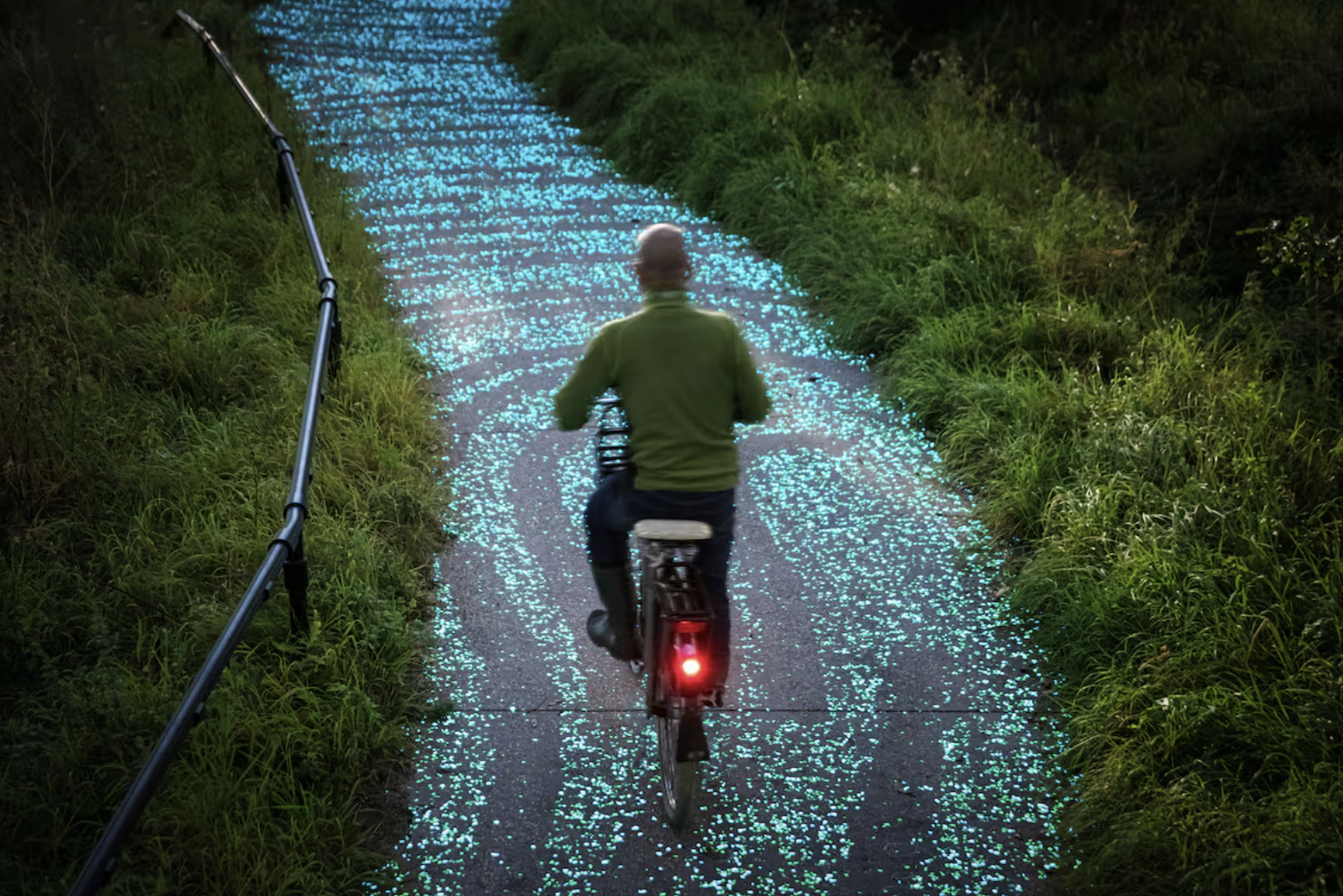
When I was first introduced to the project, I couldn’t stop thinking about glow-in-the-dark and bioluminescence applications. I began thinking about natural occurrences, such as Puerto Rico’s bioluminescent bays, that have these living organisms that emit blue light when disturbed. As I explored this topic further I found two articles, “Starling Glow Project” and “A Visit to Nuenen, the Village in the Netherlands Where Van Gogh Began to See the Light” by Use Lahoz, that explore how photoluminescent materials can create unique nighttime pathways without traditional electric lighting. These examples sparked my interest in how glow could be used to create safer and more immersive experiences while still preserving the natural darkness of the environment.
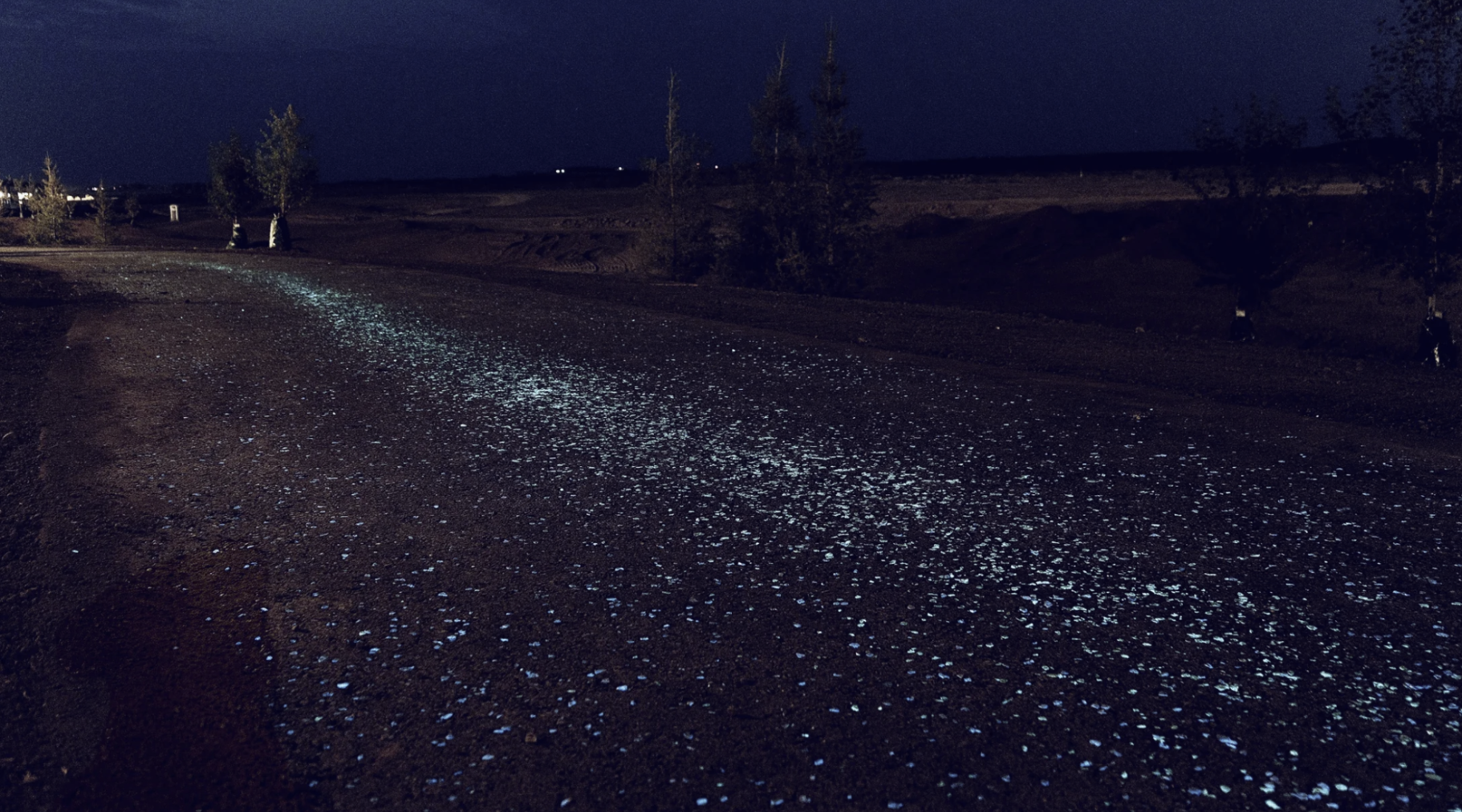
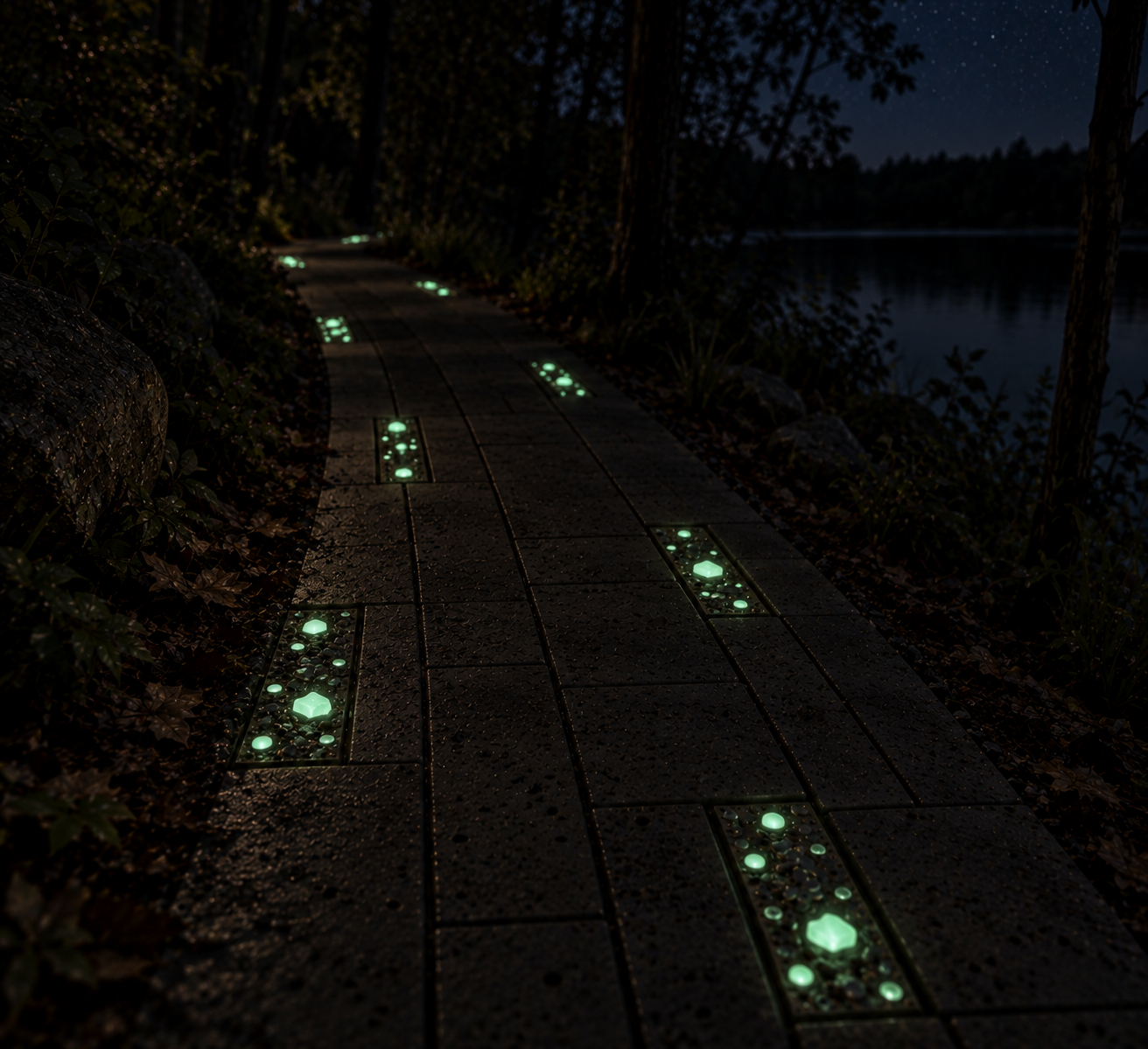
Projects like the Starling Glow Project and Van Gogh-Roosegaarde Path use glowing stones that charge during the day and provide subtle illumination at night. These pathways offer direction and a sense of safety while preserving the darkness and atmosphere of the surrounding environment. More than simply lighting a path by a new streetlight, these designs create curiosity, immersion, and a stronger connection to nature. This research shows how glow could help visitors navigate and feel safety without flooding the surrounding environment with excessive artificial light.
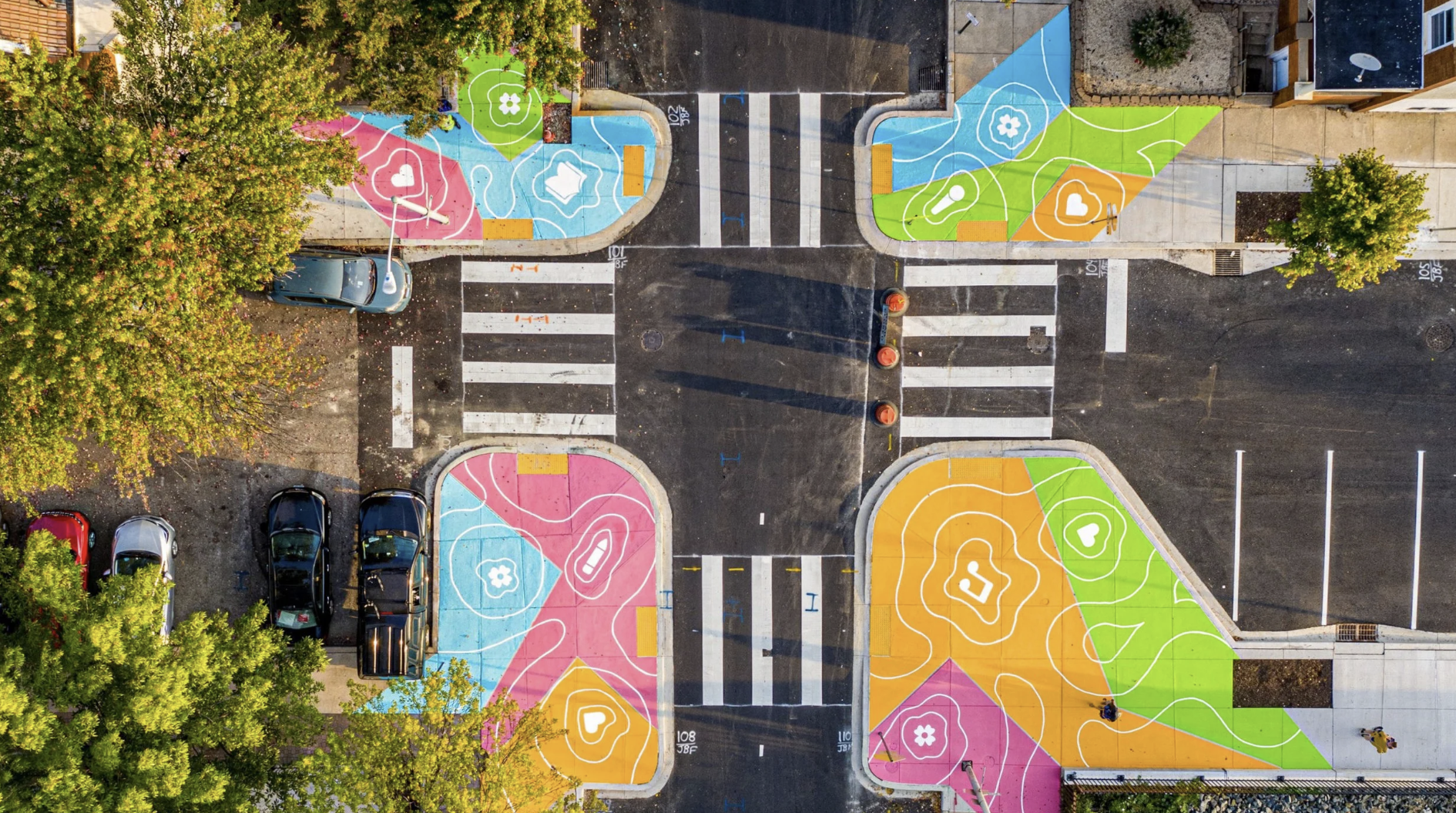
When looking at my Art and Lifestyle section I wanted to try to find installations that help bring the community together. ODNR has many different events and activities that they provide to the public for free such as lessons, cleaning ups, and activities. When researching the article “Tactical Urbanism in Baltimore Yields Safer Streets, Inspiring Art” by Ben Abramson talks about how small changes to streets and sidewalks can make an area safer and more enjoyable. Artist and designer Graham Coreil-Allen uses art to paint street corners to help make the community feel more connected to their surroundings. His projects show that a space does not always need to be completely rebuilt to make a difference.
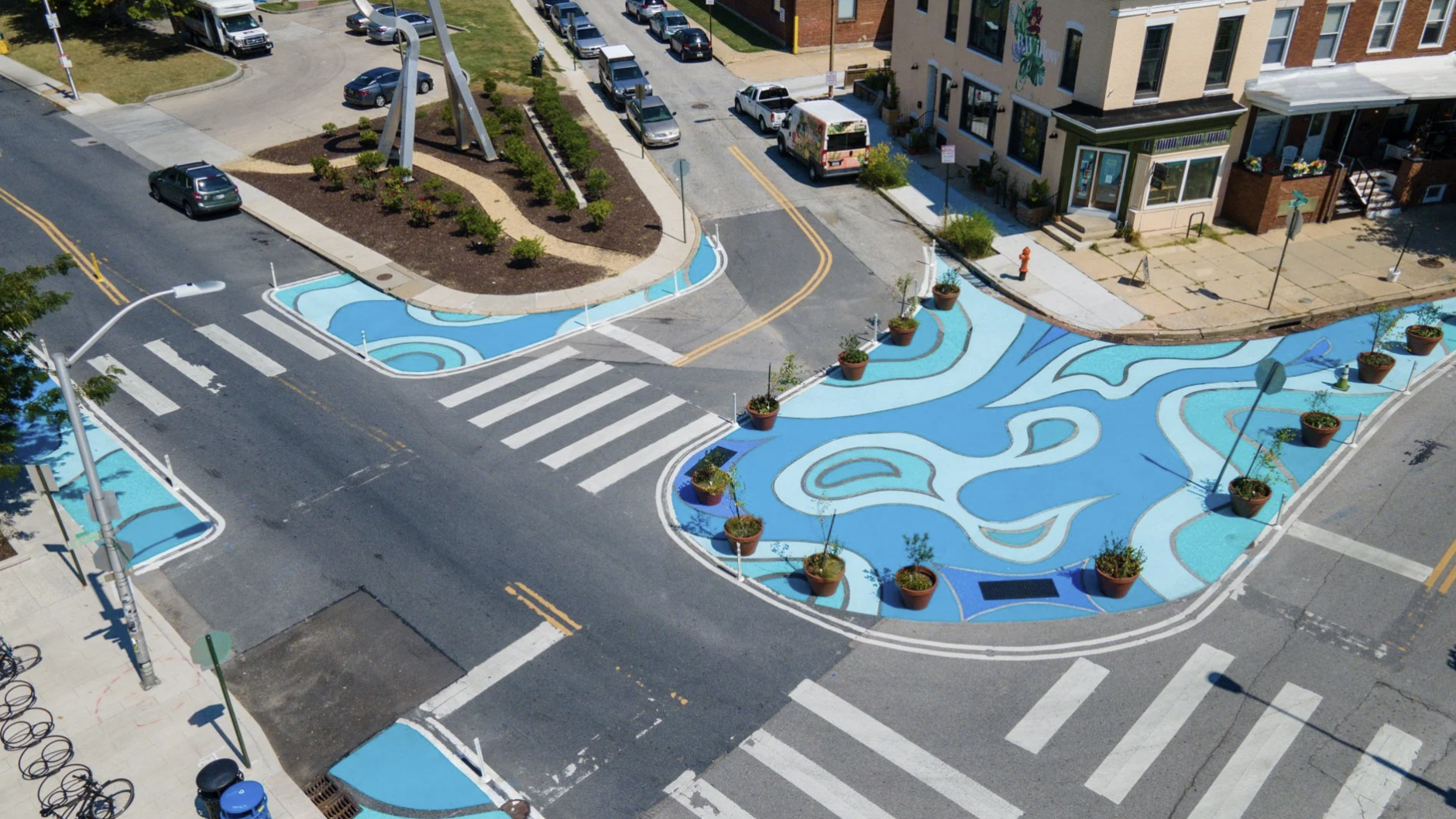
This made me think about how we could invite park visitors and local communities to help create artwork or messages. These designs could teach and encourage visitors to pay more attention to the environment. We could also explore different colors, shapes, and textures that might still be visible at night without needing bright lights.
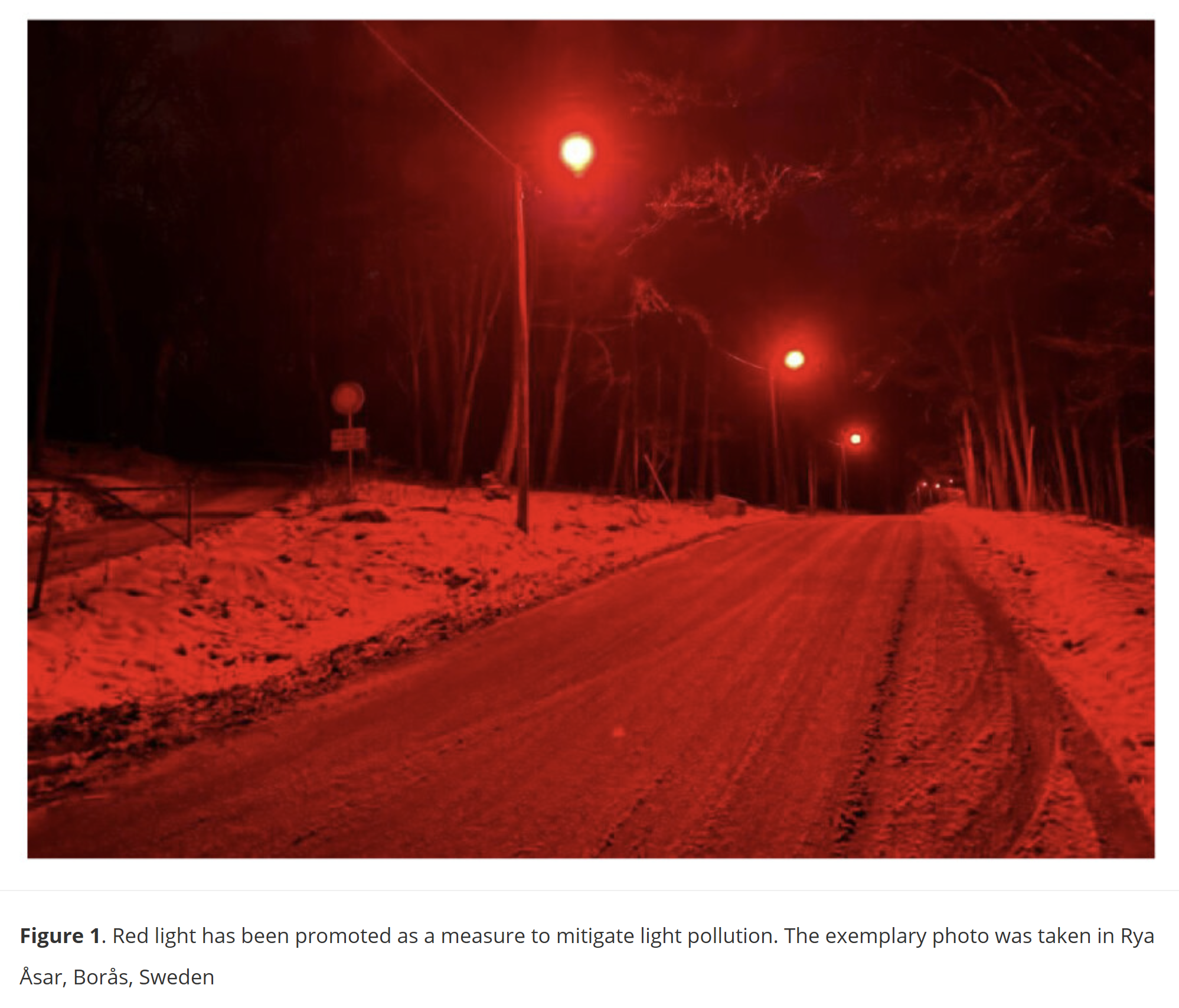
Within my Science and Technology section I wanted to explore how different colors of lighting could be more friendly for the environment. One of the topics that Heather and Tracey went over was how different color lights are better to use than others. The article “Research note: Red light to mitigate light pollution: Is it possible to balance functionality and ecological impact?” by D. Durmus, A. K. Jägerbrand, and M. N. Tengelin looks at whether red light could be used to reduce light pollution while still giving people enough light to see at night.
Red light is interesting because it spreads less through the atmosphere than white light, which could help reduce the glow we see in the night sky. However, the article explains that red light can affect specific different species, including bats, insects, birds and people too. Red illumination does not show colors as clearly as white light, which can make it harder to recognize objects, faces, and details around you. This made me think about the balance we need to create in a park between limited light and peoples comfort and safety.
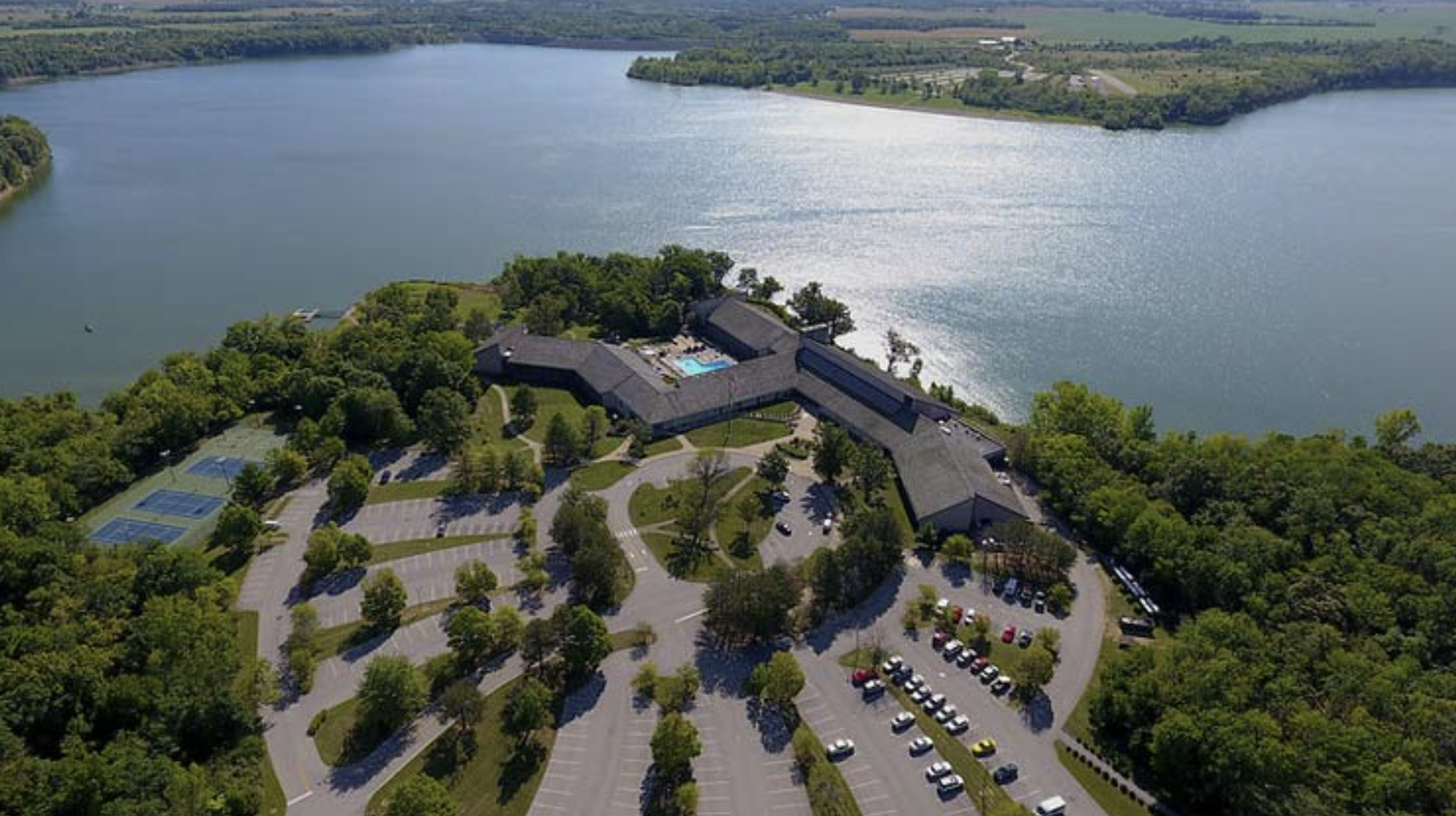
My conversation with Summer, a naturalist at Deer Creek State Park, gave me a more personal understanding of what the Dark Sky initiative looks like from inside a state park. One of my biggest findings was that supporting dark skies is not necessarily the difficult part, actually making changes is. Summer explained that even if everyone is on board, changes can be limited due to funding, management decisions, and existing infrastructure. This made me realize that my design needs to be realistic for parks to purchase, install, and maintain.
Another important conversation we had was the balance between darkness and safety. Summer explained that simply turning lights off at a certain time could be a problem because visitors may still be arriving or leaving. She talked about targeting smaller groups who might care most about protecting dark skies. This made me think about how a design could connect dark skies to something visitors already value instead of making it feel like another rule they have to follow.
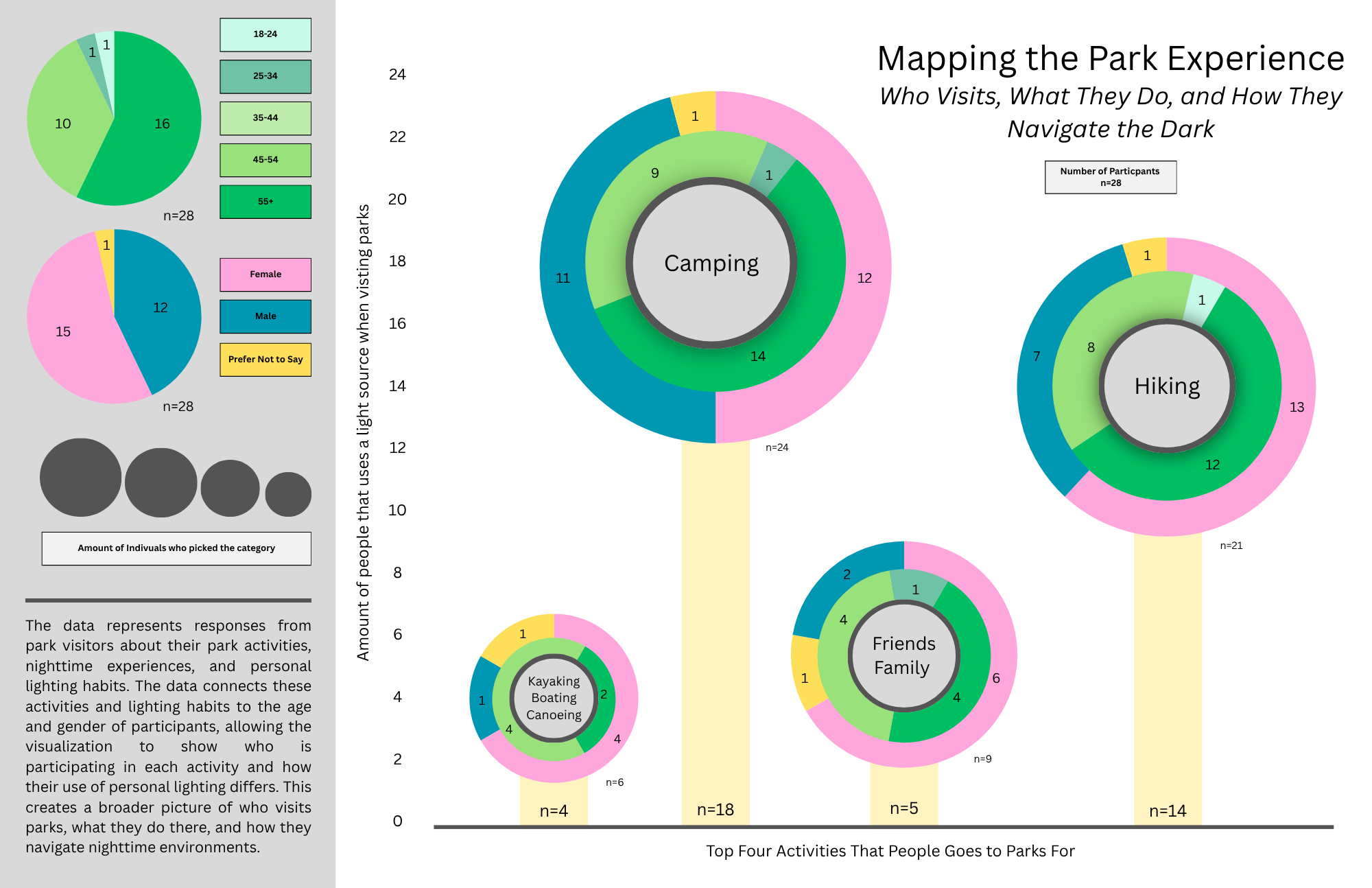
I attended seven different events across Ohio State Parks as a part of my recruitment process for my survey. Unfortunately, none of the intended park goers attended the events I visited, making in-person sampling/recruitment process difficult. To still outreach to park visitors I shared my survey in Ohio State Park Facebook groups. I posted the survey in six groups and received 28 responses.
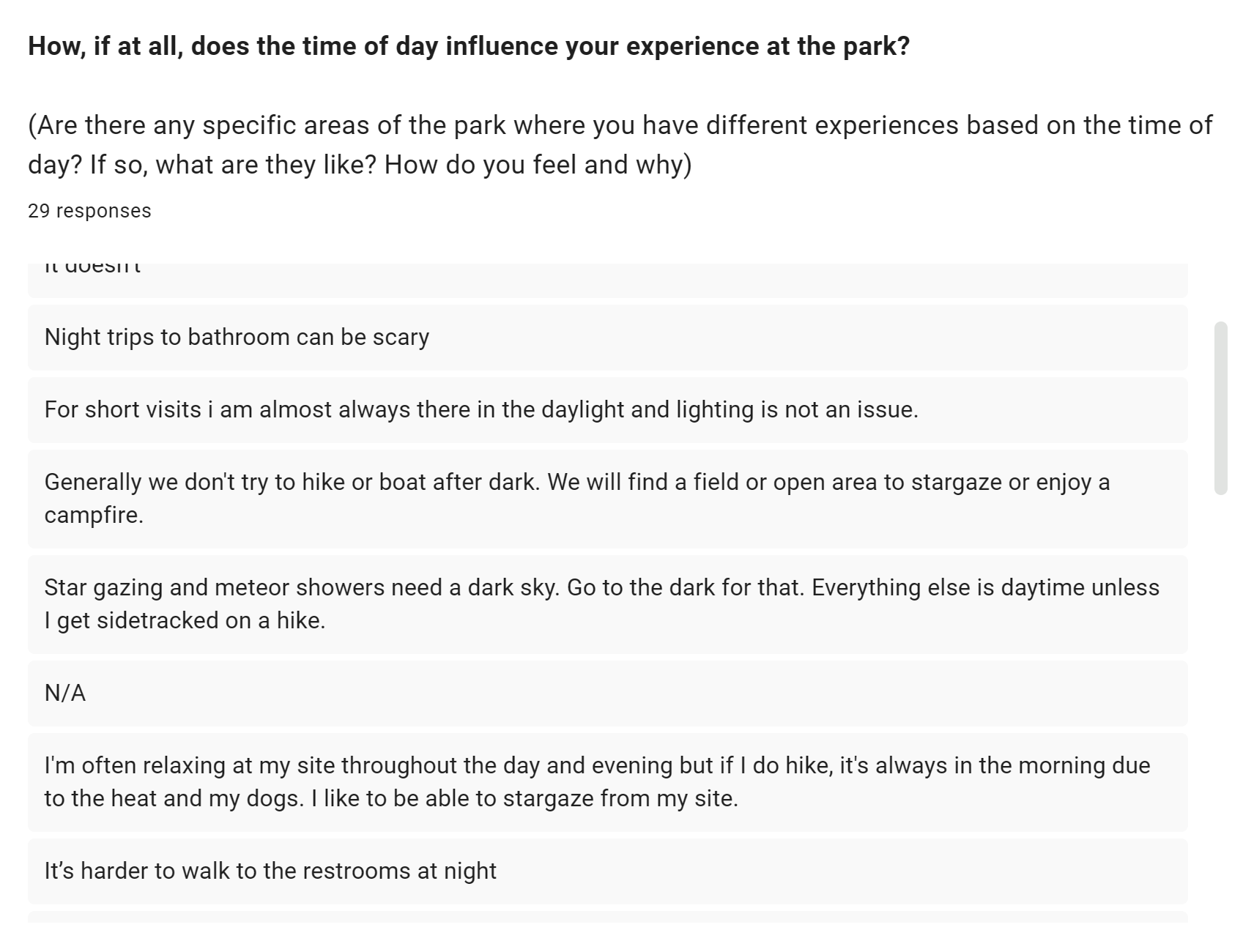
One question I asked that provided valuable information was, “How, if at all, does the time of day influence your experience at the park?” This question allowed participants to describe how their experiences of the same park space can change depending on the time of day.
"Honestly, it's not the park that changes. Light pollution is real, and as someone who uses outdoor space to reset from the unnatural cycles of modern society, having the ill effects of modern society seep into the experience is frustrating. I spent much of my youth exploring the wilderness of the Northeast, and on recent long outings there, I have found the light pollution to be increasing."
Out of the 28 survey responses, I received 12 participants that provided their contact information when asked if they would be interested in connecting with me further for follow-up questions or participating in a co-design group.
Google Forms: Thoughts on Dark Sky (Survey)
Excel: Thoughts on Dark Sky (Responses)
When I first thought about how to make park visitors feel safer at night without adding traditional lighting infrastructure, I became interested in bioluminescent and glow-in-the-dark materials. After Heather and Tracey discussed how hydrilla is affecting Ohio’s lakes and reservoirs, I began thinking about how this invasive plant could be repurposed instead of simply being removed and treated as waste.
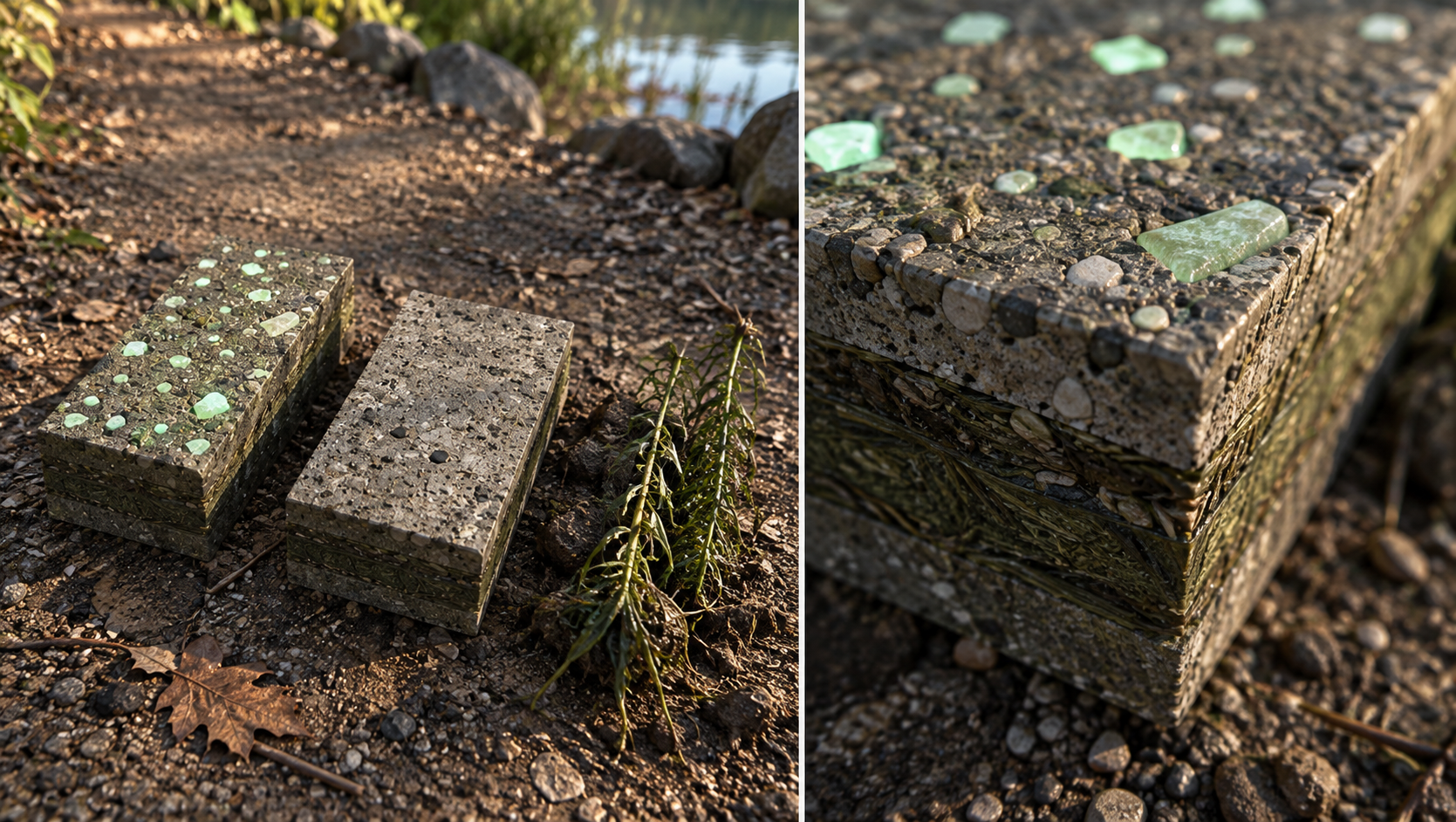
My concept is to dry hydrilla and incorporate it into a cement-based brick (Hideo, 2003), then add photoluminescent materials such as glow powders, paints, or stones that absorb sunlight during the day and slowly glow as the sun sets (Glow Shop, n.d.). These bricks could be placed along trails, crosswalks, and around park facilities to create subtle visual guidance for visitors without relying on traditional light fixtures. Which relates to luzinterruptus interesting installations called mutant weeds. The goal is to provide enough visibility to help people understand where they are going while preserving the natural darkness of the environment.
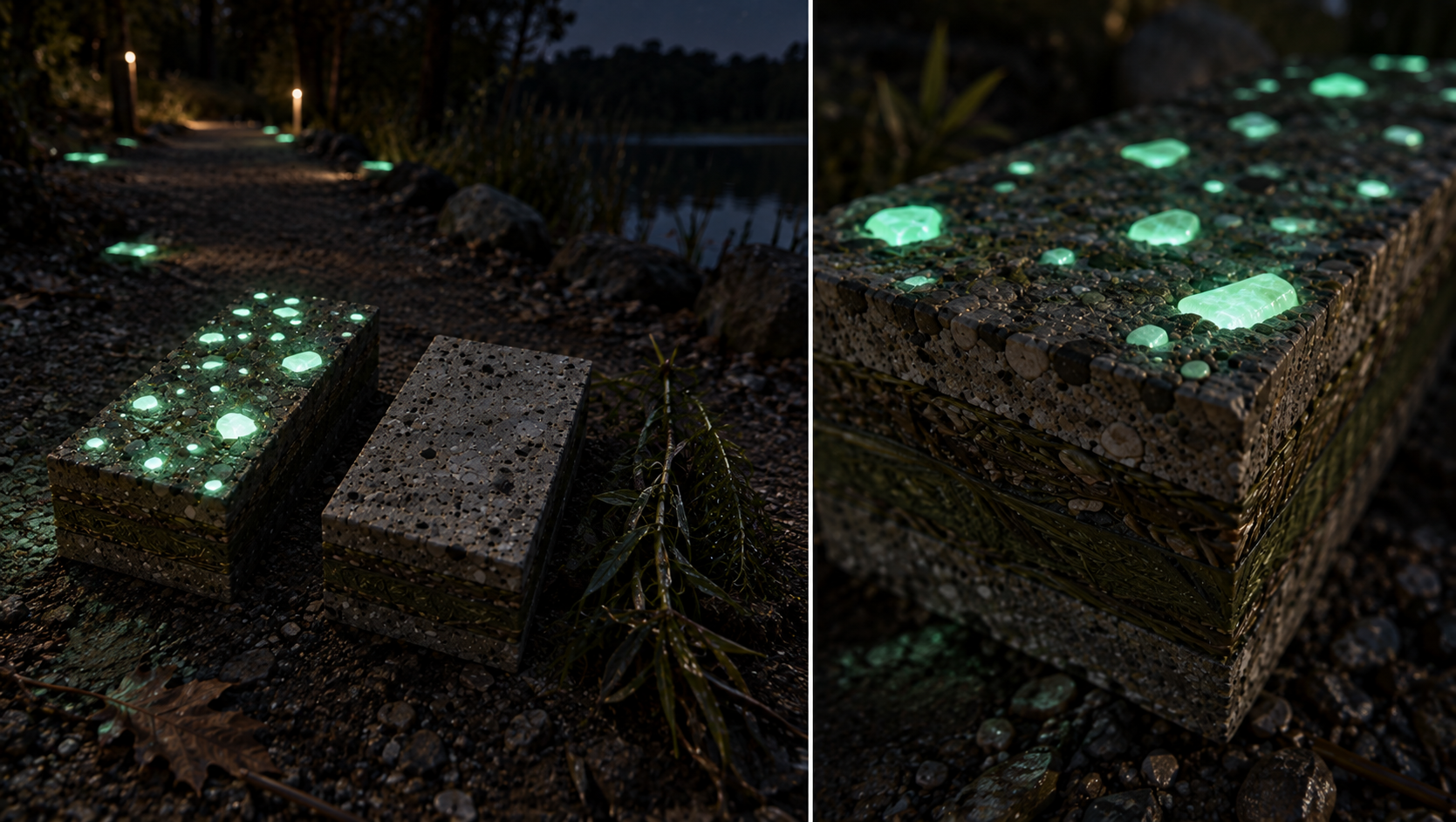
This concept could potentially create a connection between two different problems. Reducing the amount of hydrilla entering waterways while creating a material that supports nighttime park experiences. However, there are still important questions that need to be tested, especially the durability of the brick. Adding dried plant material could create air pockets or weaken the cement, making it more vulnerable when people are constantly walking over it, moisture, erosion, etc. As well as I would also need to make sure the hydrilla is completely dried and safely processed so that pieces of the plant could not escape from the brick and spread back into nearby waterways which would reinfect them.
Another concept came from conversations with Summer, who mentioned that state parks often have small shops where visitors can purchase necessities. She also brought up how difficult it can be for people to break away from familiar routines, which made me think about how a design could work with behaviors visitors already have instead of asking them to completely change.

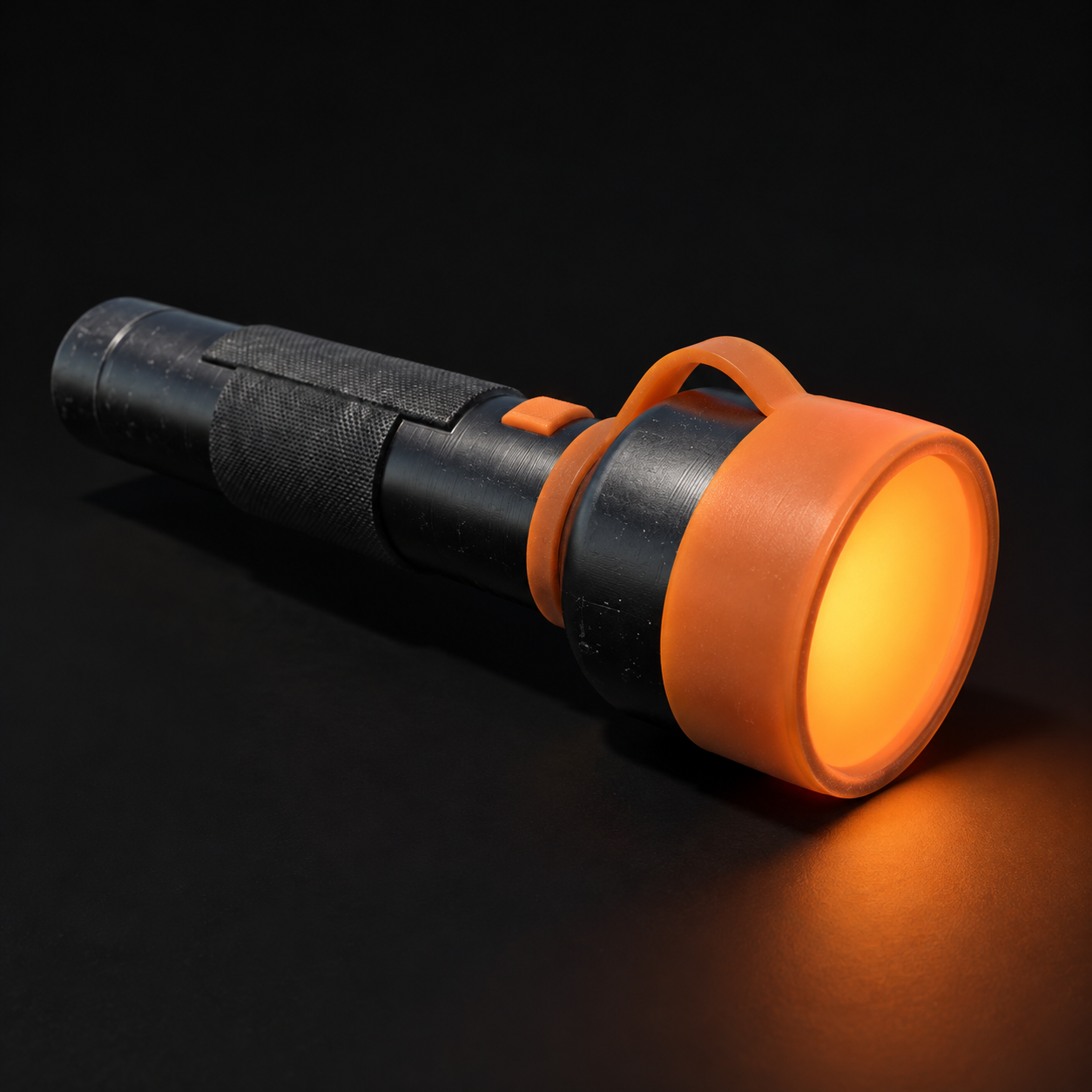
While trying to recruit participants for my survey, I observed many RV campers walking around dark campgrounds using handheld flashlights. My survey supported this observation, with 21 out of 28 participants reporting that they carry a personal flashlight when visiting state parks. Instead of creating an entirely new lighting product, I wanted to modify something visitors already own. My concept is an orange silicone cap that stretches over the head of different flashlights and changes the bright white LED light into a softer amber-orange glow (Flagstaff Dark Skies Coalition, n.d.). The cap could be sold in park shops, making it an easy and accessible addition to visitors’ existing routines. This could provide a more intentional form of personal lighting while reducing bright white light in dark park environments (Shiller, 2024).
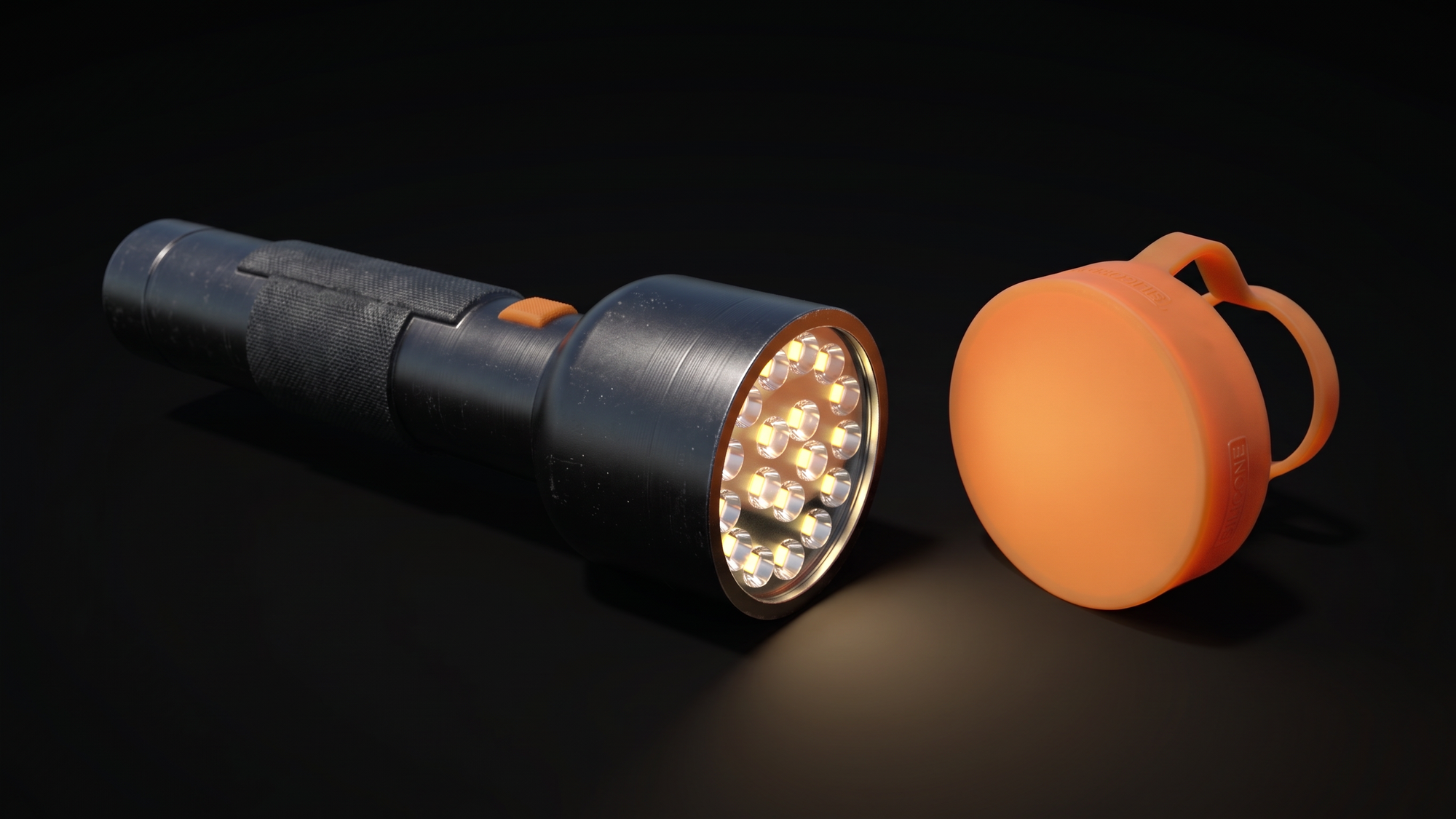
However, I still need to test how durable and stretchy the silicone would be and whether one cap could fit a range of flashlight sizes or if multiple sizes would be necessary. I also need to determine how much visibility the orange light provides because research on reddish lighting suggests that it can make it more difficult to see certain details in low-light conditions (Durmus et al., 2024). The final design would need to balance visitor safety and visibility with the goal of reducing the impact of artificial light on the nighttime environment.
CONCLUSIONS
At the beginning of my research, I asked what happens when modern infrastructure becomes so common that we no longer notice what we are losing. Through my research, I realized that the problem is not just that we can no longer see as many stars. We are slowly changing what nighttime means. My research showed me that simply adding more lights, changing the color of the lights, or turning them off completely does not solve the problem. I want to explore solutions that use only what is necessary to guide visitors, such as subtle glow, visual cues, and interactive experiences. If visitors can experience the night sky, feel connected to their surroundings, and understand what is being protected they may be more willing to care about it. The goal is not to make the night brighter. It is to make sure we do not lose the night altogether.
References
Abramson, B. (2023, June 27). Tactical urbanism in Baltimore yields safer streets, inspiring art. Strong Towns Archive. https://archive.strongtowns.org/journal/2023/6/27/tactical-urbanism-in-baltimore-yields-safer-streets-inspiring-art
Bulb, Dr. (2025, July 31). Rising light pollution hinders our cosmic research. Dr. Bulb. https://www.drbulb.com/rising-light-pollution-hinders-our-cosmic-research/
Durmus, D., Jägerbrand, A., & Tengelin, M. (2024, January 20). Research note: Red light to mitigate light pollution: Is it possible to balance functionality and ecological impact? - D durmus, AK Jägerbrand, MN Tengelin, 2024. Sage Journals. https://journals.sagepub.com/doi/10.1177/14771535231225362
Glow in the Dark Powder & Glow Paint Superstore. Glow in the Dark Powder | Glow in the Dark Paint | Glow Shop. (n.d.). https://www.technoglowproducts.com/
Grammarly. (n.d.). https://www.grammarly.com/
Izumida, Hideo. (2003). Japanese Clay-Walled House; Materials, Artisans and Techniques. 日本の土壁住居:材料、職人、技術. 10.13140/RG.2.1.1331.5284.
Lahoz, U. (2024, July 15). Una visita a Nuenen, El Pueblo de los países bajos en el que van Gogh empezó a ver La Luz. El País. https://elpais.com/elviajero/escapadas/europa/2024-07-15/una-visita-a-nuenen-el-pueblo-de-los-paises-bajos-en-el-que-van-gogh-empezo-a-ver-la-luz.html
Lamp Spectrum and Light Pollution. Flagstaff Dark Skies Coalition. (n.d.). https://flagstaffdarkskies.org/critical-dark-sky-issues/lamp-spectrum-light-pollution/
luzinterruptus. (n.d.). Pharmacy herbs / hierbas de botica. https://www.luzinterruptus.com/?p=1057
ODNR. (n.d.). Deer Creek Park Lodge. Deer Creek State Park Lodge. https://www.deercreekparklodge.com/
O’Neill, D. (2024, January 31). Light-Emitting Cement. Apeiron Construction. https://apeiron-construction.com/light-emitting-cement/
Porcayo, O. (2017, November 8). ¿Te imaginas transitar por una carretera fosforescente, o no necesitar lámparas en tu casa para iluminar? Un mexicano lo ha hecho posible. Barrio. https://esbarrio.com/news/jose-carlos-rubio-avalos-cemento-luminoso/
Shiller, D. (2024, February 21). Researchers find red lights outdoors for wildlife protection comes with potential risks |. LightNOW. https://www.lightnowblog.com/2024/02/researchers-find-red-lights-outdoors-for-wildlife-protection-comes-with-potential-risks/
Tom, P. (2026, June 2). Starling glow project - 2025 AGTTM glow commercial project honorable mention. Ambient Glow TechnologyTM. https://ambientglowtechnology.com/blogs/projects/starling-glow-project-2025-agt-glow-commercial-project-honorable-mention



