
Trash Has a Type
Trash never stops moving.
It moves faster than I expected; conveyor belts carrying an endless stream of plastic, cardboard, and items I can’t fully define. Men in neon-colored Rumpke vests stand beside the belts, sorting through it as it rushes past them like ocean waves. From above, the machines are impossible to comprehend. Trash disappears into one machine and comes out somewhere else. Standing there, you can’t help but to feel small.
At the end of the wall, the chaos becomes organized. What looked like an overwhelming mass of waste a few minutes ago has been divided into clean, neat, usable streams.
But at what point does it stop being waste? After we sort it? Recycle it? Or is something considered waste simply because we haven’t figured out its value yet?
Marble Plastics
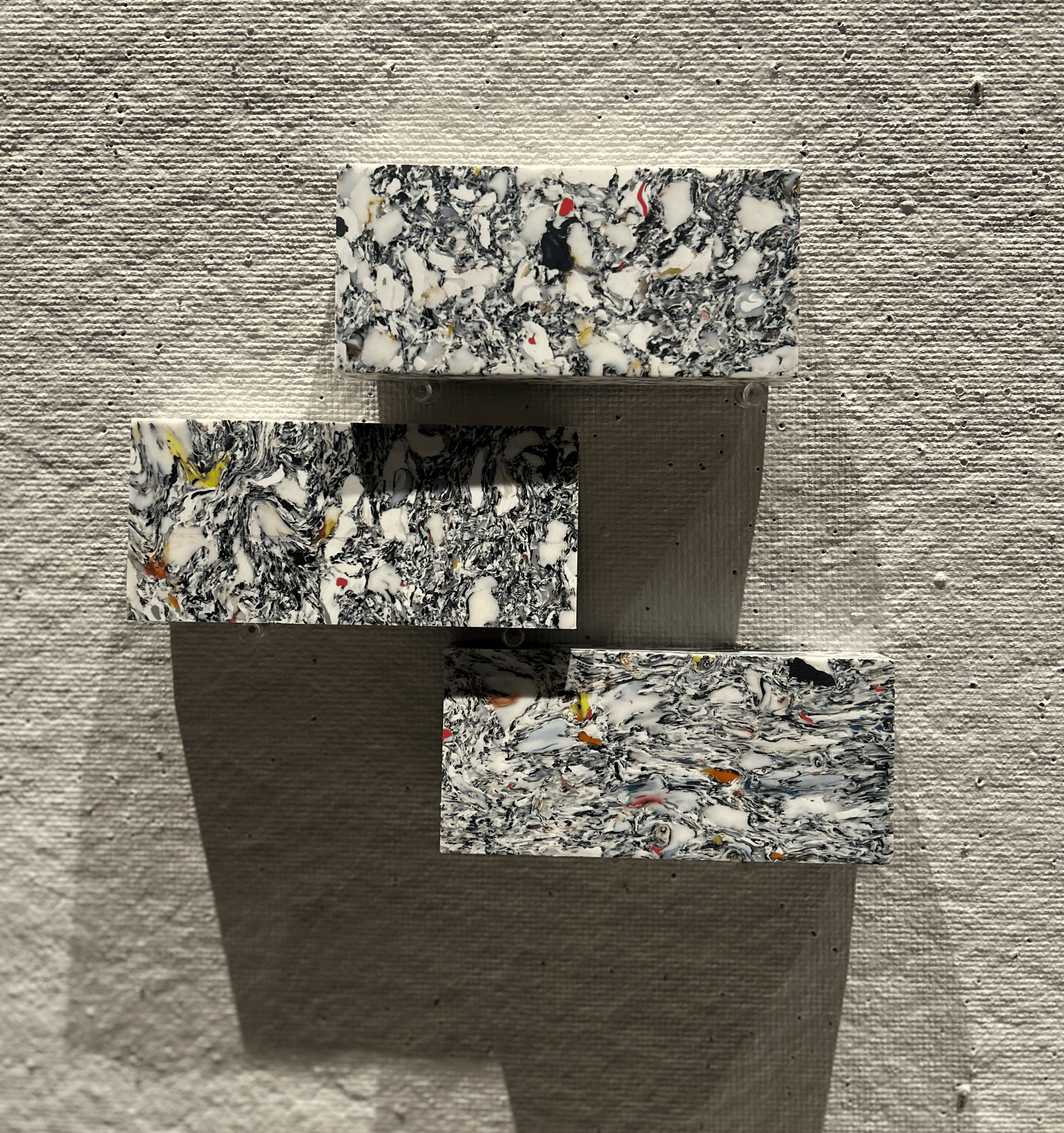
Marble Plastics is a Columbus-based manufacturing company that creates sheets from post-consumer recycled plastic. They collect their plastic, melt and press it into 4x8 sheets, then CNC-machine it to the desired thickness.
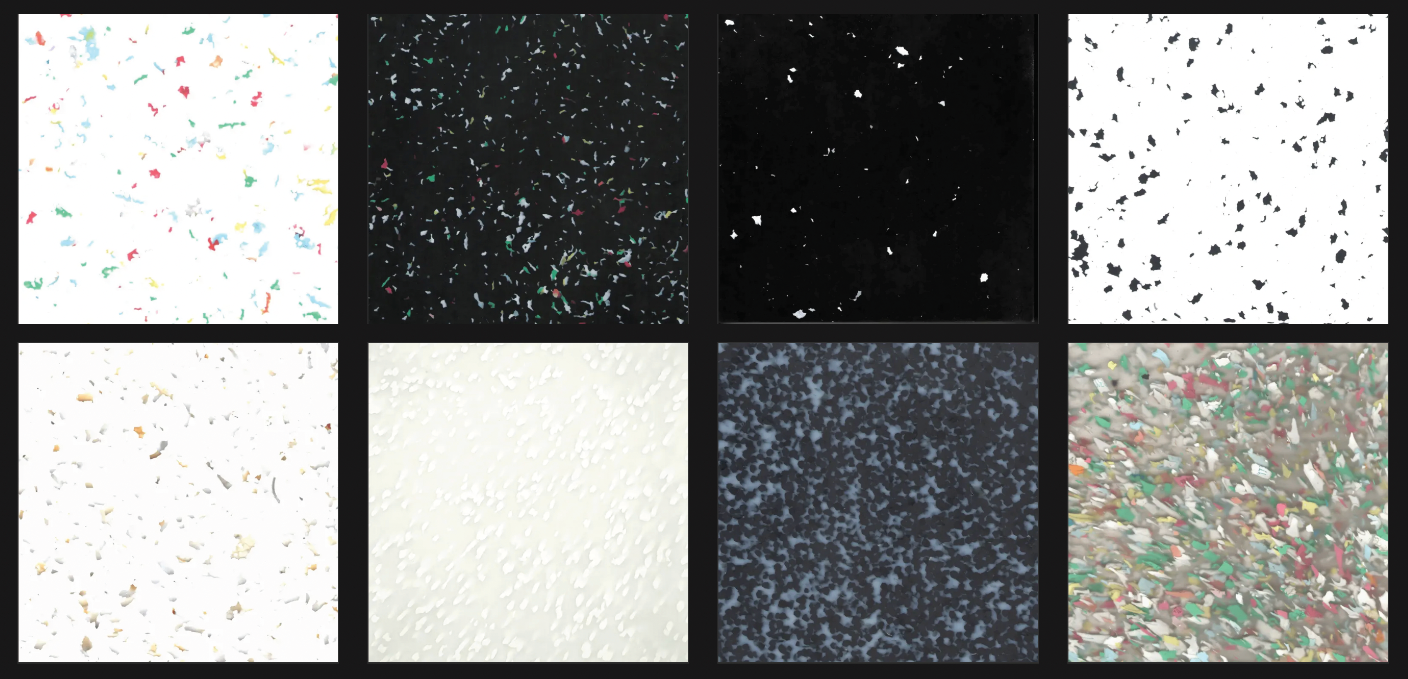
But, the founder of Marble Plastics introduced a problem: The shavings create secondary plastic waste. These chips, shavings, and offcuts are an unknown or mixed percentage of fine plastics that don’t follow the appearance of Marble Plastics' primary sheets. Currently, Marble Plastics can repress the secondary waste into sheets and use it for miscellaneous objects around the shop…but there are only so many things you can make for your own shop.
So the question becomes: How can design give value to Marble Plastic's secondary plastic waste?
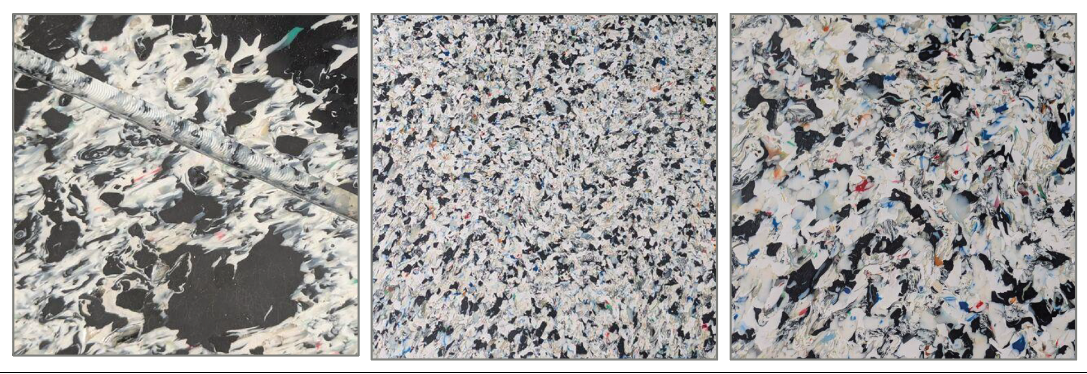
The secondary material, which I call "X2" (mix of material - reprocessed twice) is different from the primary sheets because it is mixed, unpredictable, and inconsistent in appearance; made from fine plastic particles less visually controlled.
My other partnerships with the Center for Design & Manufacturing Excellence and Neighborhood Design Center are helping me explore my ideas beyond research. CDME has given me access to physically experiment with X2, and NDC has introduced me to another potential audience for exploring the application of X2.
To add value to X2 I looked into a few categories, Business Models & Technology, Arts & Literature, and the psychology behind desirability. I also compared these to my survey.
Business & Tech
When looking into business models that pertained to my problem I discovered TerraCycle. TerraCycle works with brands to create programs that collect and process difficult-to-recycle post-consumer items. An interesting stream I looked at was Gel nail polish in their collaboration with Beetles Gel Polish. Beetles will accept empty gel polish bottles from any gel polish brand and teach you how to dispose of it correctly. Once you have recycled a specific amount of bottles, you get a coupon to buy more gel polishes from Beetles Nail Polish.
What makes me interested in this program is that it gives consumers a reason to participate. They’re not telling you to recycle, the program connects recycling with something consumers already want: more beauty products. This creates a cycle where consumers buy a product, use it, recycle the packaging, and receive a reward that can encourage them to purchase again. TerraCycle handles the recycling system, while Beetles helps support and incentivize the program.
This inspired a quick, low-stakes prototype I made where I used X2 to create curly hair tools. From my personal and friends’ experiences, I know that curly haired people have specific hair needs when it comes to detangling and defining their hair, so they are more likely to invest in tools they know will work for them. My conjecture features a styling brush using BounceCurl's technology and a volumizing hair pick.
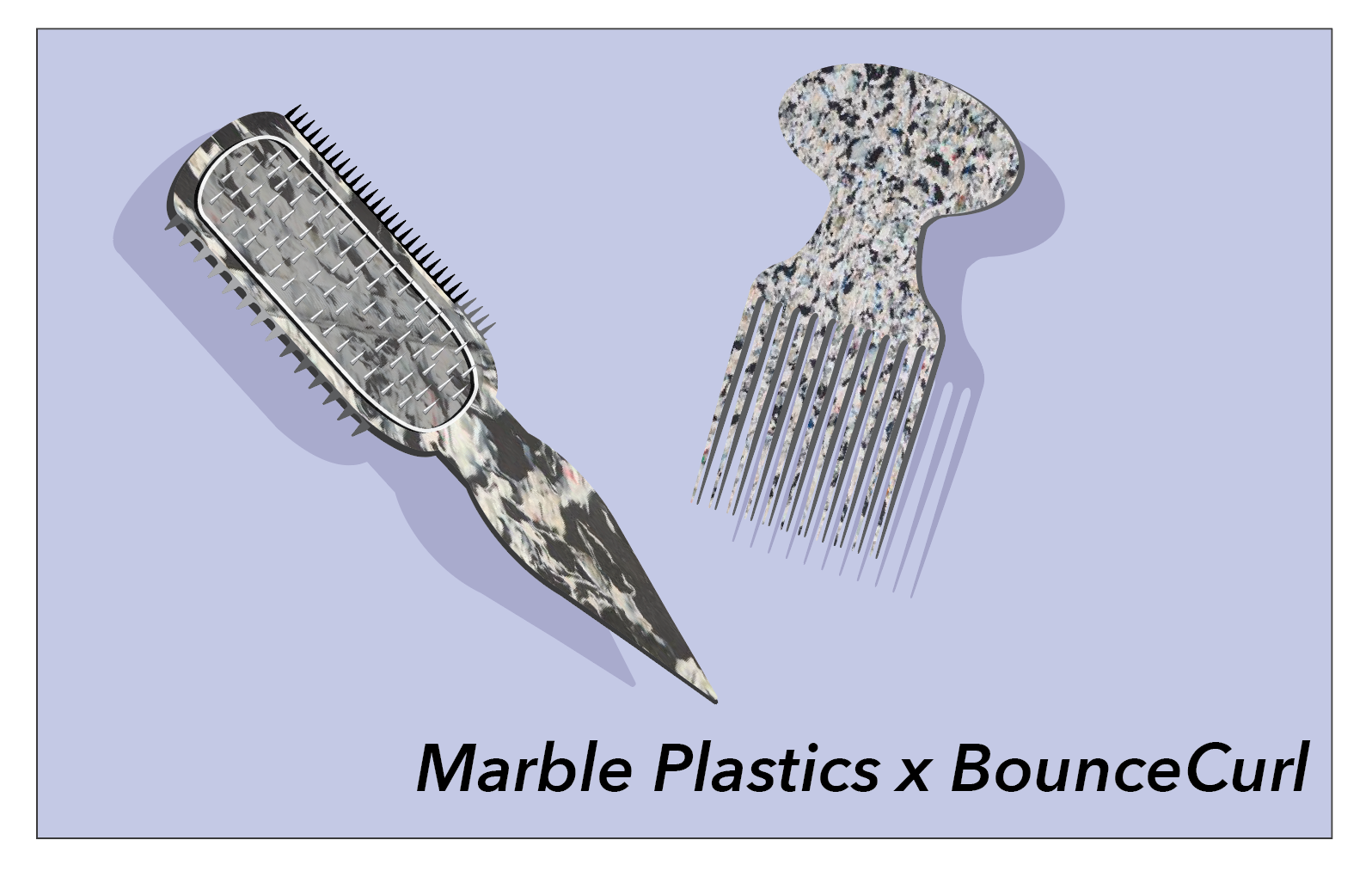
When a brush works for a curly haired person, we stick with it, and we swear by it. I think we would appreciate a system where our loyalty is incentivized, similar to TerraCycle. I imagine Marble Plastics partnering with Bounce Curl to have a take-back program where Marble Plastics could then collect the used brushes, reprocess the material, and use it to make more X2. Ideally, recycling this hair brush would get people a discount towards their next brush. This creates a loop for Marble Plastics instead of sending the brush into another waste stream.
I picked Bounce Curl because their brushes have an innovative technology behind their bristle design. I would assume customers already keep this brush and if it were to break, they will most likely buy another. This led me to research how technology can create value from a material, but also made me question whether a technology is truly sustainable simply because it recycles something.
This is where my research into Alterra became important. I learned that technology can be designed to recycle waste without the actual system being sustainable.
Alterra
Alterra is a chemical recycling facility that uses a process called pyrolysis; where they heat recycled plastic without oxygen, creating oil. This oil can then be used as a raw material for making new plastics. Although this technology sounds like an amazing solution, the process requires a significant amount of heat, and the gases produced during the process produces emissions.
There are concerns about the environmental impact of pyrolysis and whether turning plastic into this oil truly represents recycling in the same way as keeping plastic in a closed material loop.
Children in Summit County have more than 60% more asthma-related emergency-department visits and hospitalizations than children in the rest of Ohio. The organization connects this disparity to the concentration of plastics and petrochemical facilities in the county, including Alterra's Akron facility. (Moms Clean Air Force, 2026)
Recycling isn't enough, some technologies can technically recycle or process waste while still creating other environmental concerns. So my project cannot simply be about finding something to do with Marble Plastics’ waste. I have to consider whether my entire system will actually be sustainable.
Art
I found two art pieces that really spoke to me.
Salvadoran Mona Lisa: A Venezuelan artist created a mural in El Salvador 's capital using bottle caps. The recycled bottle caps are visible, but they aren’t just presented as trash. Their arrangement creates the beautiful imagery of a Latina woman.
"The Mona Lisa is an ordinary woman, and she's an icon of the Italian Renaissance- and now we are living through a new Renaissance, both in El Salvador and the world” (Olivares, 2026)
This story of new beginnings makes this beautiful mural so much more sentimental and impactful. Where gang graffiti once marked these streets, there is now something created for the community to enjoy and connect with.
Save Ralph: A short film about animal testing. It does a great job creating empathy by personifying Ralph as we follow him through a “Day in my life” video. We see Ralph go to work where he gets beauty products tested on him and the aftermath of it. I have shown this short film to a few friends and I get the same reaction every. single. time: regret for buying cosmetics that risk the lives of animals and then considering cruelty-free cosmetics. Again, this story creates enough empathy to change consumer purchases.
These examples showed me that the materials or issues themselves aren’t the entire message; the storytelling behind them can change how people connect to them. This was also a finding in my survey.
Survey
My survey covers fourth-year Architect and Interior design students' perception of X2. My key findings show that X2’s recycling story changed how it was perceived.
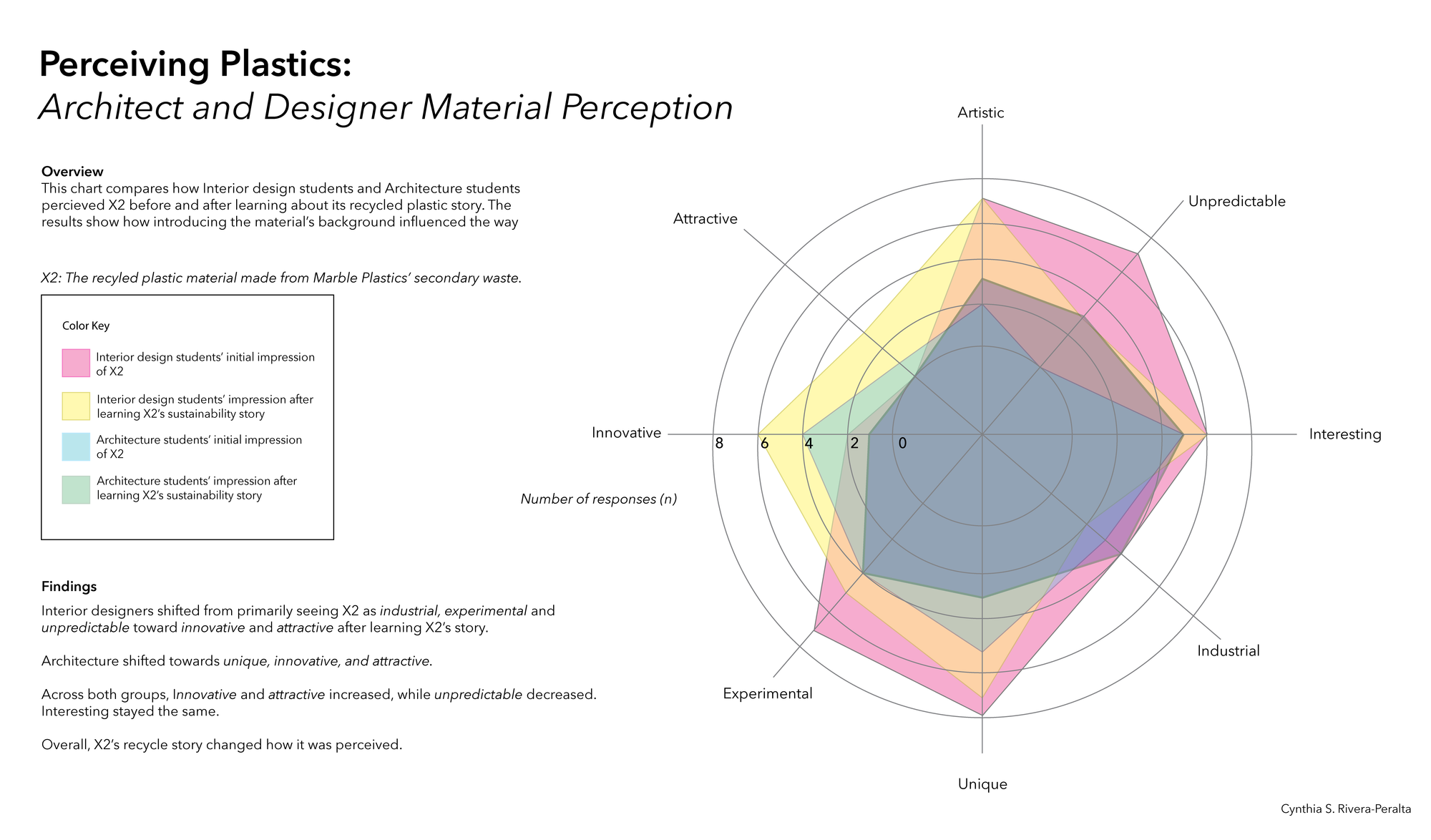
- Interior design students showed an increase in innovative and attractive, while industrial, experimental and unpredictable decreased.
- Architect students showed an increase towards unique, innovative, and attractive while artistic and unpredictable decreased.
Across both groups, innovative and attractive increased, while unpredictable decreased. Interesting stayed the same.
Psychology on Desirability
I looked into Pop Mart’s mystery box collections because the idea of using uncertainty to inspire designers seems quite interesting. But my research on it made me question how ethical this would be.
“Mystery-box collectibles’ psychology operates on the most powerful reinforcement system ever studied in behavioral psychology: variable ratio reinforcement. In a variable ratio schedule:The reward is unpredictable, You never know which attempt will succeed, The uncertainty itself fuels persistence…slot machines run on this formula.” (Hartoonian, 2026)
Even though I like the idea of a mystery-patterned-material system being used for Marble Plastics, buying something repeatedly because you might finally get the one you want goes against the idea of sustainability. I think I should still explore the concept of mystery collections to inspire designers but I want to steer away from a system that takes advantage of people who are more sensitive to rewards or uncertainty.
Something I don't want to steer away from: Changing People's Taste. A group of independent magazines intentionally moved away from the clean and polished style that was common in design because they wanted to challenge the idea that there is only one way for something to look “good.”
“Trends spread like viruses, it’s unavoidable. A type trick here, a color combination, a paper stock… we’re all open to infection by a trend. Right now the cliché epidemic involves clean white pages of minimalist typography with overzealous detail of obscure coffee-” (Jamieson, 2016)
When people are repeatedly exposed to the same clean and organized styles, they can become used to seeing those qualities as good design and then things become almost expected. By giving people new visual references, something that may initially look strange or unattractive can start to feel interesting or intentional when people understand the idea behind it and continue seeing it used in a creative way. Over time, this can expand what people consider good taste.
This is what happened to Plywood. It was once treated as a basic building material, but designers like Charles & Ray Eames and Alvar Aalto showed what it could become through furniture, architecture, and other products by bending and molding plywood into shapes that were difficult to create with traditional wood. The material itself did not suddenly become more beautiful. Designers changed how people understood it by finding new ways to use and present it.
X2 Magazine
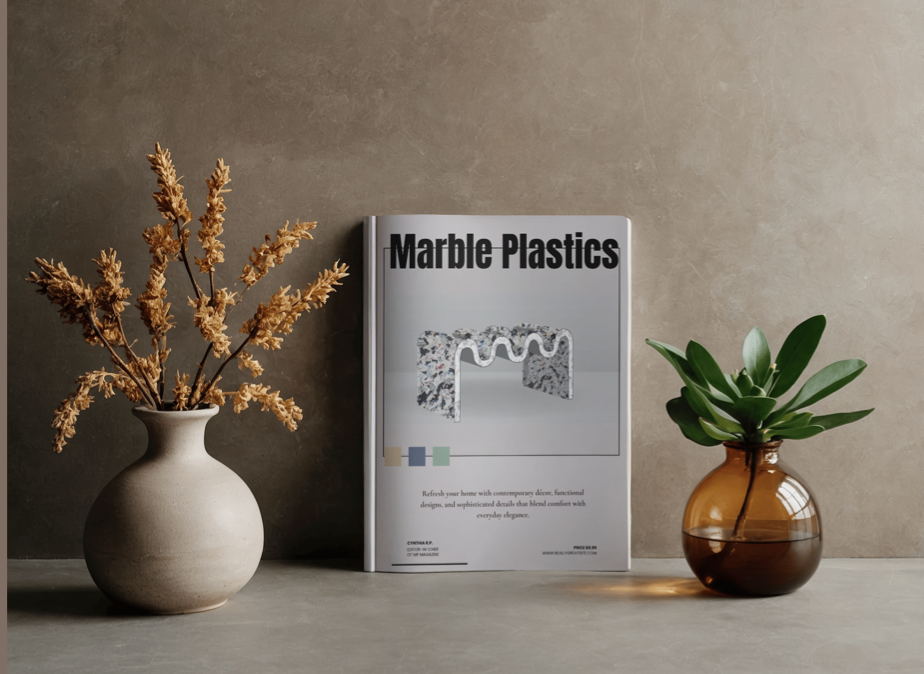
My research on the importance of story-telling, unpolished magazines, and the perception change of plywood made me think about how I could create a magazine or a website for X2. I would give it its own aesthetic and apply the material to existing items or furniture with the intention of possibly making people see X2 in a different light.
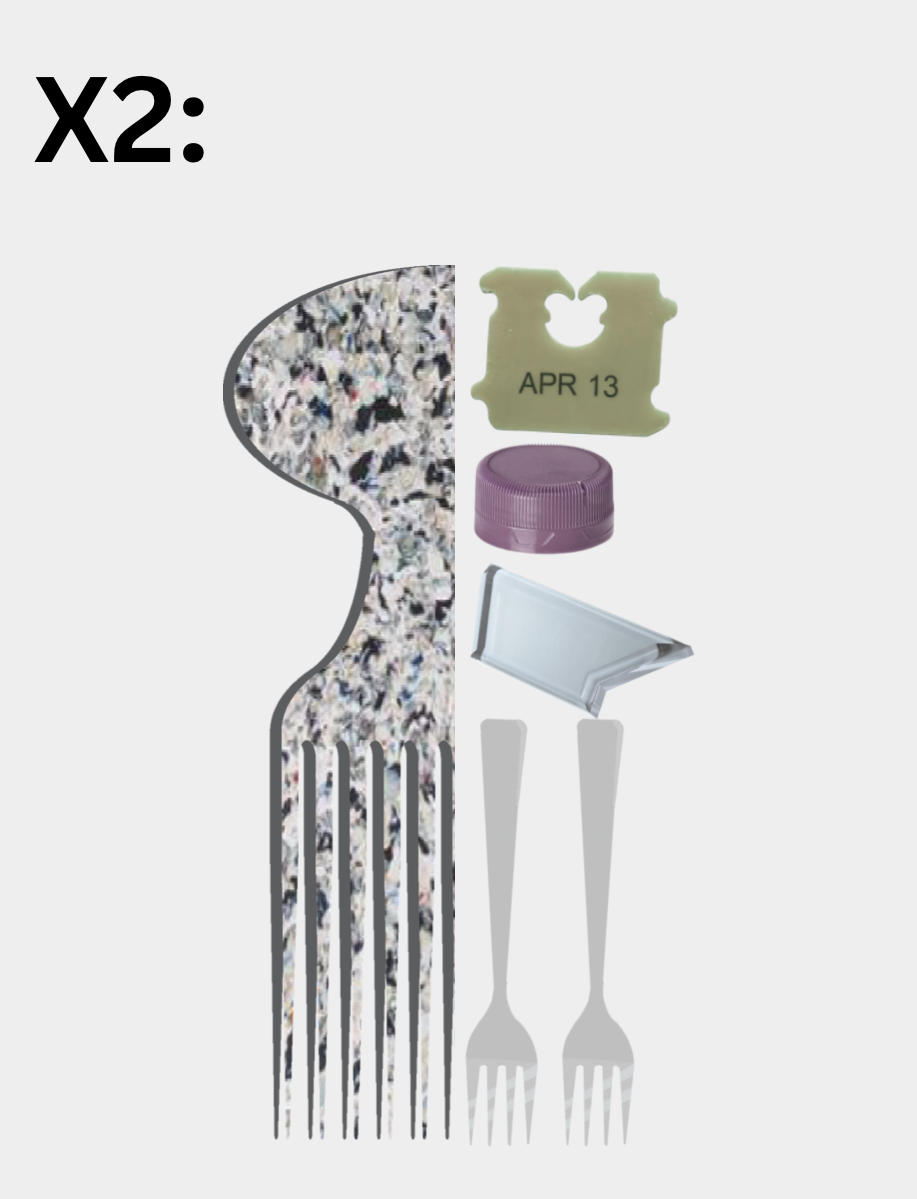
Even though I really like this concept, people don't really read magazines anymore. I don't know if this will actually reach my intended audience so I would have to refine this idea. I do think there is something valuable in the under-stone of this concept and I should continue to explore similar ideas.
X2
I think X2 is beautiful, but how can I make others see this beauty, too? My partnership with CDME might uncover material specs in X2 that could change its perception, revealing qualities I have not yet considered. What I do know is that X2 should not have to become another version of the company’s existing sheets. Its inconsistent colors and patterns are exactly what separate it from the primary material. Instead of treating those differences as flaws, my research has made me interested in translating these flaws into beauty. My Business model exploration showed me that business waste ideally needs a value exchange, my art exploration and Survey showed me that storytelling can give materials meaning, and my psychology research can influence how people perceive something.
Maybe the future of waste isn't making it look new, but finding value in what makes it different.
References
TerraCycle. (n.d.). About Us https://www.terracycle.com/en-US/about-terracycle
Suzanne Labarre. (2012, Feb 1). How Plywood Revolutionized Design (No, Really). Fast Company. https://www.fastcompany.com/1668947/how-plywood-revolutionized-design-and-changed-the-world-no-really
Ruth Jamieson. (2016, May 11). The New Wave of Anti-design Magazines Will Question Your Sense of Taste—and That’s a Good Thing. AIGA. https://eyeondesign.aiga.org/the-new-wave-of-anti-design-magazines-will-question-your-sense-of-taste-and-thats-a-good-thing/
Narineh Hartoonian. (2026, January 20). The Psychology of the Collectible Craze: Why Blind Boxes, Labubu, and Pokémon Cards Hook Our Brains. Rowan Center. https://rowancenterla.com/psychology-collectibles-blind-boxes-labubu-pokemon-cards/
Human Word for Animals. (2021, April 6) Save Ralph - A short film with Taika Waititi. [Video] Youtube. https://www.youtube.com/watch?v=G393z8s8nFY
Rumpke. (n.d.). Recycling Center Tours https://www.rumpke.com
Oil & GasWatch. (n.d). Alterra Akron Plastic Recycling Facility https://oilandgaswatch.org/facility/5859



