
OP-ED: Addressing a Need for Darkness

Background
I chose to work on the Dark Sky problem space that the Ohio Department of Natural Resources Parks and Watercraft Division presented to our team. The Dark Sky Initiative aims to restore natural darkness at night, protect the right to dark skies, and conserve the nighttime ecosystem.
When I began researching what the Dark Sky Initiative was and who is interested in it, most of the press I found about DarkSky focused on astronomy. While viewing the stars is a beautiful experience and a valid reason to support the Dark Sky Initiative, I wanted to understand the bigger picture of how human behavior around light at night affects animals rather than other humans.
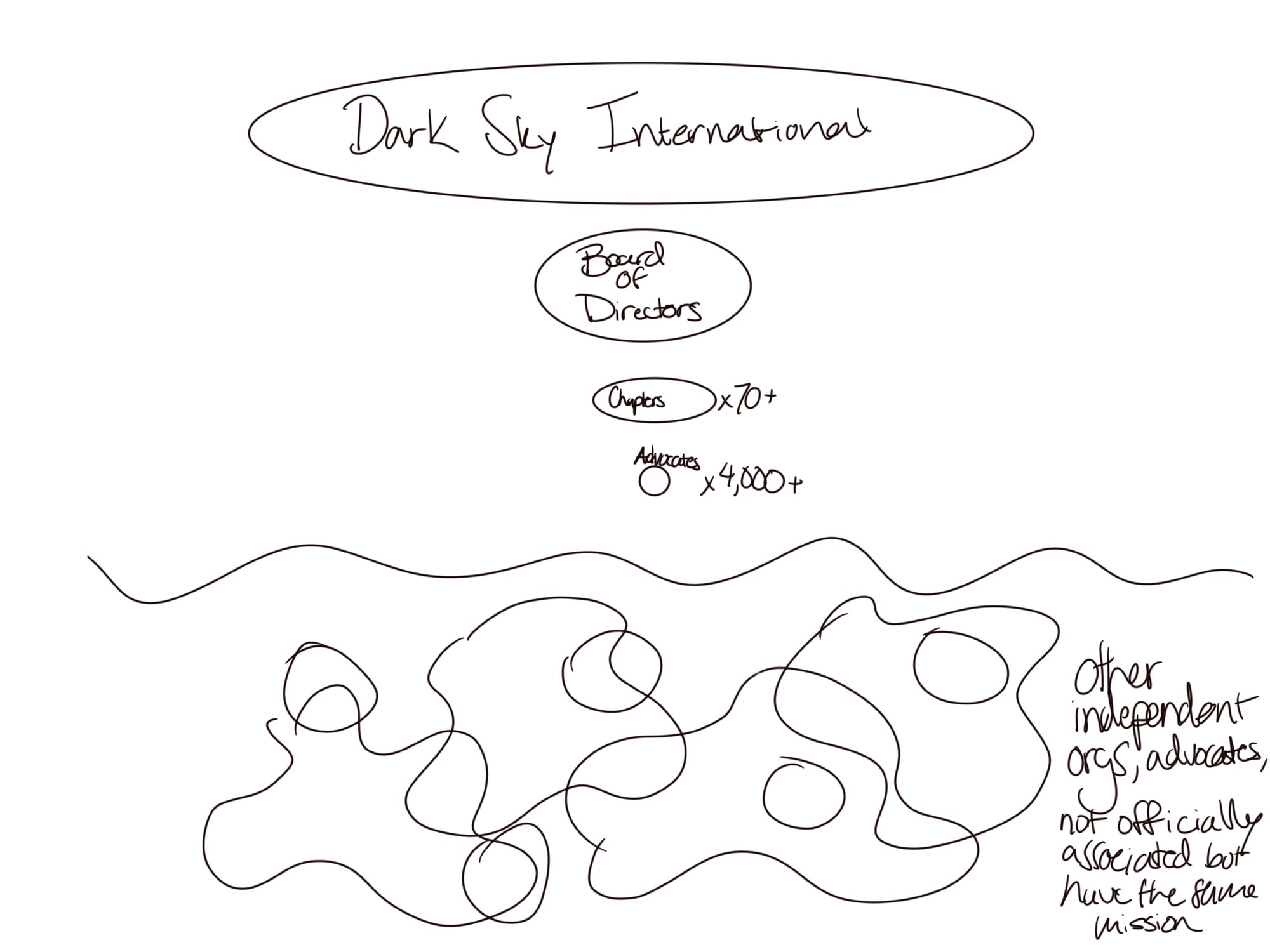
I began reading newspaper and journal articles about wildlife decline related to light pollution, the conservation efforts in place, and how people can avoid adding to the problem. Across the board, much of the advice on how to avoid adding to light pollution was the same: warm light (red, orange, yellow) over cool light (white, blue, green), fully shielded directional, downward-facing light over unshielded, flare-causing light, and only turning on lights while they are in use. These are all things found in Dark Sky International lighting guidelines and in smaller organizations like LightsOut Ohio, Dark Sky Ohio, and other nocturnal conservation groups.
Interviews
After gathering background information, I became particularly interested in nocturnal insects and nocturnal migratory birds because they rely heavily on the night sky. This led me to speak with Devin Mingesbruney, Jim McCormac, and Summer Wohlfrom.
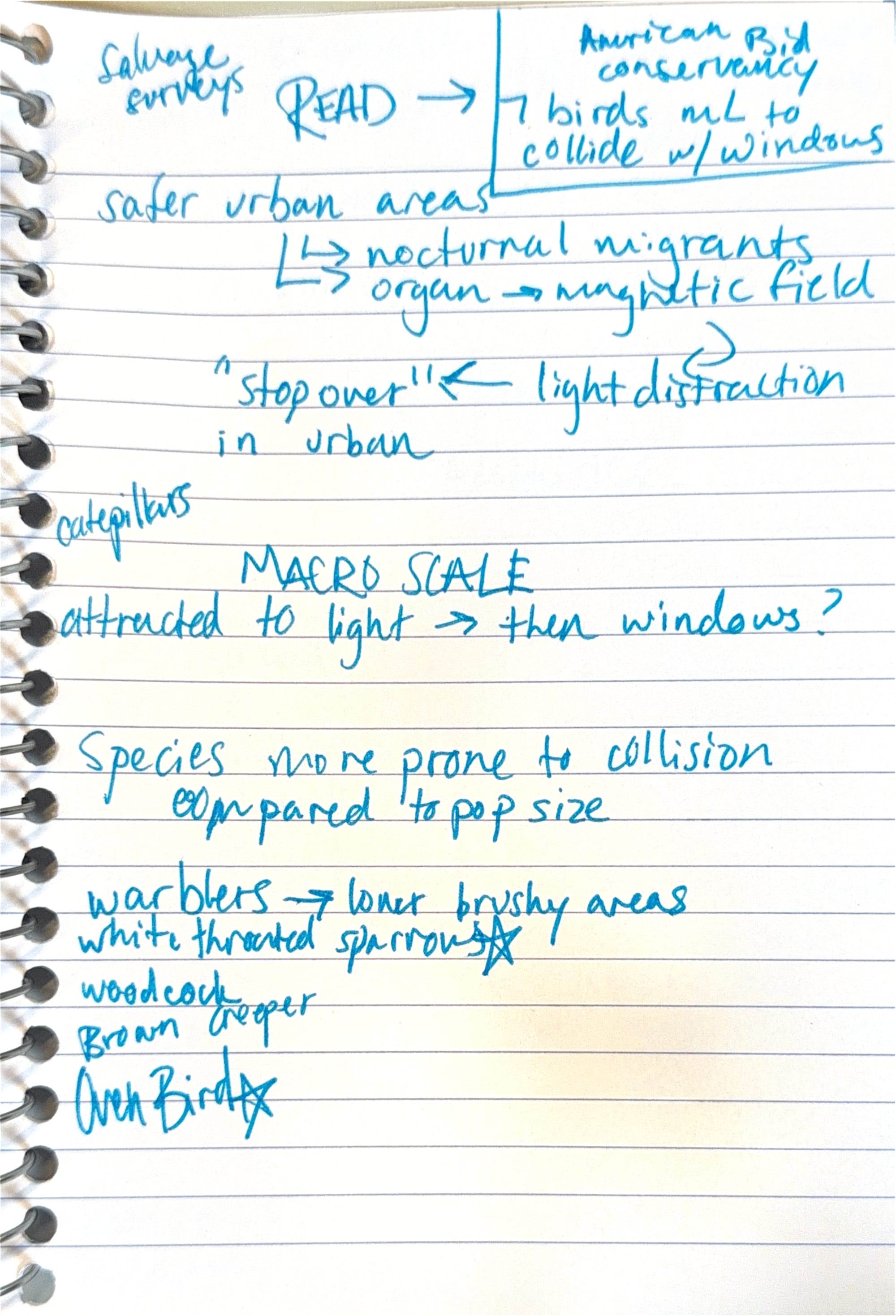
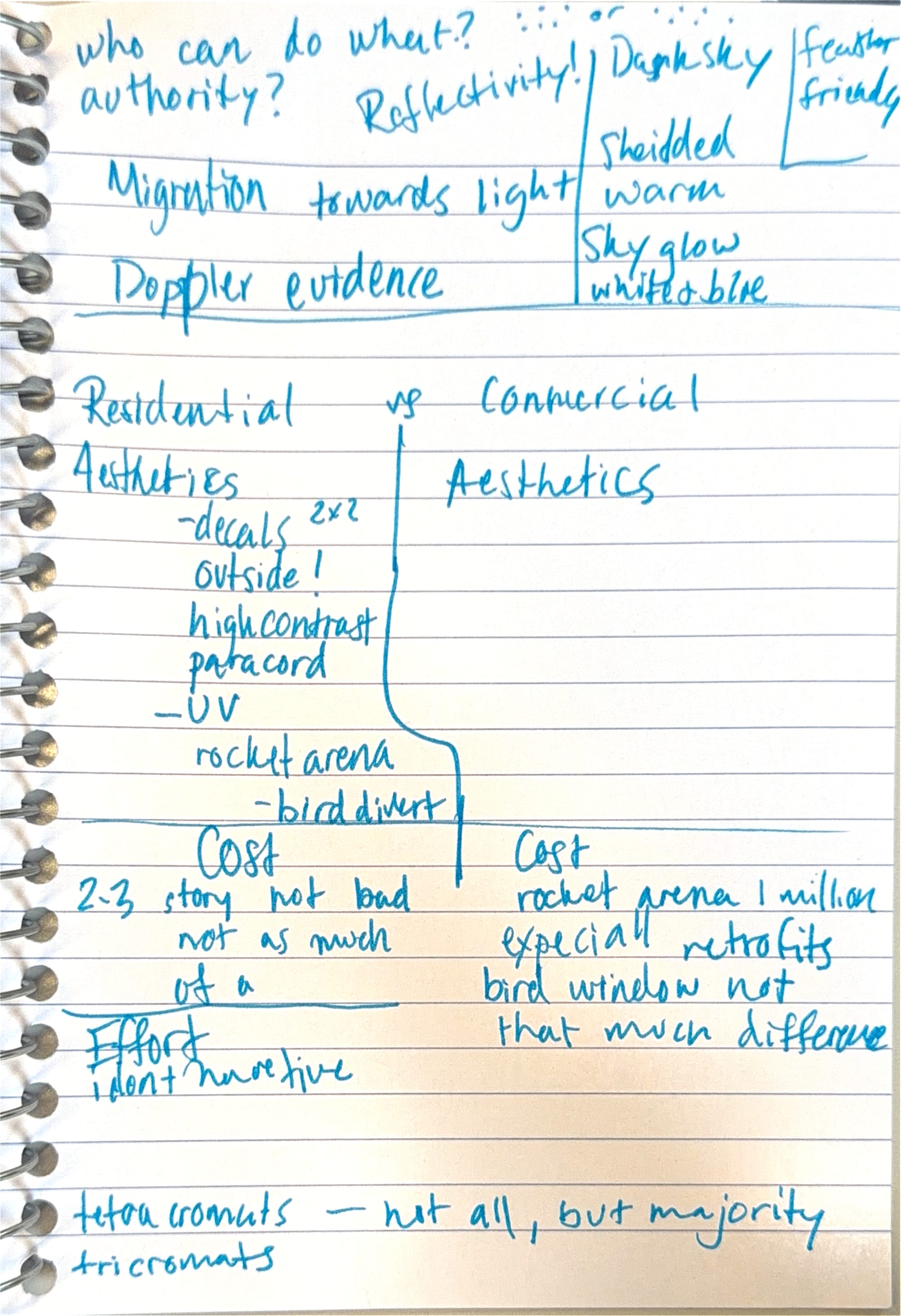
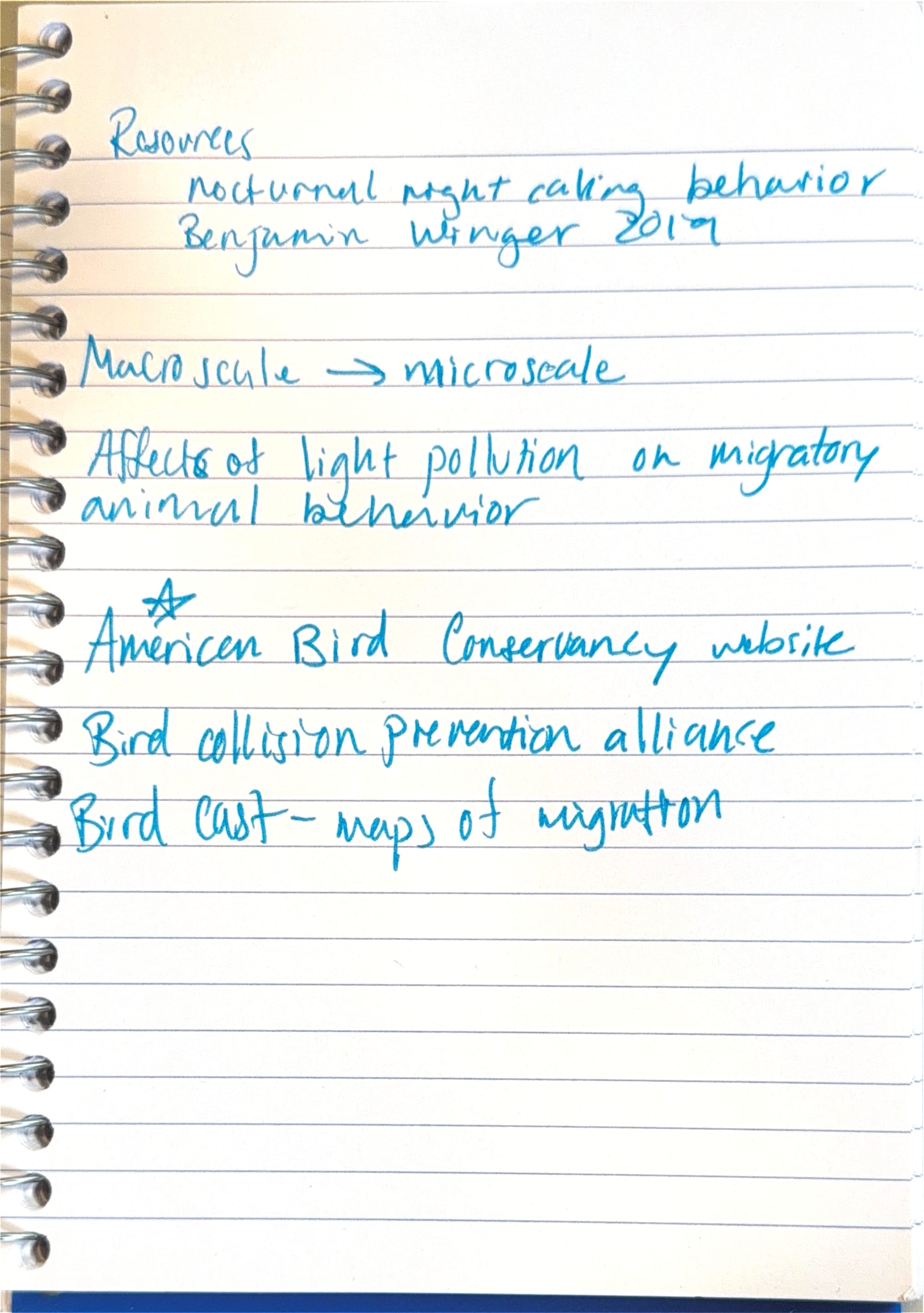
3 pages of interview notes
Birds - Devin Mingesbruney
Devin Mingesbruney coordinates Ohio Lights Out, a conservation organization focused on bird collisions. I met with her at her office in Kottman Hall on campus. Through a series of questions, with me asking questions and her redirecting me to better questions, which was much appreciated, she mapped out for me how nocturnal migratory birds are impacted by light pollution and how that leads to collisions.
Like humans on a road trip, nocturnal migratory birds need “stopover” locations to rest between long legs of their migration and are attracted to brightly lit urban areas. Once in a city, they often become disoriented because of the amount of glass and reflected light. They cannot distinguish a reflection of open space from actual open space, causing them to collide with buildings or be unable to find a safe place to rest. This leads them to either die on impact with a seemingly invisible wall or die after flying up to the point of exhaustion.
Suburban and rural areas also have problems; bird collisions can occur there too. While they may not emit as much light as Downtown Columbus, the window issue still applies. They still can not tell that there is a surface there and will collide with them.
I learned a lot about birds through this interview, but in hindsight, the most pertinent part was her outreach work. She told me a story about how often she or her colleagues encounter people who are well-meaning but implement bird collision interventions incorrectly. She explained that many products are misleading or weren't well researched, don't follow conservation standards, but advertise as if they do. She explained how awareness and accurate information are what the cause needs most because people can't make changes if they don't know how or why.
Moths - Jim McCormac
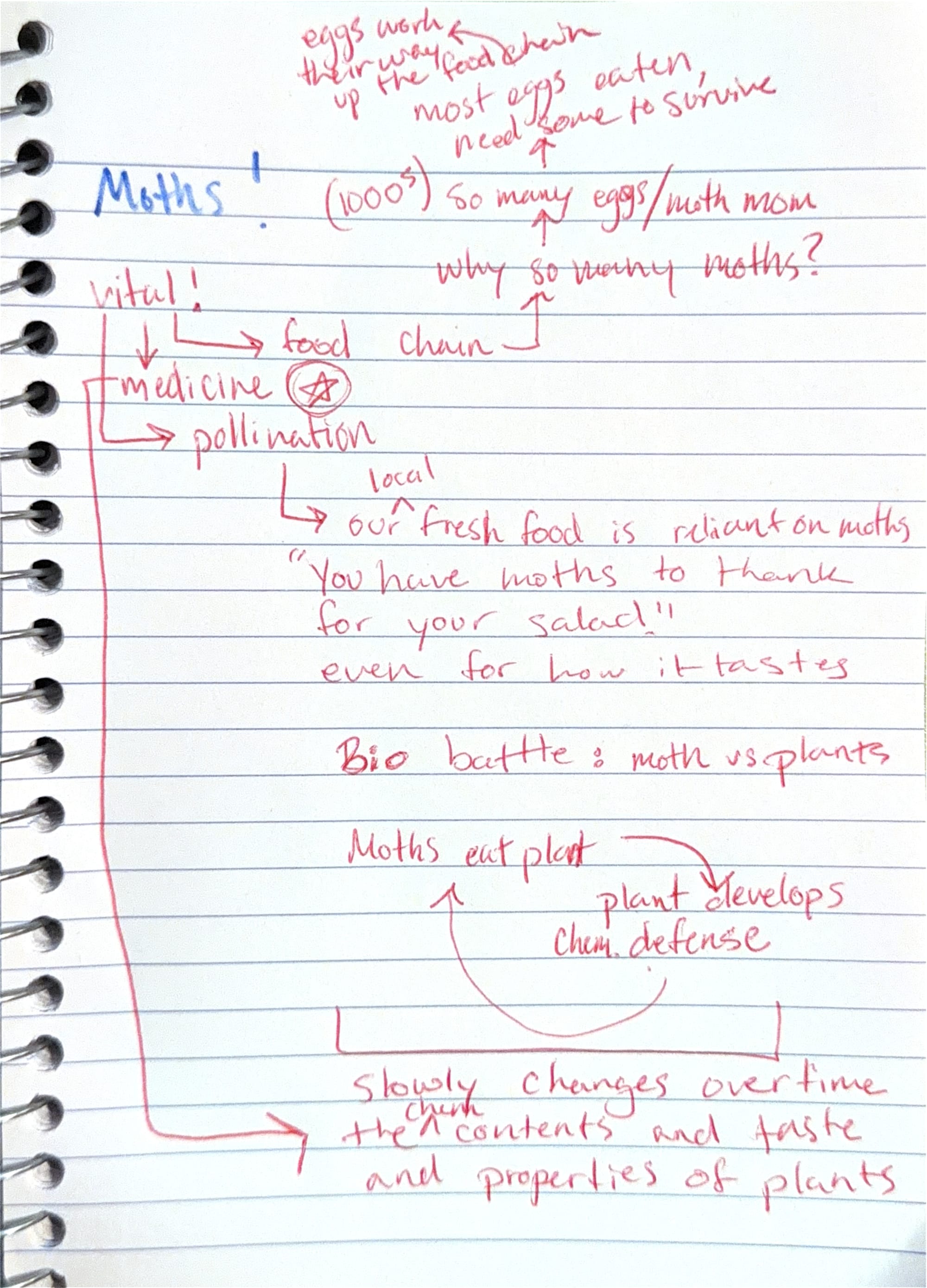
After Annaliese and I sat down with him and made our introductions, he got right to it. He started by asking how many species of butterflies we thought were in Ohio, and then how many species of moths were in Ohio. The answer was shocking: there are 140 species of butterflies and over 3000 species of moths in Ohio. Throughout the rest of the interview, this question, guess, and explanation rhythm continued.
Jim focused mostly on how vital moths are to our ecosystem, showing how integral they are to the food chain, our food supply, and medicine. By the end of our conversation, it felt like the entire world rested on moths' wings.
With so many moth species and how they lay thousands of eggs at a time, evolutionarily, it shows that laying that many is advantageous. Why? Because most of the eggs will be eaten. They support the very bottom of the food chain. Without them, the chain reaction would be catastrophic.
Let alone the plant life and crops that rely on their pollination, specifically at night. Most of our nocturnal pollinators are moths. As we spoke, Jim pointed to Annaliese’s salad and emphasized how she has moths to thank for her meal.
One fascinating piece of information he shared was how moths have contributed to medicine. He described how moths and plants have been in chemical warfare since they both existed on Earth. Moths rely on plants to host and feed their young; plants that can fight off moths are the winners and go on to produce the next generation, and the moths that can withstand those plants are the ones that reproduce. The cycle continues, and plants develop new chemical compounds used as defense mechanisms against moths. Now, the chemicals found in those host plants are often used in our medication.
Parks Perspective - Summer Wohlfrom
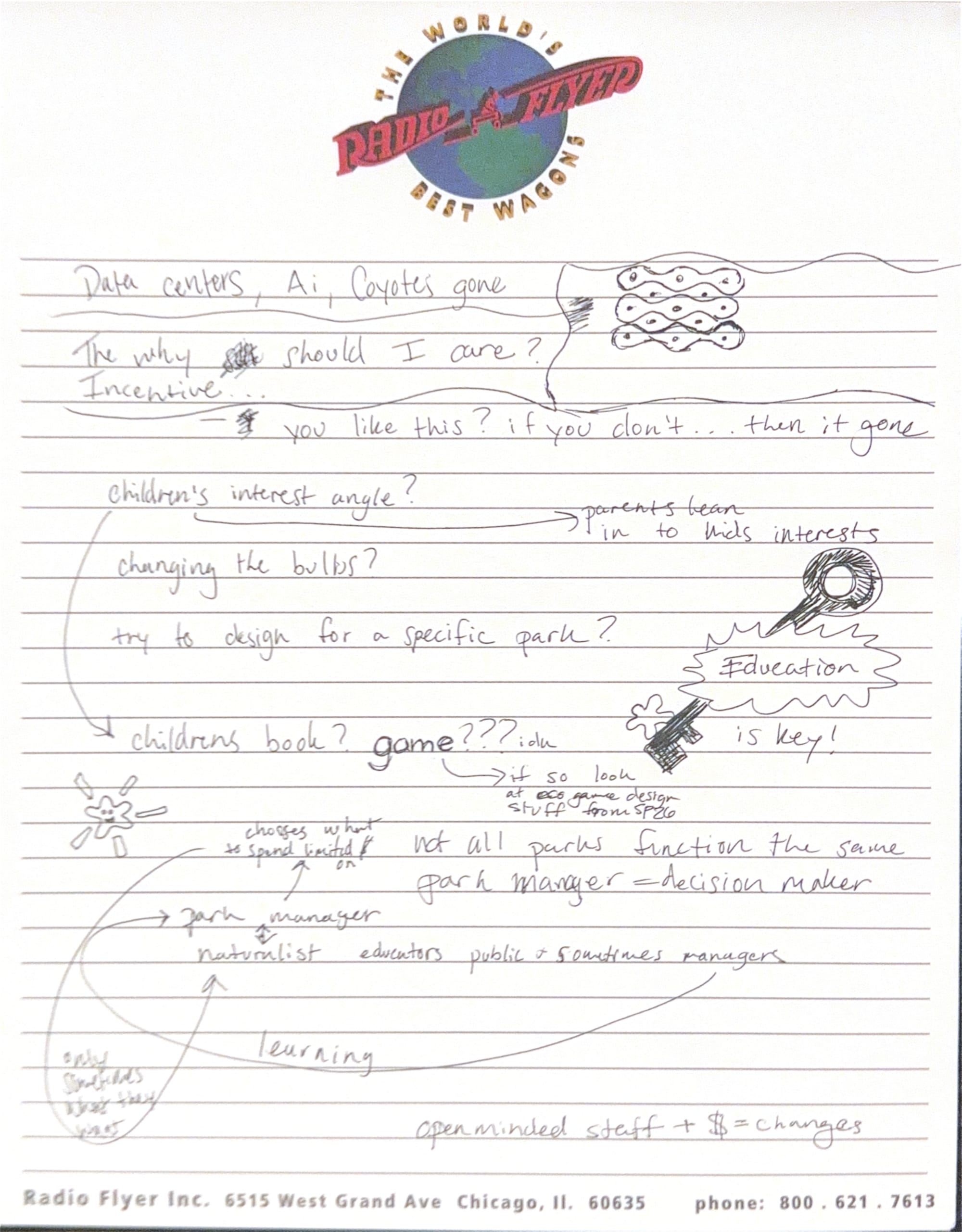
I had an impromptu conversation with Buck Creek’s Naturalist, Summer, while attending a Bird Bingo event. Victoria and I attended because we had been having trouble getting to outdoor events due to the weather. This conversation clarified the structure of Ohio State Parks staff and the barriers to implementing dark sky interventions and rules.
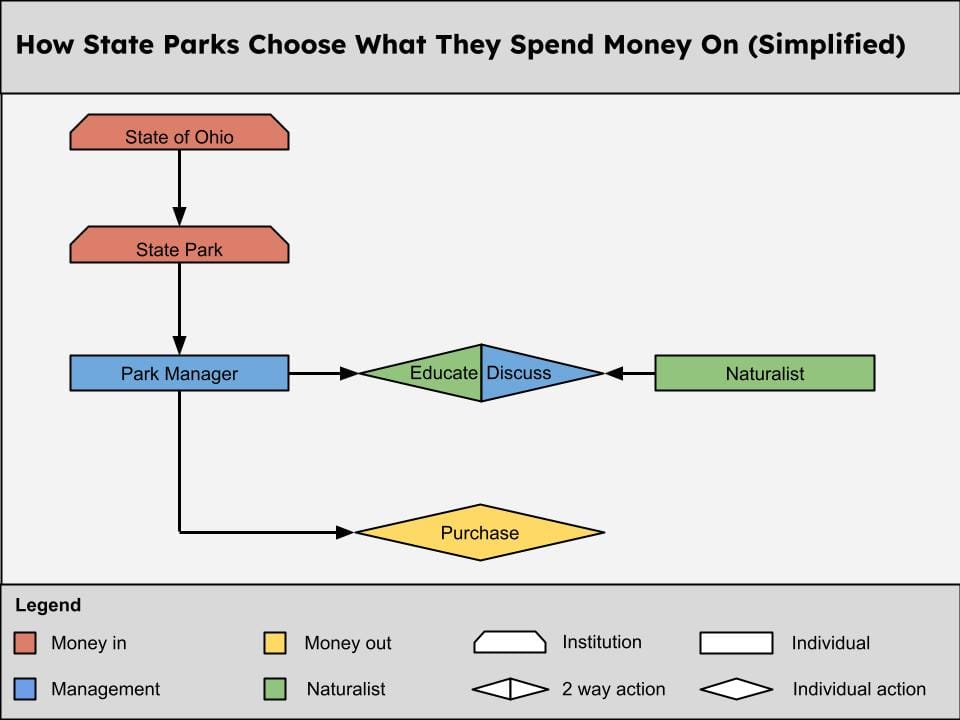
As I understand it, parks are more like franchises that follow the overall ODNR Parks and Watercraft core values and operational rules, but can choose what they want to invest time and a little extra funding in. So, parks end up being influenced more by the park manager’s and naturalist’s personal interests. Which isn’t necessarily right or wrong; it just isn’t what I had imagined from a government organization.
She explains that people see their go-to campgrounds as a second home and resist change or being told what to do. Another barrier is that parks have no authority to enforce rules like that. So, for parks to see a behavior change, they need to get visitors on board.
Survey
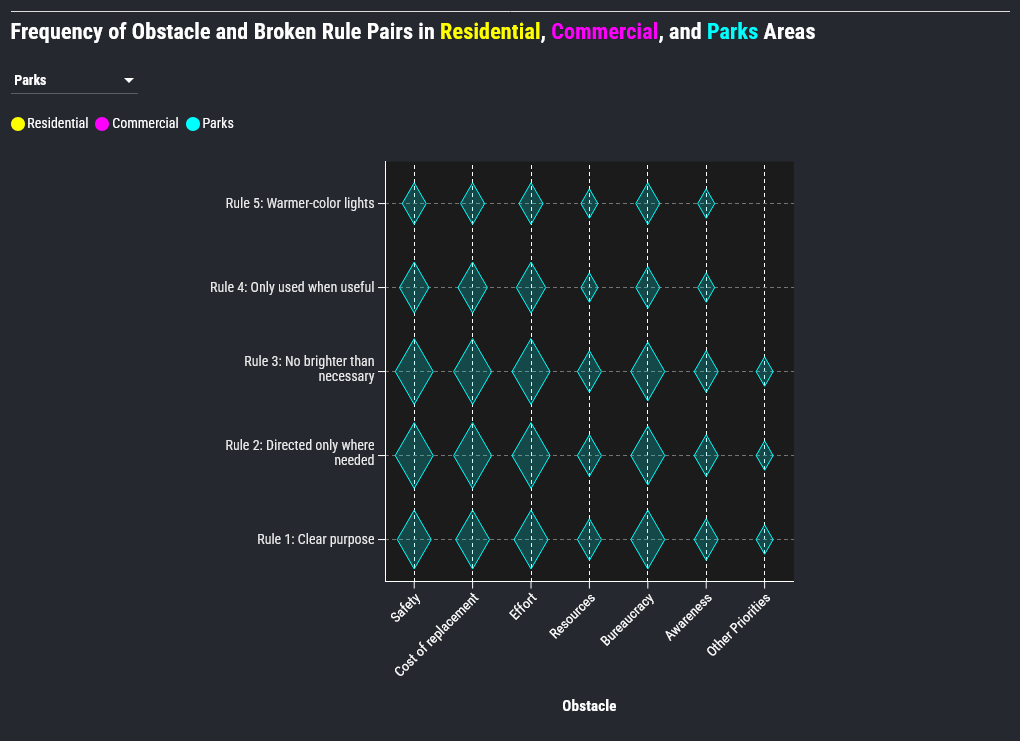
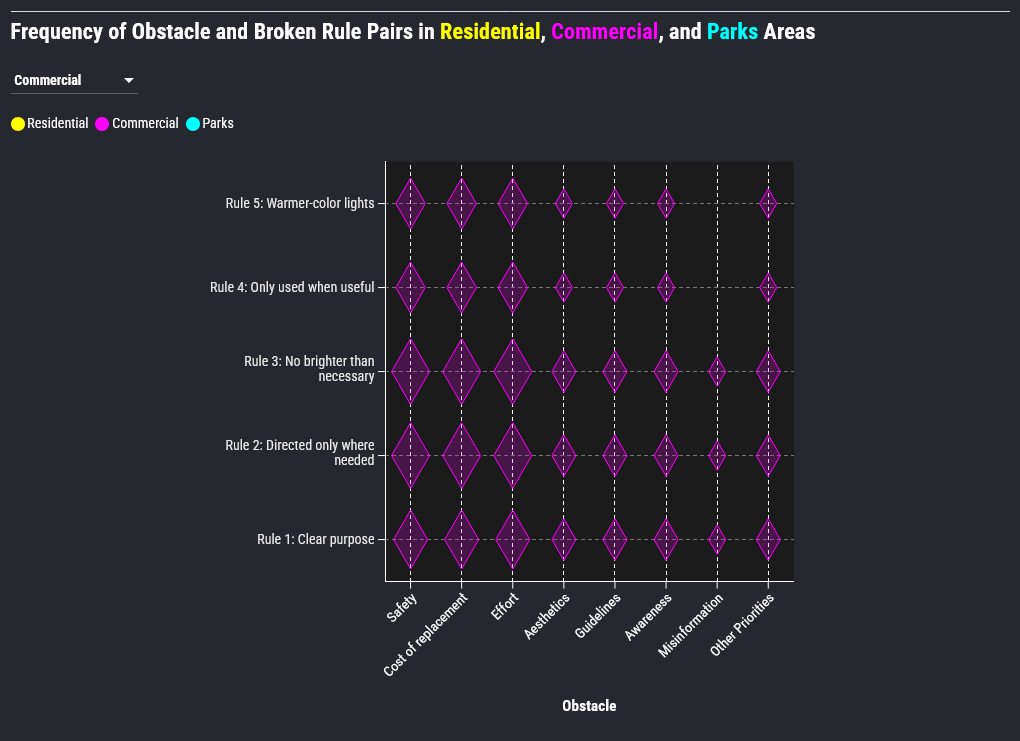
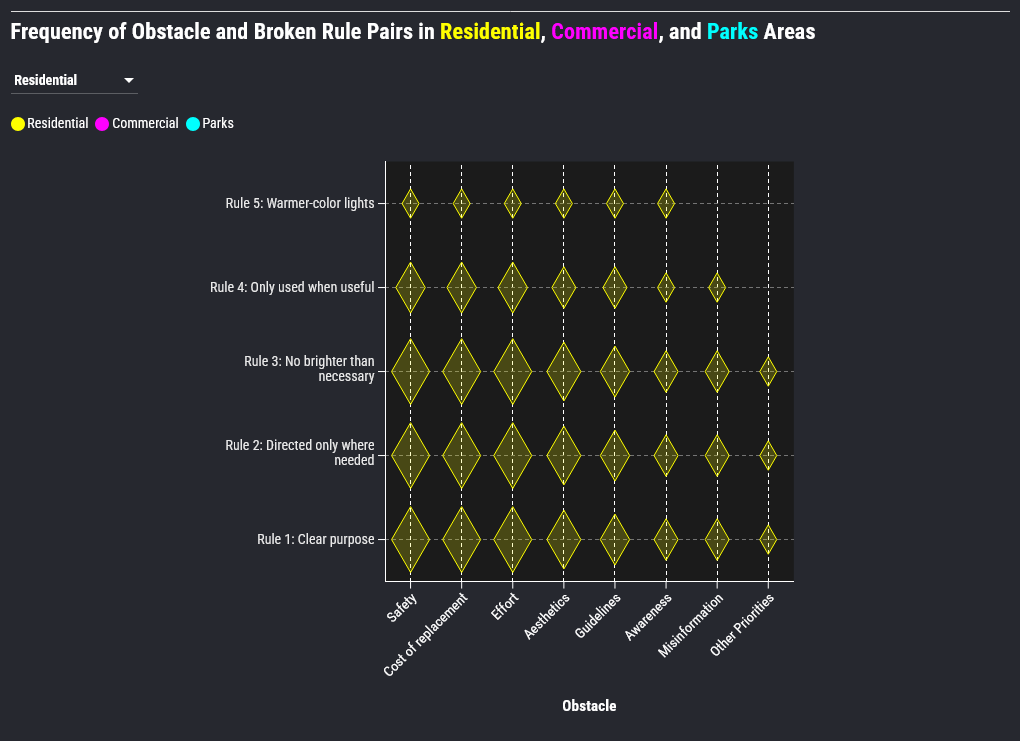
Across the locations, the most common rule breaks were rules 2 and 3: light should be directed only where needed, and light should not be brighter than necessary. Across all locations, the most common obstacles Dark Sky Ohio volunteers reported to keeping people from adopting responsible lighting practices were safety, replacement cost, and effort.
The question surrounding obstacles preventing people from adopting responsible lighting practices had a fill-in-the-blank "other" category. As I reviewed these write-in options, 8 of the 11 responses I received fell into 2 major categories: awareness and misinformation.
This mirrored the takeaways I left with after interviewing Devin Mingesbruney, Jim McCormac, and Summer Wohlfrom.
Problem Framing
During my research, I felt pulled in so many different directions. Light pollution affects everyone and everything. Nocturnal migratory birds get misdirected into brightly lit metro areas to rest, only to collide with buildings and never reach their destination. Nocturnal insects fundamental to our ecosystem get trapped in a trance, circling night lights, unable to break free to do their jobs, and end up served on a platter to predators of the night. Extra nighttime light disrupts humans' circadian rhythms. All of us, humans, flora, and fauna alike, miss out on the beauty, navigational tools, and rhythm of explicit day and night phases provided by a clear, dark night sky.
Call to Action
Education has to be where this work starts, because humans cause the problem, and people can't change what they don't know needs changing. Fostering positive educational experiences in parks concentrated on dark sky could be the first step to tackling the problem. If the public can find community in the conservation effort and emotionally connect with the cause, word could spread through those communities. Parks already host educational events for visitors; adding dark sky activities, programming, curriculum, and/or experiences could foster the positive educational experiences needed.



