
Opinion: Recycled Material is Fun! How Can We Get More People to Think So?
Material has a finite lifespan. More and more products are being produced. Single-use products are getting harder to avoid. It would seem that everywhere we go, at any point throughout the day, we could be receiving something that will eventually wind up in the trash. Space is limited, landfills are expensive, and waste can end up affecting our environment. However, innovations in recycling, creating recycled materials, and renewable resources, along with new ways to educate about them, are revealing opportunities for our society to take steps towards a brighter tomorrow. Recently, the model of the circular economy has taken hold as a way to keep materials alive and renewable, rather than letting them become waste.
The circular economy is a system where materials never become waste and nature is regenerated.
In a circular economy, products and materials are kept in circulation through processes like maintenance, reuse, refurbishment, remanufacture, recycling, and composting (Ellen MacArthur Foundation, n.d.).
How can we apply methodology such as this to the world that is around us? That’s exactly what we with Local Loops want to figure out.
Stakeholders
Local Loops is a team of designers and stakeholders focused on using local waste streams and creating a circular economy around them. Team members include Isaac Moyer, Cynthia Rivera-Peralta, Annie Hughes, and Jack Low. This year, Joseph Klatt of Marbel Plastics has taken the lead on providing an existing product and waste stream to work around, take inspiration from, or create a solution for. In addition to Joseph, Local Loops can also find support and opportunities from the Neighborhood Design Center, as well as Lili Hurst, the Lab Coordinator at the Center for Design and Manufacturing Excellence, who has been specializing in the circular economy of 3d printed plastic.
An additional, but central, pillar to the stakeholders is the community itself. Local Loops as a group was created to research and explore the circular interaction between different people, places, businesses, and resources of a community. Throughout research, ideation, and production, I will continuously find ways to get different stakeholder groups to interact with each other.
Primary Research
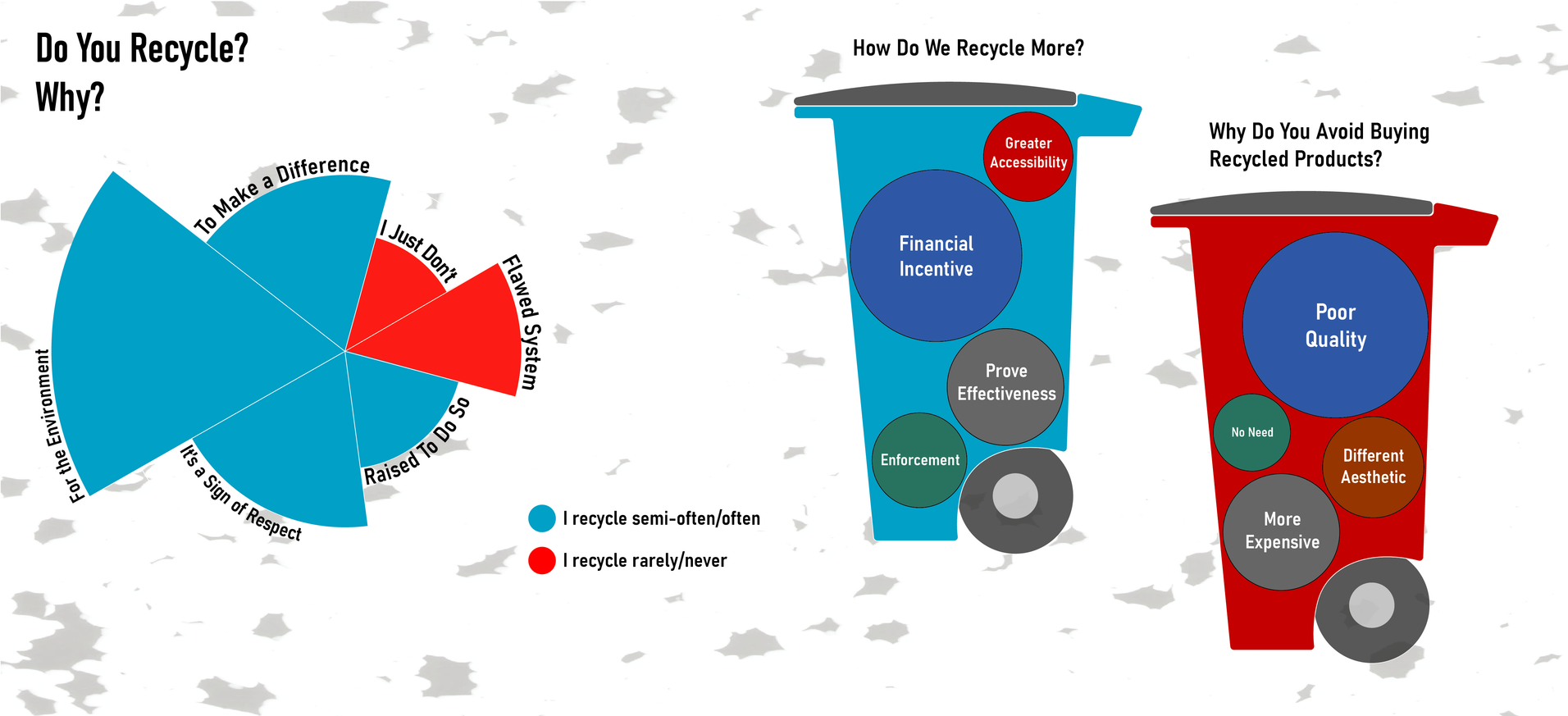
In a survey sent out to 54 people, I received 12 responses, which is a lower conversion rate than I would have liked, but still provided good data. My target sample size was 18-25 year olds, due to their newly found independence and ability to purchase more home goods products (or otherwise) for themselves. In synthesizing the data from these responses, the most common answer to the question of why one recycles is “because it’s better for the environment.” Other reason include their upbringing and the want to be respectful and make a difference. On the contrary, some of my respondents choose not to recycle because of their belief that the recycling industry is a flawed system that doesn’t work to the best of its ability. Other questions yielded the responses of “one way we can incentivise recycling is to prove its effectiveness,” as well as “recycled products are of cheaper quality than virgin plastic items.” The key takeaway from these survey responses is that some people don’t have faith in the system of recycling, find it inaccessible, and aren’t aware of what the material that they recycle goes toward making.
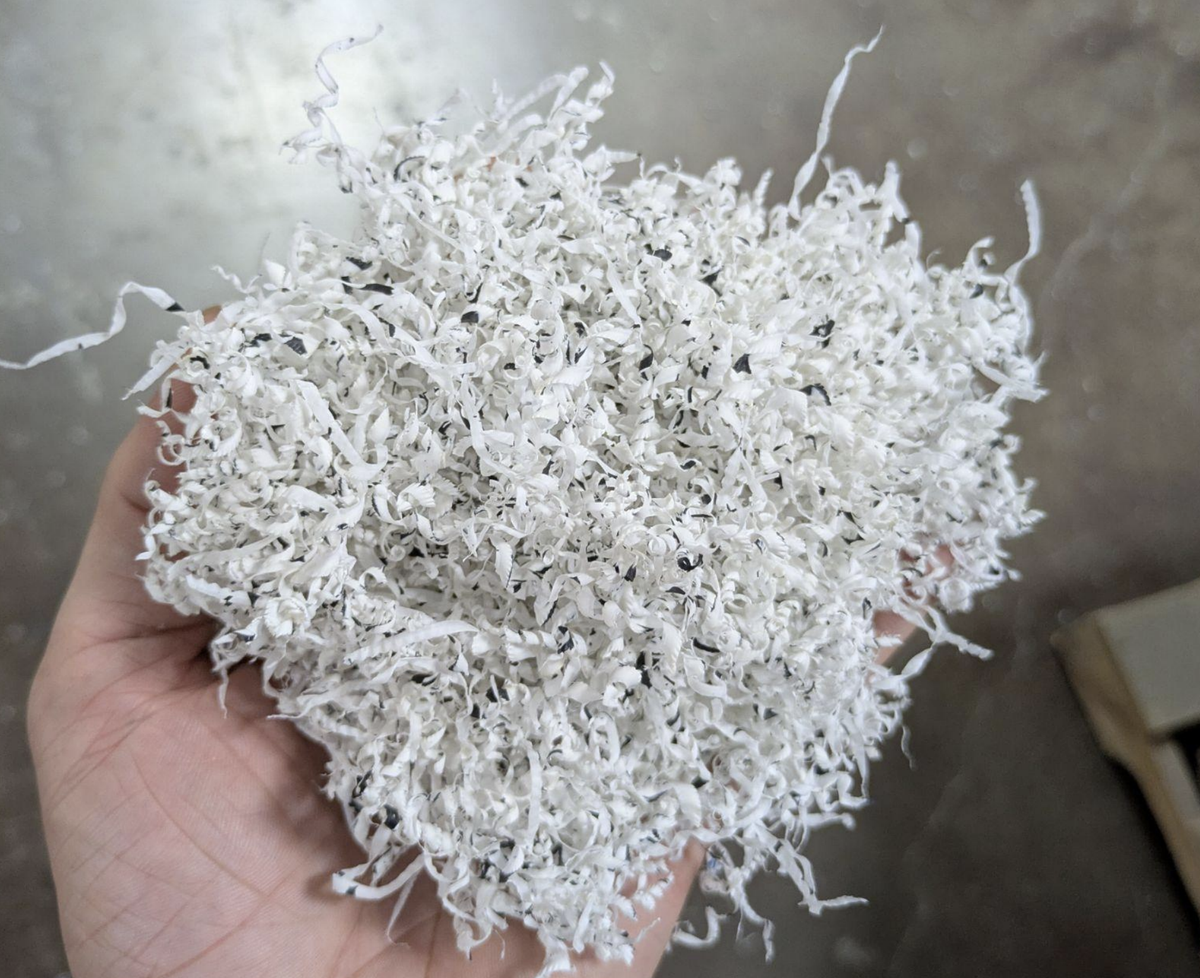
Multiple site visits were conducted throughout the research process. Our team visited Marble Plastics, our primary stakeholder in this project, to learn about our problem area and how this product was made. Joseph made us aware that he has an existing waste stream that needs solving. When finishing the products that they sell, Marble Plastics runs them through a CNC to flatten the boards. When finished, they are left with a byproduct of scraps and shavings. They then take these shavings and re-press them into non-premium boards with less control over the color and pattern. Previously, these re-recycled boards have been used internally or sold at a discount. Joseph posits that there perhaps is a solution for this waste stream, using the scrap material, existing boards, or making something new. In a visit to CDME, we met with Lili to take a tour of the facility and learn about the machinery required for re-melting recycled plastic, particularly surrounding her area of expertise, recycled PLA.
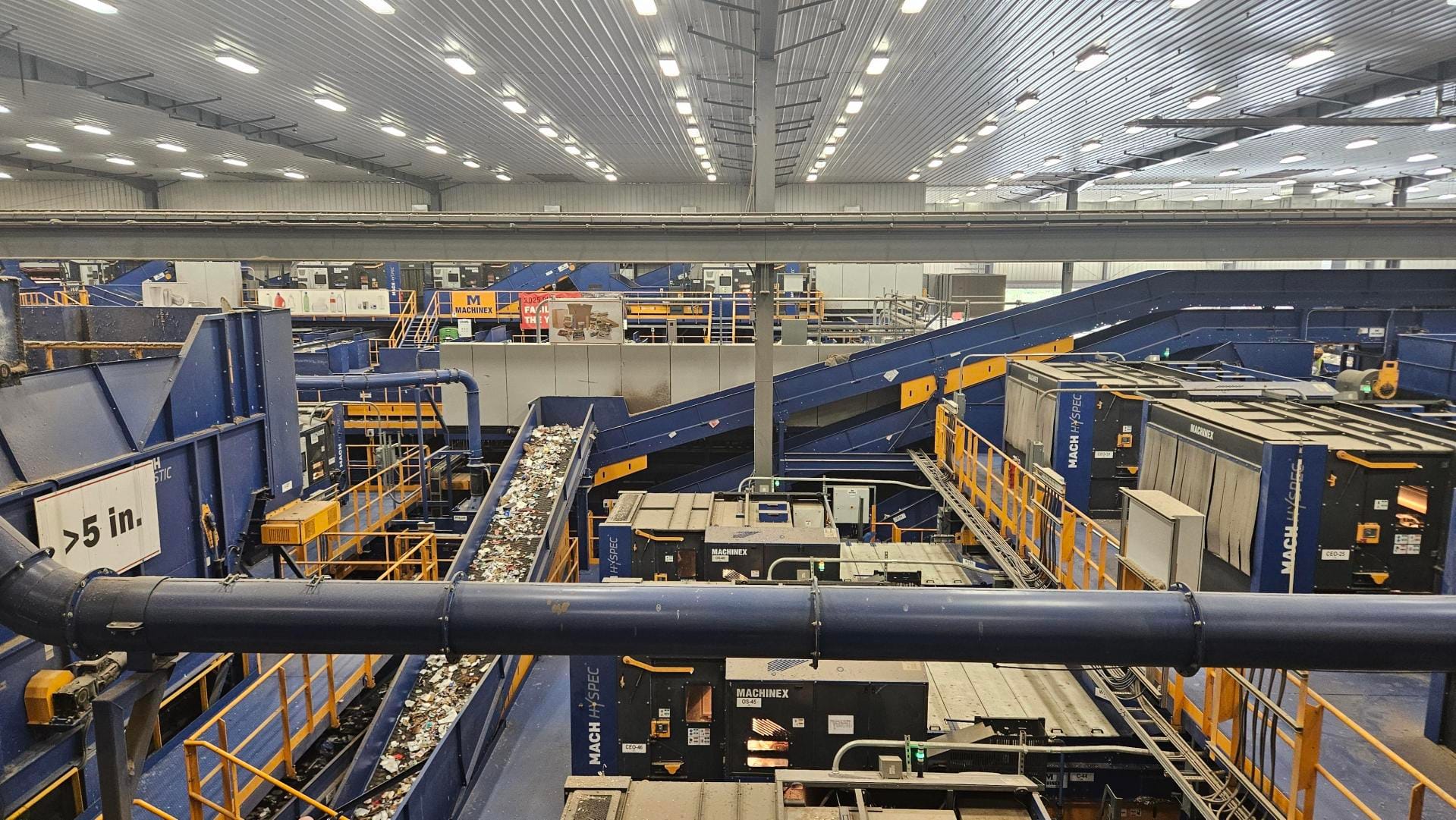
Outside of our project stakeholders, we took a tour of The Rumpke Recycling & Resource Center, where various recycled materials are sorted, baled, and sent to manufacturers. In a conversation with Lauren Monnin, we learned that through continued efforts and innovation by Rumpke, 98% of material that makes its way to the resource center is sent to an end user as recycled stock. We also learned that recycling is more difficult than throwing trash away. Recycling centers as well as end users are very picky about what types of plastic, metal, and cardboard they can take, as well as how much contamination and inclusion are present in the trash, which is usually quite a bit. That is why they ask that LDPE and polystyrene not be recycled, as they cannot process it. They also ask that trash be cleaned of contamination before being sent in, to reduce the risk of inclusion. While these steps are put in place to achieve that very impressive 98% recovery rate, they can also be seen as additional roadblocks that could deter a user from recycling their waste.
Part of The Rumpke Recycling and Resource Center, Rumpke has partnered with COSi to create interactive educational exhibits that teach the process of recycling, starting at the supermarket and ending when the plant sends the bales to an end user.
This effort at Rumpke, combined with all of the new information that I learned myself about what not to recycle, what happens after something gets thrown in a bin, and where that recycled material goes, reinforces the need, or rather the opportunity, to create something that will bring more knowledge and awareness to people about the process as a whole.
Initial Ideas
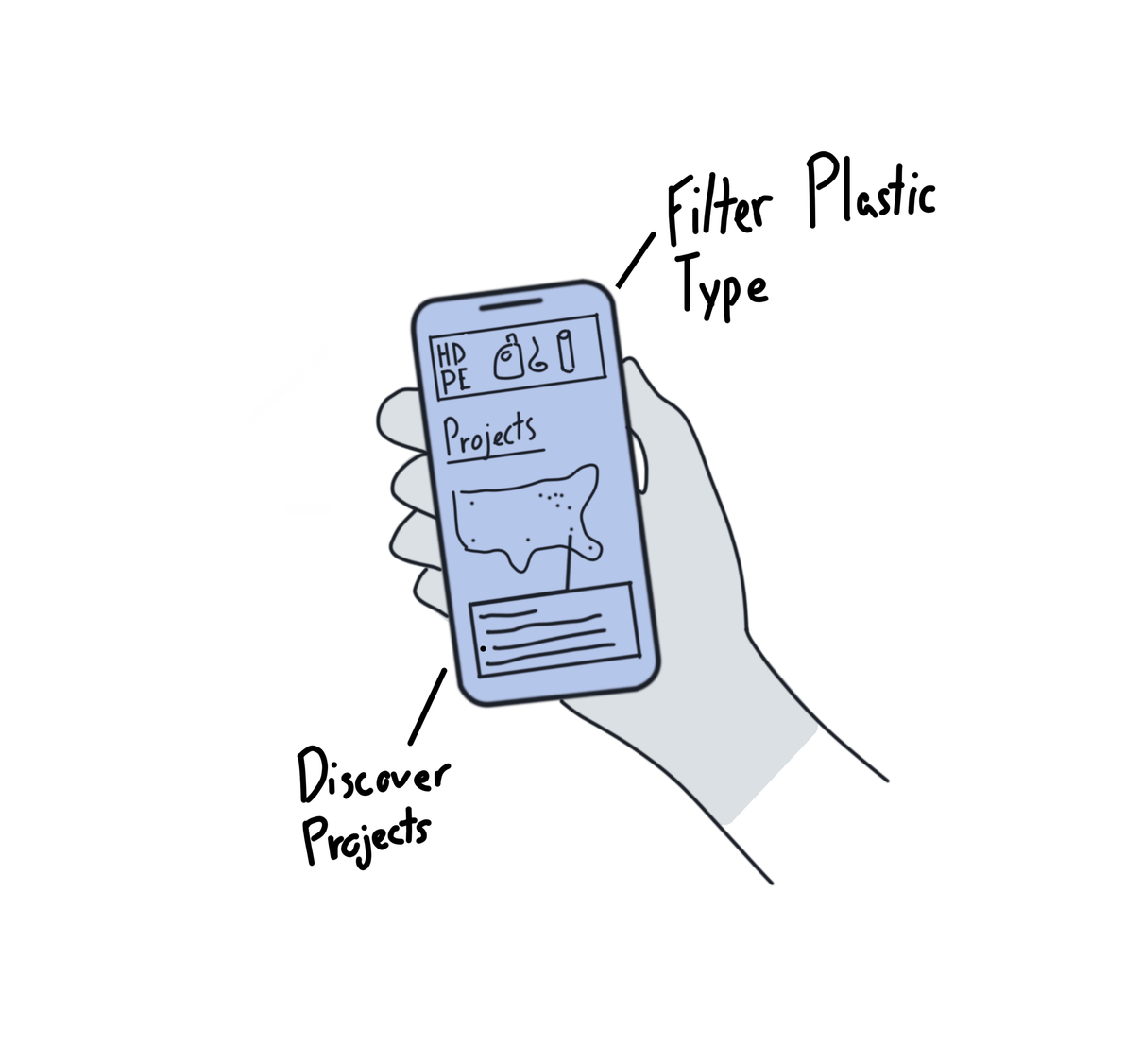
The keystone of this design, an online service/app called TrackMyTrash, is the playfulness of innovation. TrackMyTrash allows a user to view a large database of plastic types that they could have recycled. The app then shows them what interesting new and existing projects utilize this recycled material. This design was inspired by both primary research as well as secondary research into new innovations in recycled plastic, such as a team in Hawaii using old fishing nets to pave roads. The goal of this design is to give the public an easy-to-use database of fun and cool projects, which allows them to see that their recycling efforts are making a difference.
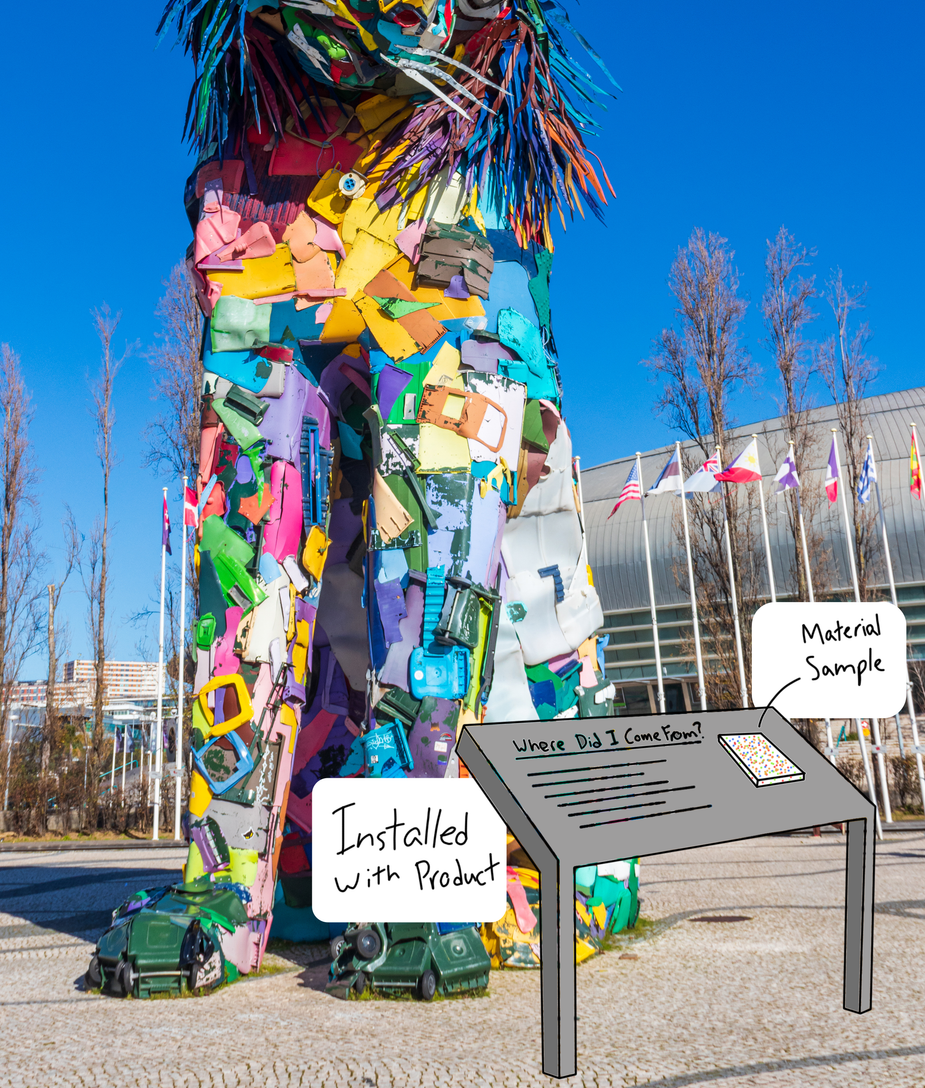
This design features an innovative informational plaque for public installations that utilizes recycled material. Where Did I Come From? tells the story behind the recycled material, how it was processed, sorted, and shipped to an end user. The display also features samples for pre- and post-production of the material that was used, allowing viewers to see the transformation that occurred to create it. The goal of this was to further efforts in educating and spreading the word about recycled material and how it is made.
Where to Go Now
After compiling all research done thus far, I believe that the problem stands clear and present: How do we increase interest in recycling and recycled material? By making people more knowledgeable about the systems that are present, the innovations that are taking place, and the ways that every person along the path can help the world decrease how much waste they are producing. My next steps moving forward are to take this problem and implement it in the form of Local Loops, creating a way that multiple local parties can be involved, and using recycled Marble Plastics material while doing so.
What will it take to transform our throwaway economy into one where waste is eliminated, resources are circulated, and nature is regenerated? (Ellen MacArthur Foundation, n.d.).
References
Ellen MacArthur Foundation. (n.d.). What is a circular economy? Ellen MacArthur Foundation.
https://www.ellenmacarthurfoundation.org/topics/circular-economy-introduction/overview
Klatt, J. (2026). Marble Plastics CNC waste [Graphic].



