
Preventative Care, Not Reactive Care
Context
The current healthcare system is full of breakthroughs and new forms of treatments. Along with the continual advancement in technology, services, and facilities, we should be getting closer to living forever. Some have even frozen themselves in hopes that future technology will revive them. However, is all of this advancement relevant or even accessible to the everyday person?
While advancement is not a bad thing, it is actually good, I believe that if we are to design for good we must also consider those that may have been neglected in these spaces. I am partnered with four other industrial design students and Battelle’s Human Centered Design team to explore the space of assistive and automated medicine in remote and rural applications. This was defined as, “Designing human-machine systems that extend safe and effective care beyond traditional clinical environments.” When we were introduced to the problem, some of the statistics were shocking.
Firstly, there are forty three million people living in rural communities that face primary care health professional shortages. (Tanzeem et al., 2025) Primary care is one of the first lines of preventative care, which is essential to the early diagnosis and treatment of conditions and health management. Professional shortages in this field means less access to primary care. Additionally, over 100 rural hospitals have closed between January 2013 and February 2020. (Rural Hospital Closures, 2020) With hospitals housing many important facilities like emergency care, intensive care, imaging, and surgery, the elimination of these facilities means that some people’s only realistic avenue for these types of care is now wiped. Along with this, provider and staffing issues do not seem to be improving anytime soon. There is a projected shortage of up to 86,000 physicians in the United States by 2036. (New AAMC report shows, 2024) This will cause the already heavy burdens on the healthcare system to grow, creating many more issues within the healthcare field overall. Finally, to make matters worse, mortality rates are 20% higher in rural communities in comparison to urban ones. (Tanzeem et al., 2025) All these statistics point towards communities that currently lack and soon will be losing resources, staffing, and facilities to provide adequate and accessible care.
Primary Research
The current healthcare system has become increasingly more distant from serving the everyday individual. Instead, it is more focused on profits, specialized care, and administrative compliance. I believe that healthcare should go back to its roots. We should be looking towards serving, designing for, and helping the regular folk. This is why I chose to focus on the everyday individuals in the chartered village of Gallipolis.
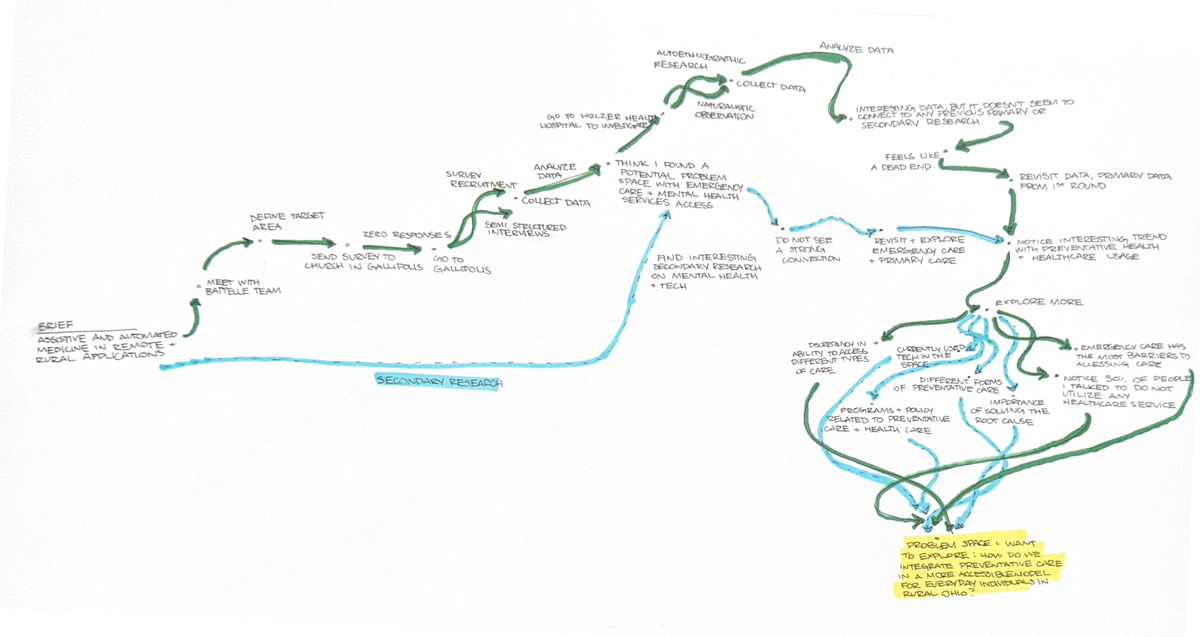
My journey to find my target area was an interesting one. I began by creating a ten question survey that focused on participant’s experiences and perceptions with healthcare services and health related technologies. I reached out to a pastor in the Gallipolis area to see if I would be able to send my survey to his congregation, to which he obliged. After unsuccessfully receiving any responses, I decided to make the two hour trip to Gallipolis to talk to and recruit people myself.
For the recruitment process, I chose to seek out individuals in public spaces of Gallipolis. These public places would allow me to engage with more everyday individuals in a greater capacity, in comparison to somewhere like a hospital, where most people there would be seeking treatment. My strategy included approaching individuals, providing them with a brief overview of my research interests, and providing them with the option to participate or not. If participants showed interest in engaging in further conversation about the topic, I would begin conducting semi structured interviews. These interviews would allow me to gain some more insights into areas that the structured survey did not cover.
I began at the library first because of their public facing access as an institution that provides resources to the public. This attracts a wide population of individuals throughout the community. While engaging with people, I received some skeptical looks that seemed suspicious about my investigation. While recruitment at the library was unsuccessful, one of the librarians did provide a useful resource, Rio Family Healthcare. This practice was opened by a local resident that had returned to the Gallia county area after medical school to serve their community. So far, I have been unsuccessful in being able to speak with the physician, but I hope to in the future.
The next place I went to recruit was the downtown area of Gallipolis. This area was chosen due to its function as a public environment that is surrounded by a park, local businesses, restaurants, and residential living spaces. Here, I was able to engage with a variety of everyday community members from families, young adults, workers, and retired individuals. Of the 34 individuals that I approached, I received seven (7) survey responses and performed 14 semi structured interviews. This resulted in a response rate of just over 20% for my survey.
From these data sets, there were some interesting points and trends that jumped out at me. I found that there was a disproportionate amount of individuals that struggled to obtain emergency care services in comparison to the number of individuals that regularly used emergency care compared to any other healthcare service. Of the seven (7) that responded to the survey, 57% struggled to obtain emergency care while only 14% regularly utilized emergency care. In comparison, 86% regularly used primary care while only 29% struggled to obtain primary care. I then began looking at and comparing the barriers that inhibited care. The largest barriers to receiving emergency care were attributed to high costs, long wait times, and socio-cultural barriers. With socio-cultural barriers relating to language, religious, and cultural norms. Then I coded the conversations from my semi structured interviews, with some organizational help from AI, and began analyzing that data. Another interesting trend jumped out at me. Of the 12 that I engaged in interviews with, 50% of those individuals did not use any form of healthcare service at all. This was a shocking number. When this finding was put alongside the data from the survey, it seemed to indicate some serious issues with either local healthcare system access or usage, especially in the emergency care department.
While I was still analyzing the data, I was also doing secondary research. During this research, I began to explore different areas of policy, programs, and types of care within the medical field to see what might be useful in better understanding and diagnosing the problem. While researching, I stumbled upon the article, “CMS to add more chronic disease conditions to ACCESS model in 2027,” by Anuja Vaidya. The article explained how the Centers for Medicare and Medicaid services will be rolling out a voluntary ten-year program. This program encourages health technology companies to help Medicare enrollees manage and improve their chronic conditions. Participating companies would receive monthly payments to use their technology to help Medicare enrollees manage and improve their conditions, with higher payments for improved markers. The goal of this program would be to find ways to reduce chronic disease in America. (Vaidya, 2026) This began my interest in understanding how preventative care could be one avenue to help solve the issues of accessing care.
Secondary Research
The phrase “reducing chronic disease in America” stood out to me. It has been well documented that the average population in America is not getting any healthier as time goes on. We face shorter lifespans, lead unhealthier lifestyles, and the rate of chronic illnesses is rising. Here is where I began to question, what if we began to tackle the problems at the root of the cause instead of at the point of issue? At times with healthcare, it can feel as if we are acting reactively to situations, when they arise, as opposed to proactively, before they arise.
One study tested exactly this. A newer care model, called personalized medicine, was tested against the traditional medicine model on their effects towards healthcare service utilization and healthcare expenditure over a three year period. The personalized medicine model utilized a strong physician and patient relationship with a central focus on quality and personalized preventative care. This included more rigorous 60 to 90 minute physician visits that included health screenings, diagnostics, and personalized coaching for nutrition and exercise.
With personalized medicine care, individuals paid an average monthly cost of $150. With this added monthly payment, healthcare expenditure was practically the same between both groups, with some participants saving money being enrolled in the program. By year three, 63% of members had achieved monthly savings above their $150 monthly fee. Additionally, healthcare service usage was dramatically reduced for personalized medicine members. Utilization of any emergency services for non members, traditional medicine users, was at 17.3% and was at 10.1% for any urgent care utilization at year three. In comparison, emergency services utilization for members was 14.7% at year three, while urgent care utilization sat at 4.5%.
This is a significant difference in healthcare service utilization for the personalized medicine group in comparison to those enrolled in traditional medicine. Results from this study indicated that personalized preventative care focused on wellness and prevention, with strong physician and patient relationship, can help improve health management and reduce healthcare utilization and expenditures. (Musich et al., 2016)
Along with this, I also began looking into how artificial intelligence and other technology played a role in these forms of care. From the article “AI and Predictive Analytics: Transforming Preventative Care,” I learned that nearly 70% of healthcare providers utilize machine learning models to identify high risk patients and intervene before critical issues arise. (Piash, 2025) This is a vast majority of providers that use, and secondarily train, these models to better diagnose and treat patients preventatively. Research has also shown that machine learning model directed preventative care and medication adherence reduced five year hospitalization risk by over 38.3% and 37.7% respectively. (Piash, 2025)
I believe these examples highlight the beginning of a new avenue, where preventative care and machine learning may also become a part of the everyday person’s health journey to better understand and improve their own health.
Solutions
This leads me to my area of interest. I am interested in exploring how we might integrate preventative care in a more accessible model for everyday individuals in rural Ohio.
Research has shown that modifiable lifestyle behaviors are associated with healthcare expenditures, which are influenced by health risks. As these health risks increase or decrease, healthcare spending follows these trends. This may be attributed to improved health over time helping to mitigate the prevalence of chronic disease and disability. (Musich et al., 2016) By improving the health of individuals with modifiable lifestyle behaviors, this may also reduce preventable healthcare service usage. In doing so, this could help ease those same individuals' issues with accessing care that may no longer be needed or needed as often.
By easing burdens on the struggling healthcare systems in these rural areas with less preventable healthcare service usage, it also opens up the doors for more individuals that truly need care. Now how can we implement this preventative care model into a greater variety of avenues that increase its accessibility and adherence? Below are some solutions that I have proposed. These are not meant to fully replace seeing primary care physicians for preventative care, but to supplement that care and make it more comprehensive.
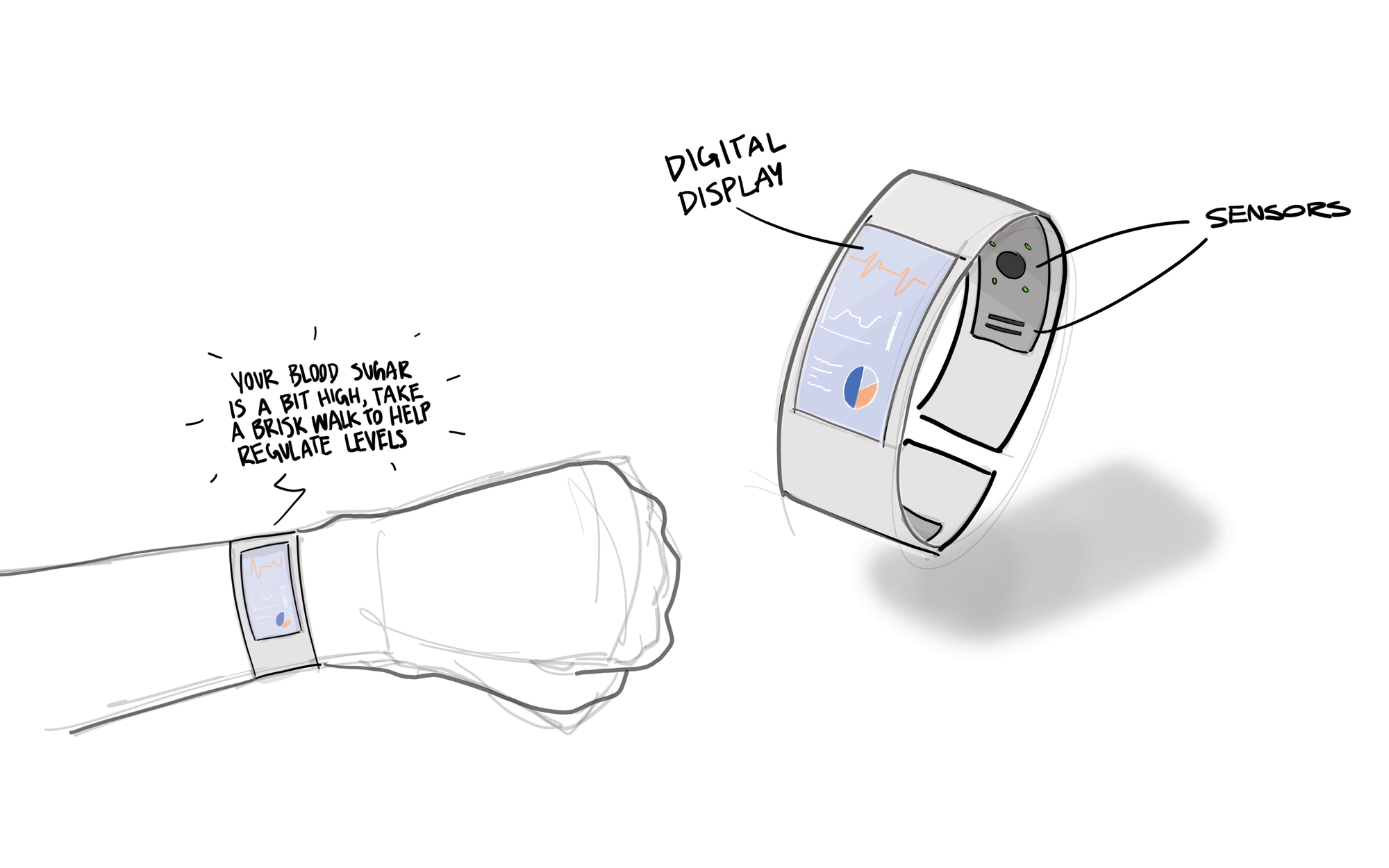
Soma is a wearable that tracks health information and diagnoses health trends. It would use machine learning models to help the user better understand their health condition and recommend lifestyle changes to make improvements to their health and health markers. Users would also be able to access a database of their health metrics from Soma, allowing them to better understand their overall health.
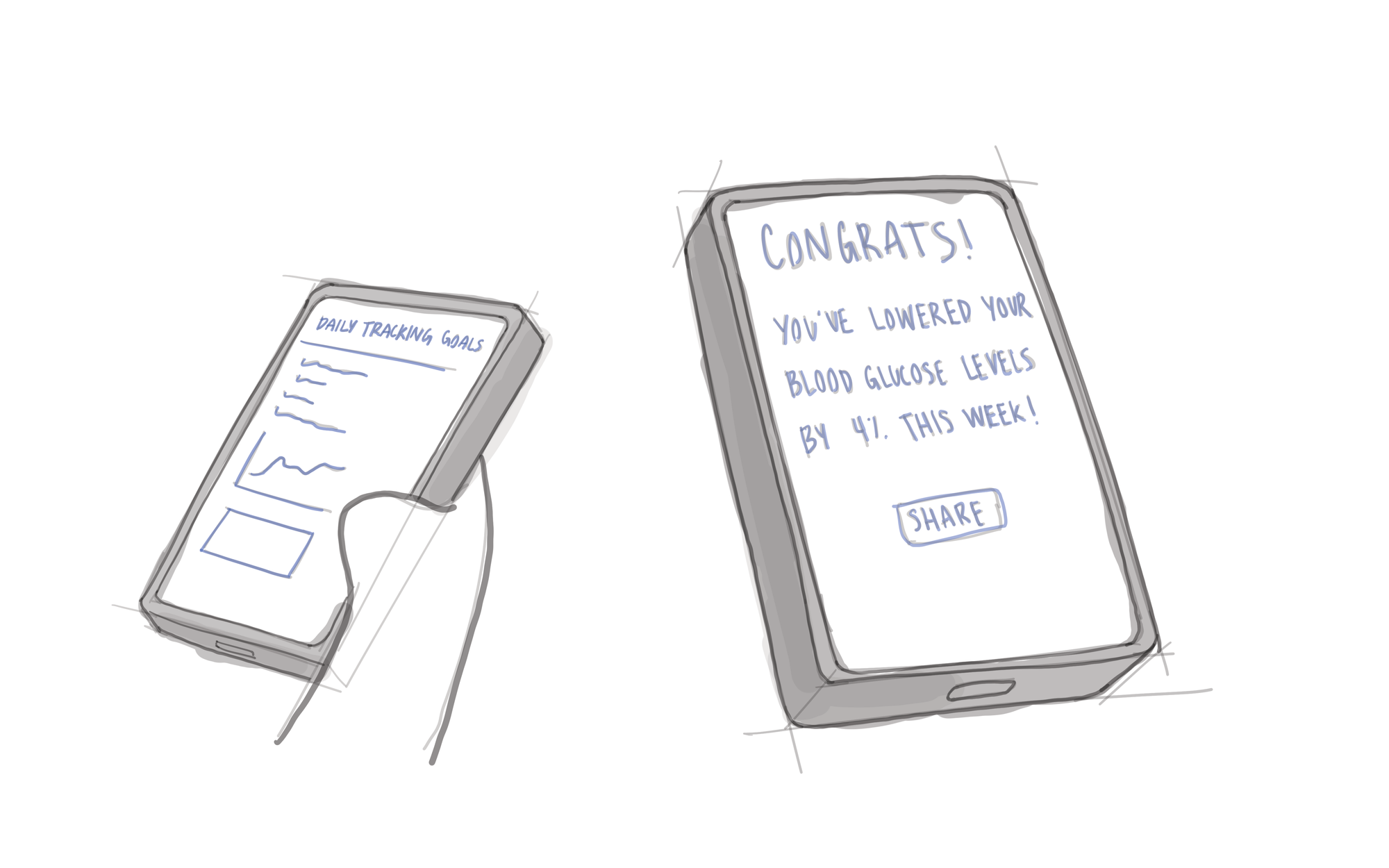
Baseline is an app that helps individuals track their health activities, goals, and markers. Users would be able gain insights from the app on how to improve their lifestyle. It would also have a sharing feature, where users could post their health activities, trends, and goals for users to encourage and keep each other accountable.
Future Solutions
I decided to include one solution that could be implemented in the future. It is not in consideration right now due to the scope of the current project and solution.
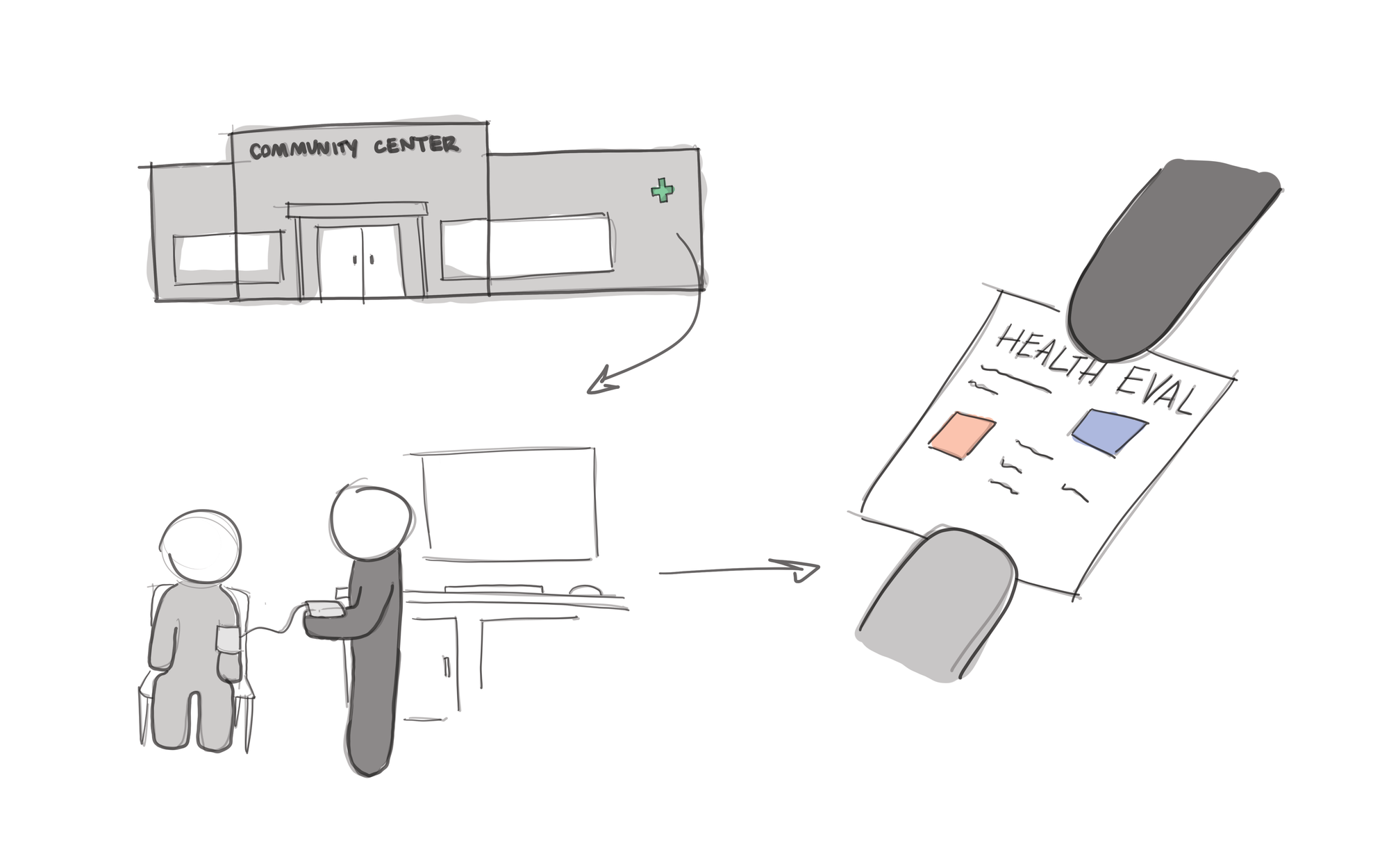
Gauge is a diagnostic health clinic that is situated within the local community center. Its focus is on providing local community members easier access to better understand their health. Health metrics would be measured, people would be given an evaluation, individuals could act to improve their health, and then individuals would be able to return at more regular intervals to assess their health standing and improvement.
Next Steps
While these are still working concepts, these will be developed further along with new ideas as further research is conducted. Next steps also include engaging in codesign with potential stakeholders to better understand what their needs are.
No generative AI was used in the writing of this section.



