
Primary Research - Connecting with AI

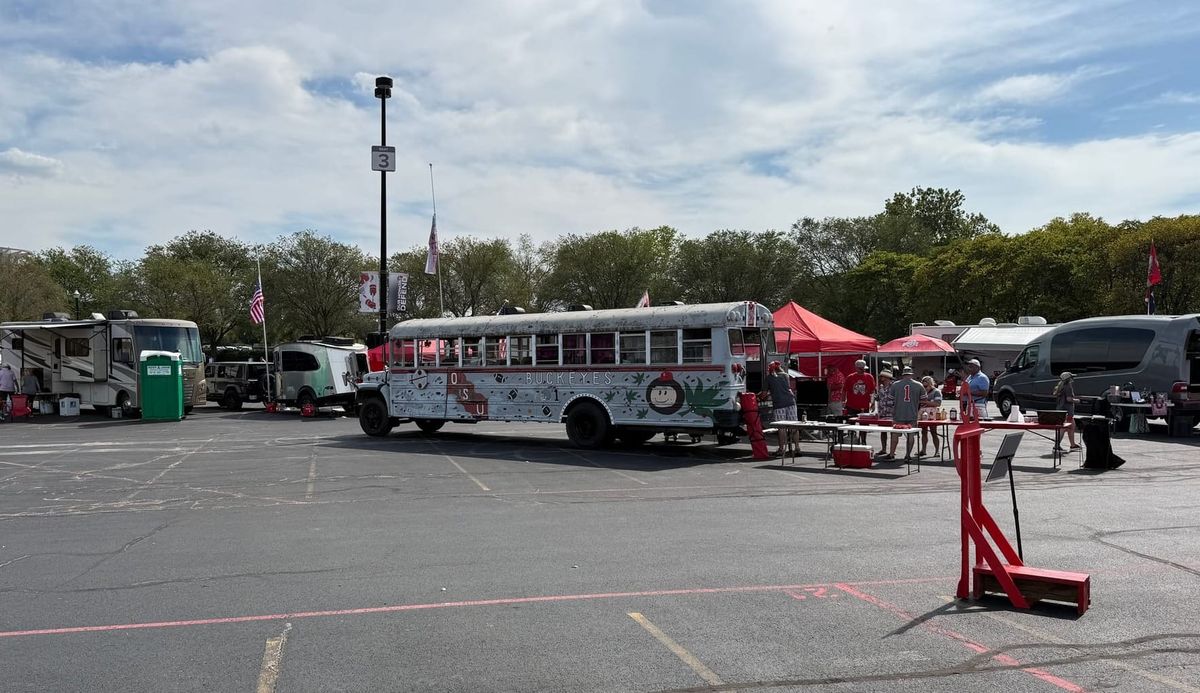
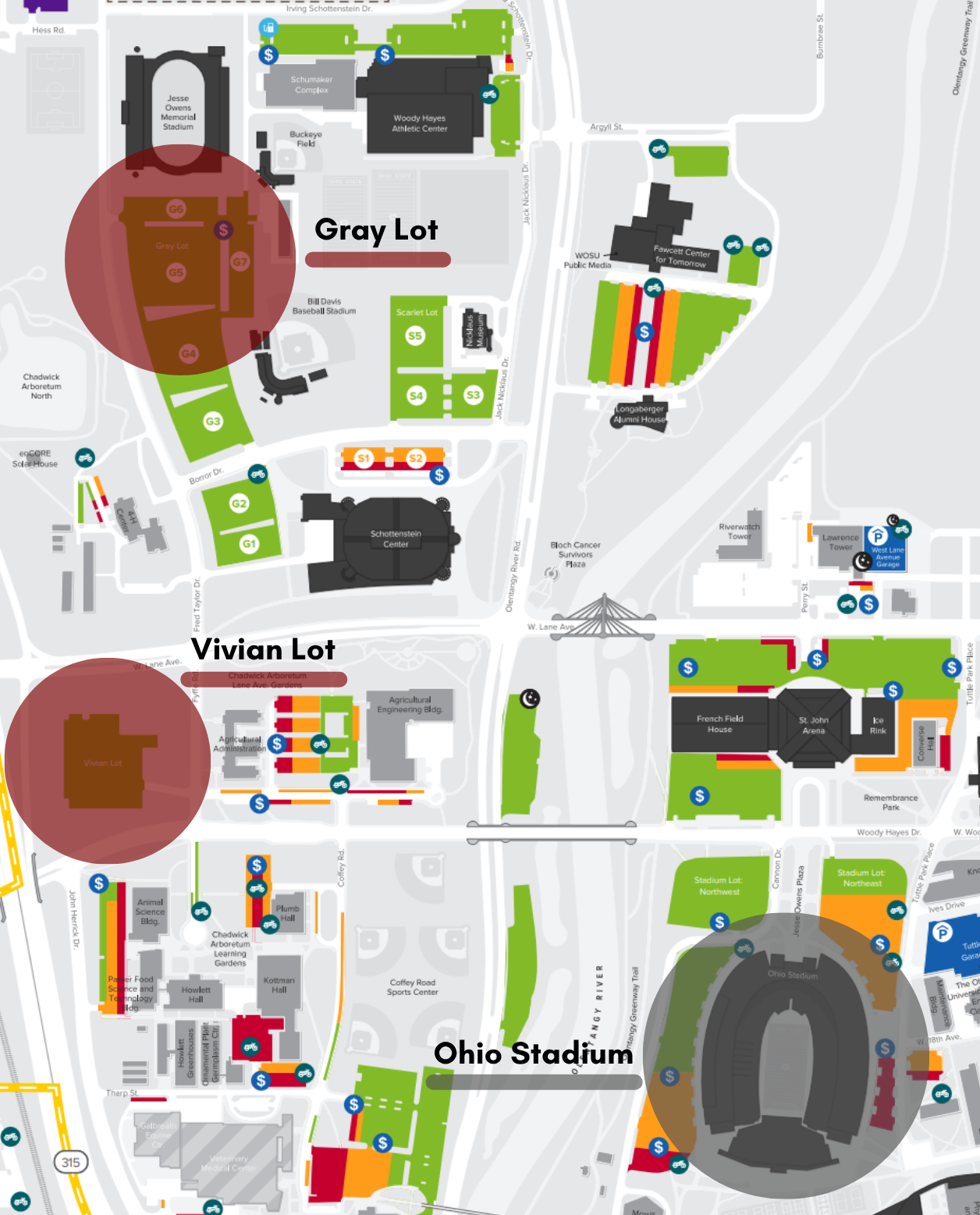
The main portion of my primary research consisted of a series of short interviews conducted at tailgating locations around Ohio Stadium before an Ohio Stat Buckeyes football game. Tailgating at an Buckeye's game is a very popular activity and covers a couple miles of the university's property in surface lots, garages, and local restaurants and businesses, so I had to narrow down the area that I would be talking to football fans. I tried to move myself further away from Ohio Stadium because many of the lots anywhere close to the stadium are far too loud to be having an in depth conversation. I ended up selecting the "Gray Lot" near the Jesse Owens Memorial Stadium and "Vivian Lot" near the Agricultural Administration as seen in Figure 1.
I also decided as I started my research that I wanted to talk to those who it would be most convenient to talk to which includes targeting those talking in a small group of 3 or 4 people, those sitting down at a small table, or one person by themselves. I didn't want to approach large groups that seemed to be all talking together or participating in gameday activities.
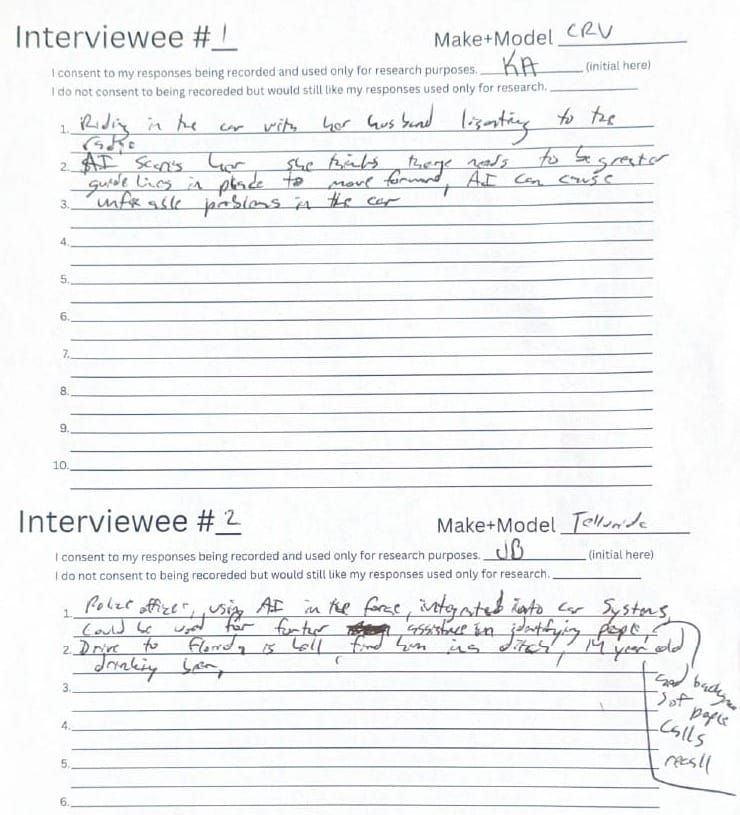
From that, I had 6 interviews with 8 people total (some interviews had more than one interviewee). With them I asked for them to sign their initials to consent for the interview to be used for my research and a handful of questions that look less than 5 minutes for almost all interviews. I then took notes using the simple template I made below in Figure 2.
The questions asked to participants include:
- What make and model of car do you drive?
- How do you like that?
- Who do you typically drive with?
- Where do passengers sit (children particularly)?
- How would you say your family gets along in the car? Is there a different dynamic to being in the car versus out of the car?
- What do your children complain about when they're in the car?
- What are backseat passengers typically doing when they're in the car?
- Is there a social environment when your family is in the car?
- How do you adjust or adapt your car for long road trips?
- What are your feelings on AI in general? What do you use it for?
- How do you feel about assistive AI tools being present in your car?
Unfortunately, I largely didn't learn much from the proceedings of the first 5 questions, however where I did consistently get the most interesting and useful answers was from question number 6.
Question number 6 responses:
Interviewee #1 stressed that AI scares her a little bit and that in order to move forward and to make her feel safer about AI tools being in her life, there should be greater guidelines in place to restrict what AI companies can do with their users information and what users are able to do with their platforms. She also felt that having such tools integrated into her car would worry her about potential breakdowns of the system that could cause issues with repair.
Interviewee #2 stated that they are a police officer and that they occasionally receive training or are informed of how AI is being used in the force or rising innovations in the law enforcement world. He said that he could see it being used to help better identifying people's faces for investigations or in a more domestic setting could be used to recall past text messages or calls connected to your phone.
Interviewee #3 said that AI, particularly its use in cars, is being misunderstood by many. He felt that the use of AI in cars could help create a personalized experience for drivers in which the system in the car could learn your driving habits and adjust with the way the car functions or give accuracy of things like mapping directions. He also felt that Tesla was doing well with many of these things.
Interviewee #4 included two people who both said that they had recently purchased new cars. They said that they used Claude to help them with getting recommendations for cars and giving summaries and overviews of what the cars provide.
Interviewee #5 felt that AI in cars could help people become better drivers and commented on the poor driving skills of others she experiences around Columbus. She also felt that it would be helpful in making directions and mapping more efficient and highlighted how far this technology has already come since her use of MapQuest when she was younger.
Added note about Interviewee #5: She also gave me a great, unrelated, story regarding her son in the backseat. She said that her son uses a CD player in the backseat to stay entertained while she is driving and one day a car in front of her started braking suddenly and caused her to brake appropriately hard to avoid collision. Unfortunately, in the process of braking her son had come loose of his harness and scraped his eye on the CD player in front home him nearly causing blindness in one eye.
Interviewee #6 was an individual who owns a Tesla Cybertruck and said that he uses the chatbot known as Grok about everyday. His response was unique and existed on an extreme side of the spectrum of answers. He said that he uses Tesla's Full Self Driving mode when he is driving, even with his family, and is able to get some work done or use social media while the car is driving for him. His opinion was that the use of assistive tools like this and Grok help him, and can help many others, eliminate unnecessary brain cycles to allow users to focus on more important tasks.
I was very pleased with the range of responses and opinions I received from participants. My conversation with them helped confirm some assumptions I had and bring up many new concerns I wasn't aware of before. This method gave me a good idea of the needs of a range of demographics in the car and gave insights into how I can leverage the new information to apply to AI use in the car.
Additional Primary Research
In addition to interviews, I attended an event at a local design firm named Priority Designs who hosted a series of speakers, mostly designers, who each gave a unique perspective on the way that they are using AI tools in their work ranging from business, design, education, and domestic applications.
One speaker who peaked my interest with his content was Senior Industrial Designer, Jeff Burger. His lecture revolved specifically around human-robot interaction and outlined where technology is at right now including different forms and uses. He discussed the way these robots are being implemented into our lives, whether we should trust them, and picked apart design elements that made certain robots more approachable than others.
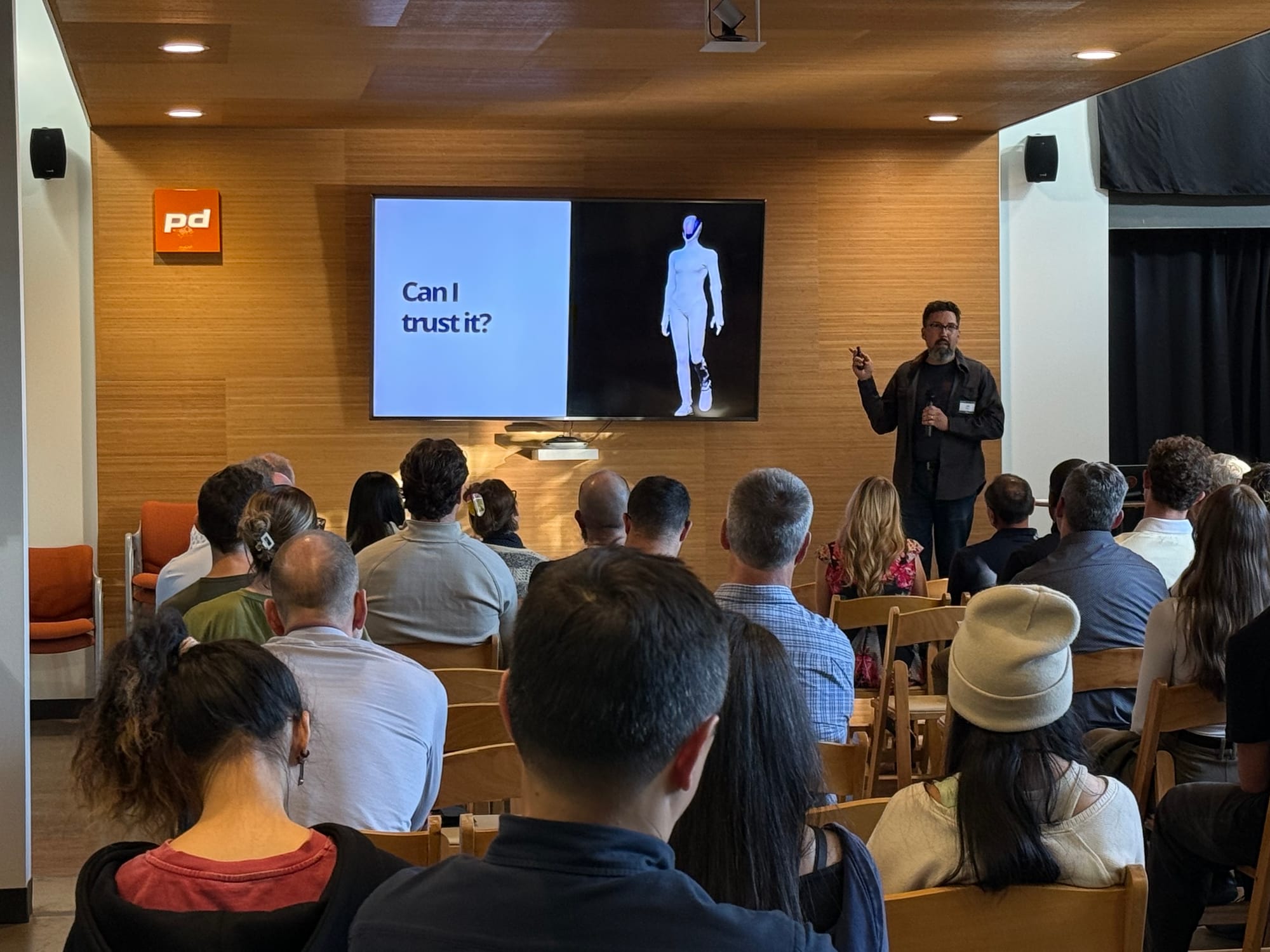
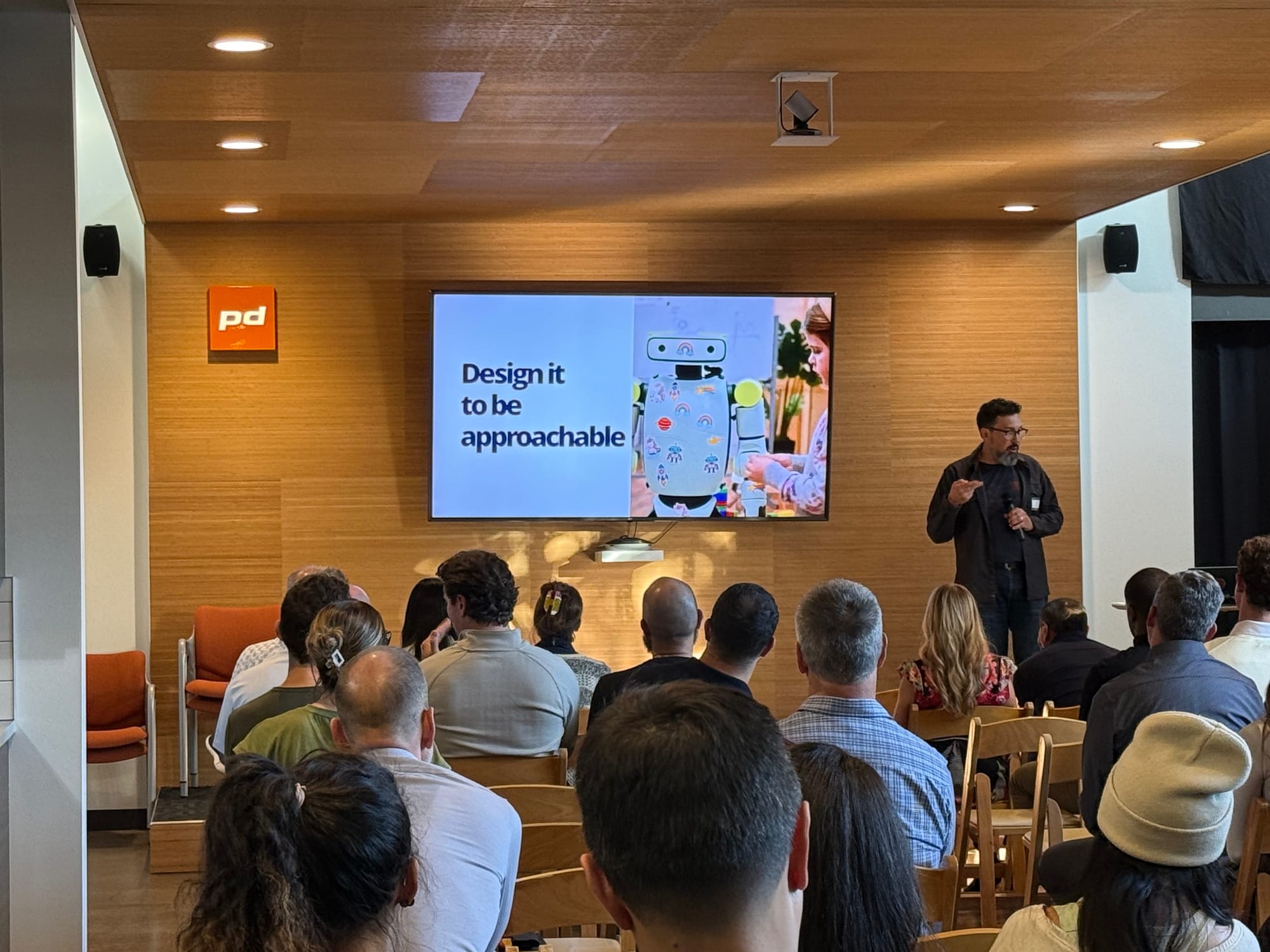
Photos from Jeff's talk on human-robot interaction taken by Matthew Colton
One of my biggest takeaways from Jeff's talk was that humans should not fear the idea of such robots entering our lives as most of them are being developed to make our lives more efficient and many who create them have the goal of bettering people's relationships between each other and brining us closer together. Developing a trust between humans and robots sounds like a fun challenge to work on that I think could be an area I get into in the coming weeks.
References
CampusParc. (n.d.). campus-parking-map. Columbus, https://osu.campusparc.com/media/40mjk5gs/campus-parking-map.pdf



