
Primary Research | Hocking County | Logan EMS Interview
With introduction from the Laurelville EMS, Avery Thielman headed over to Logan to conduct further interviews with Hocking County EMS responders.
Melanie Bushby: There's quite a wide variety of people that I think most rural communities, maybe don't get to see. Like us versus like Clinton County. Like they're very rural out there and they don't really have the sightseeing activities and stuff that we do. As for the people that live in the county, you know, we're kind of an underdeveloped area. Poverty and stuff. We have a lot of elderly people.
You can see all kinds of different problems. We get the normal sick, we get the people that wait too long, because they don't want to go to the hospital, because they don't like doctors like “I haven't seen a doctor in 20 years”. They eventually call for us and now there's a whole bunch more going on.
We get a lot of, like, trauma in our area, mostly, like, car accidents because we have the highway. We have 664, which is very, you know, curvy and up and down, left and right. Yeah, and it's hard for people, you know, if you don't drive that very often. Yeah, it's very difficult.
Q: Weather conditions make that worse?
Josh Bartlett: Absolutely.
We have a lot of like motorcycles that come through just because they love the twisty and the turny. So, you know, unfortunately we go on a lot of motorcycle accidents.
Melanie: Problems with the caves and Hocking Hills, we unfortunately have a couple people like almost every year that fall off.
So we have a protocol that we work under, and if you're having a STEMI, which is essentially, like, a super art attack. It gives us permission to leave the county to go to Lancaster, because that's where the Cath Lab is. People that are having these super heart attacks, they get a cath lab, which unfortunately we don't have within our county.
Major traumas, like we're going to ship them to Columbus.
Josh: Yeah, we're going to call helicopters.
Q: Helicopters don't fly all the time, right?
Melanie: They do weather checks. If it's too rainy, too whatever, you know, they're not gonna come, unfortunately. But we still need to get that person to Columbus. So what we'll do is this hospital next door, you know, it's one of the lowest levels of hospitals.
Q: But they still have doctors, right?
Melanie: They still have blood, they still have capabilities of things. So what we'll do is we may take that critical person, take them here, to stabilize, and then they can arrange for a private transport company to come and pick them up and take them to Columbus.
Josh: You know, so it might take us 15 minutes just to get to you. And that's running lights and sirens.
Q: Would you consider that hospital an intermediate point? Or do people actually stay there for treatment?
Melanie: They do have a long stay available, so you can be admitted there. There's just not as many beds as some of the bigger hospitals. But they don't have trauma surgeons. They don't have the capability to do strokes.
So if you're having a stroke, they can give you a CAT scan, which will tell you which kind of stroke it is, 'cause there's really two. There is either a bleed or a clot, right? And they can determine, okay, if it is a clot, then we can give you this special medication that will help try to break the clot up.cha. But if it's a bleed, they don't have surgeons.
If there's something that they need that they can't do here, they'll telehealth somebody, usually in Columbus, and they'll try to figure out, okay, what kind of treatment do they need? Can any of it be done here while they're waiting for transport to take them where they ultimately needed to be?
Service:
Melanie: We've had a lot of people where, okay, they've crashed their car at the bottom of the hill, and somebody sees it. Well, there's no service. So they'll run up the hill to try to get service, or they'll go to somebody's house and use a landline to call for help. So now the dispatcher is asking questions, like, is the patient breathing? Are they dead? Mangled? Like, can they get out of the car? Well, now they're over here and they're like, I don't know. They're down there.
[Referencing personal experience with lack of service] Now we have to call the coroner to try to figure out what the next steps are, and we don't have any service. So we have to use their home phone in order to call somebody.
But I would say the majority of our calls are not what would normally be deemed emergent.
Josh: We've got four trucks that cover 400 square miles. And there's no good way to get to some of these places. It's back roads... Some of the roads really aren't roads anymore. They're just kind of gravel and pebble.
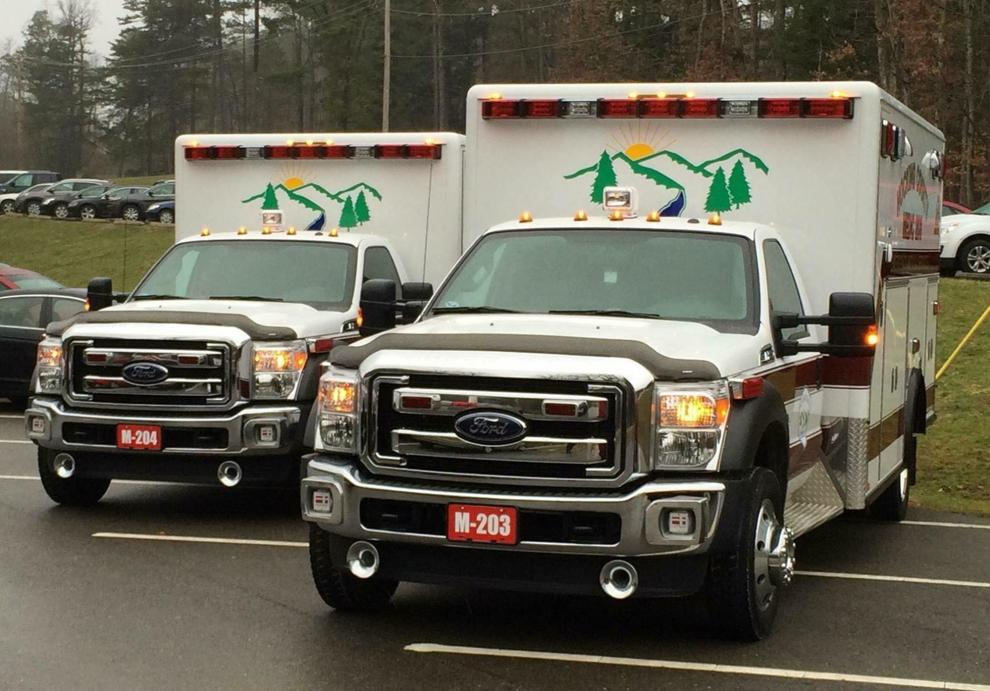
Q: Do you think your trucks are equipped to be able to go on that type of terrain?
Melanie: They are, but I think the problem that this particular department has is our trucks get beat up a lot. You know, with the twists and turns, and the crappy roads, and just the mileage that we put on them on a daily basis, just because we're going so far to try to get to you, and then bring you back, you know, the trucks are falling apart. We can only fix so much, you know, and they're stupid expensive. It's not like we can just go buy another one. And then they take 3 years to make. So even if we ordered one today, it would be three years before you get it…. [and] half a million dollars.
Volunteer departments:
Melanie: There's generally at least one paramedic on every truck. Our goal is to have two paramedics, but, you know, we just may not have the staffing that day for that, so it's at least a paramedic and EMT. We do have a sprinkle of intermediate EMTs, which is kind of like a hybrid of both. But the critical stuff, the traumas, the cardiac arrests, even childbirth, you know, you need more people for that. Just having extra hands, you know, they don't even necessarily need to be, like, paramedics level.
Josh: The city of Logan Fire Department is the only paid department in the county. So all of the other fire departments are all based on volunteers, which are available when they're available. You know, a lot of them work the normal 9 to 5 job, and then in the evenings, they're available to help.
I'm a captain out of Washington. Yeah. I work here for some time. I teach at the college part time. I'm part time at Logan Fire.
Melanie: They will send that volunteer fire crew with our EMS crew as well, just for extra people. And the nice thing is a lot of them actually have EMT certifications or at least first responder certifications. So they know they're kind of medically inclined as well.
So me and my partner, we started CPR, I put them on the monitor, and we're doing a whole bunch of stuff, and I had one of the fire guys ventilating the patient, because that was a skill he was able to do. The other guys would help hand me things or, hey, I need you to get onto the truck and get this suction. You know, run out and grab. And then, they're also very good about bringing the cot in the house for us.
Josh: Yeah, just one less thing you've got to worry about.
Melanie: There are some departments that have community paramedic programs, which I think we’re in the process of getting one. The community paramedic, he will go out and he will make sure that everything that you need is happening. You will still need to see your normal doctor.
Josh: He's more of a facilitator.
Reasons for calls regarding poverty:
Melanie: It's the poverty, the lower education. But unfortunately, a lot of people don't have family doctors. They don't have transportation to get to the doctor or the urgent care. So their only means for medical services is us, because we can transport them. We can take them to a doctor.
I think part of that is the issue. I think if we could educate them, to know the difference between this is an emergency room call, this is just going to a doctor. But getting them that information and them being able to be like, okay, I don't need to go to the emergency room I probably just need to go to my doctor, but I don't have a car. And I don't have family that can take me, so my only option is the emergency room. If you're in poverty, you probably don't have cars or means of transportation. So you can't go to school, you're not getting the education because you can't go.
That's another problem that we go on; they're too poor to pay for their meds. They can't afford the stuff that they're supposed to be on. So now they're not taking them and they're getting worse, having these terrible side effects. Or, well, I can only afford a month's worth, but I'm going to cut them in half so that way I can have 2 months worth, trying to make stuff last longer than it should be.
Mental health:
Melanie: Mental health is such a big thing these days. I don't feel like there's really enough facilities or places for people who need help with mental health.
This revealed the emergency responders perspective on poverty within rural communities as well as the big transportation barriers during medical emergencies.



