
Printing Waste
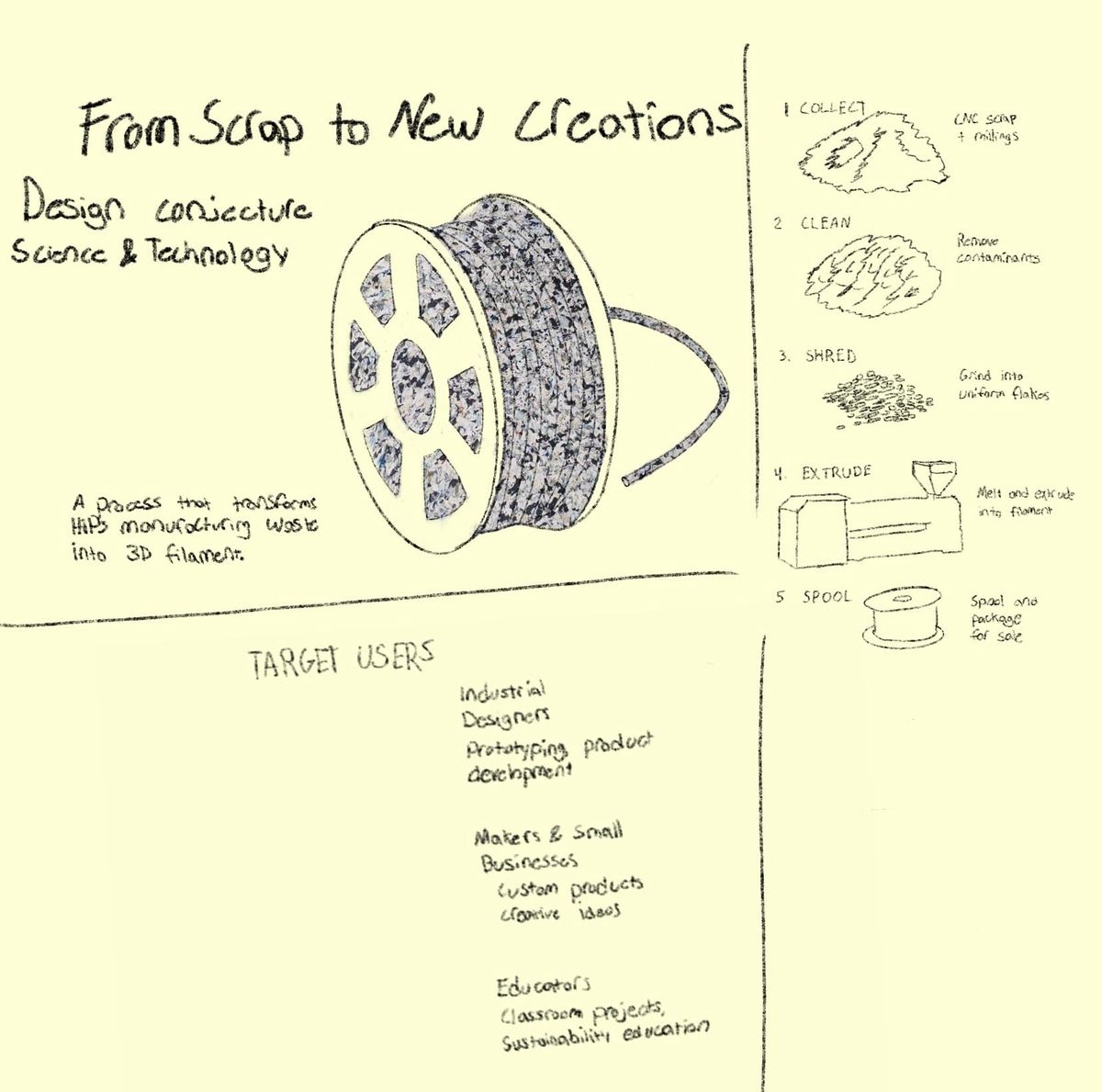
What if the material that was removed during the Marble Plastics CNC manufacturing process could be a tool for an entirely different manufacturing process? Research has shown that HIPS recycling is possible, but it is not repeatable without consequences. The more times the scrap material is repeatedly processed, the more the quality of the material degrades over time. This route that Marble Plastics could explore suggests turning the scrap material into 3D printing filament rather than the sheets that they currently produce. This filament could then be sold to local businesses, designers, and educators to support prototyping or small products. This process creates a better relationship between the creators and the material, promoting sustainability. While this process seems like it would be a straightforward process, it is not without its limitations. Contamination, particle sizes, printability, and mechanical performance are all variables that need to be considered when discussing implementing this into Marble Plastics workflows.
References:
anitio, E. W., Lutfhyansyah, N. R., Efendi, B. M., Mardiyati, Y., & Steven, S. (2023). From Electronic Waste to 3D-Printed Product, How Multiple Recycling Affects High-Impact Polystyrene (HIPS) Filament Performances. Materials, 16(9), 3412. https://doi.org/10.3390/ma16093412



