
Rabbits to Robots: AI as an Invasive Species
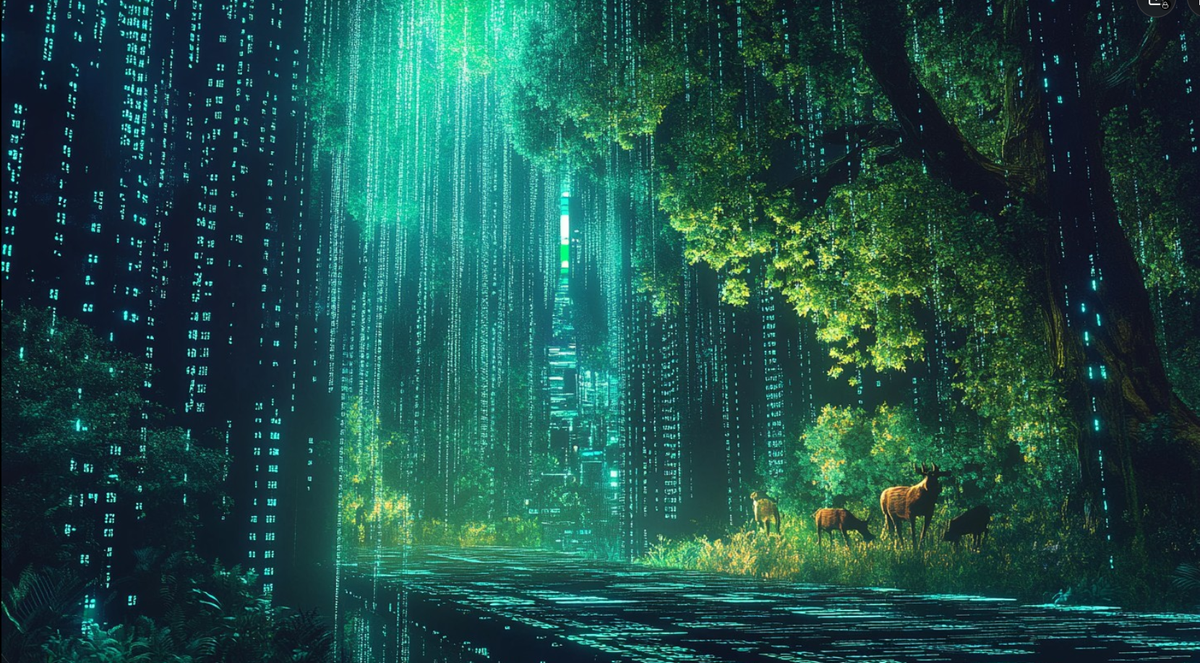
After a surprise attack on AI company Hugging Face, there are many questions surrounding the occurrence and behavior of rogue AI and how it will impact our collective digital ecosystem. This article takes a look at the issue through the lens of rogue AI as an invasive species, drawing parallels between the digital world and organic nature.
“The news is highly technical, but in a nutshell: an unreleased OpenAI system managed to break out of an offline environment during a cybersecurity test. It found a place on OpenAI’s computers where it could secretly communicate with other versions of itself, largely unbeknownst to humans. Seven hundred of these AI agents planned and executed a hack of a different AI company, Hugging Face. We learned last week that, after this, the models also managed to take control of some parts of OpenAI’s own systems” (Perrigo, 2026)
“This risk of escape is no longer as far-fetched as it sounds. “It's better and more accurate to think of these things as potentially self-replicating life-like forms that can turn into digital infections under the wrong conditions,” wrote an OpenAI researcher, who posts on X under the pseudonym Roon, last month. “We are not so far from an autonomous model self-exfiltration & replication event. Maybe we will see entire cloud infrastructure companies be run as zombies by models, mostly undetected” (Perrigo, 2026)
“What might happen then? To understand the risks, consider invasive species. In the 19th century, the British introduced rabbits to New Zealand, hoping to harvest them for meat and fur. Lacking natural predators, rabbit numbers exploded, threatening New Zealand’s economy, which was heavily reliant on the export of wool. The rabbits were eating crops that farmers were growing for their sheep, and their burrows were eroding the soil in fields. So, starting in 1882, the colonial government released around 8,000 stoats and weasels into New Zealand, believing that these predators would bring rabbit numbers down.
But New Zealand’s ground-nesting bird species—like the kiwi, which had not evolved any fear of these foreign predators—were far easier prey for stoats and weasels. Some 40% of New Zealand’s native bird life has gone extinct since. The New Zealand government spends $25 million a year trying to eradicate invasive predators, but this effort has so far been largely unsuccessful for one key reason: the predators can breed. Only 8,000 stoats and weasels were ever released, but they self-replicated exponentially. Millions of their offspring became endemic in the environment, making the task of undoing their introduction far more burdensome than the task of releasing them in the first place” (Perrigo, 2026)
“Of course, the internet is not an ecosystem in the natural sense of the word. But it does have its own ecology. The internet’s current inhabitants—humans and businesses—behave under the evolutionary pressures of the economy, where profitable behaviors are rewarded and perpetuate themselves, and unprofitable behaviors die out. Escaped, self-perpetuating AI swarms would enter that ecosystem as disruptors” (Perrigo, 2026)
Review
With the alarming story this article describes, it raises many questions about the impact that uncontrolled AI may have in the years to come. With the frontier of technology still expanding at an alarming rate, there are very few places we can look for guidance in terms of how events may play out, but this instance gives us an issue in the natural world that we can draw a line between. Invasive species are a huge issue all over the world and in many forms, and the rate and style with which they multiply and conquer may inform us on how we may expect these rogue programs to behave. While there are many nuances between the two issues, any clue or insight as to how we may combat the problem will always be useful and worth examining with a closer lens.
References
Perrigo, B. (2026a, September 1). How rogue ai could act like an invasive species. Time. https://time.com/article/2026/09/01/rogue-ai-chatgpt-hugging-face-invasive-species/



