
Rehabilitation Beyond the Clinic: How Autonomous VNS Could Accelerate Stroke Recovery
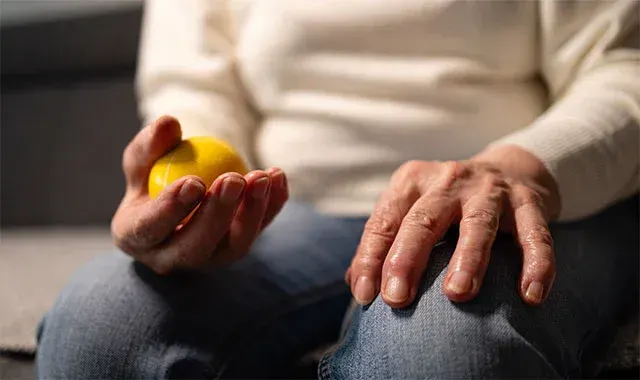
The article “Rehabilitation Beyond the Clinic: How Autonomous VNS Could Accelerate Stroke Recovery” by Battelle paints a clear picture of how one of Battelle’s case studies is developing autonomous technology to improve patient care. In this specific use case, Battelle is looking at creating a system to autonomously stimulate the vagus nerve in concordance with movement attempts to improve motor function in patients.
Currently, this type of therapy requires regular, in person care with a specialized therapist. This system is inaccessible to some due to, but not limited to, factors like transportation, cost, and precise care. With a wearable that would autonomously stimulate the vagus nerve, this therapy would become accessible to many more. This could also increase the frequency of rehabilitation, which may even improve outcomes. However, this technology is still currently in the testing phase. To have this system be fully autonomous will be a difficult process due to the complex nature of the therapy. However, if able to be done, this would open up a whole new world of possibilities for medical advancements.
That human-in-the-loop is what makes the therapy work. It is also what makes it expensive, access-limited and impossible to sustain outside a clinical setting. Most stroke survivors report ongoing deficits and unmet rehabilitation needs. For VNS, a therapy whose effectiveness depends on repeated, precisely timed sessions, the gap between what patients need and what the healthcare system can deliver is significant. More frequent, sustained stimulation paired with movement effort could improve motor function over time, but only if patients can actually access it consistently.
A wonderful solution to some large barriers to care, like high cost and reliable care, to create more accessible care
Finding a specific area where technology can assist in fulfilling a person’s role
The challenge for autonomous VNS is doing that reliably for the population that needs it most. After stroke, the engineering constraints are significant:
Neuromuscular signals are often weak, inconsistent and highly variable from patient to patient
A system calibrated to one person's signal profile may perform poorly for another's
The device must be simple enough to use independently by someone with significant hand impairment
It must perform consistently without technical support in an uncontrolled home environment
Very important to identify the shortfalls and barriers sooner rather than later. This is where prototyping can be very helpful
Understanding what the limitations are and setting goals to improve and fix these is very important to developing life changing interventions
The long-term vision is a fully closed-loop system that operates continuously throughout a patient's day, requiring nothing more than an initial calibration. Every reach, every grasp, every effort to open a door or pick up a cup becomes an opportunity for paired stimulation and the incremental neuroplastic change that, accumulated over weeks and months, can translate into meaningful recovery of function.
This is something I think is very interesting, start with the application that is achievable now, but still dream big and aim to have something that will be achievable hopefully in the near future
Considering what the full future outcome will be, while scaling it back to create something that can actually be created and utilized now with what’s available is very interesting to me
Reference
Battelle. (2026, August 11). Rehabilitation Beyond the Clinic: How Autonomous VNS Could Accelerate Stroke Recovery. Inside Battelle. https://inside.battelle.org/blog-details/rehabilitation-beyond-the-clinic--how-autonomous-vns-could-accelerate-stroke-recovery
No generative AI was used in the writing of this post



