
Rescue from Above: How Drones May Narrow Emergency Response Times

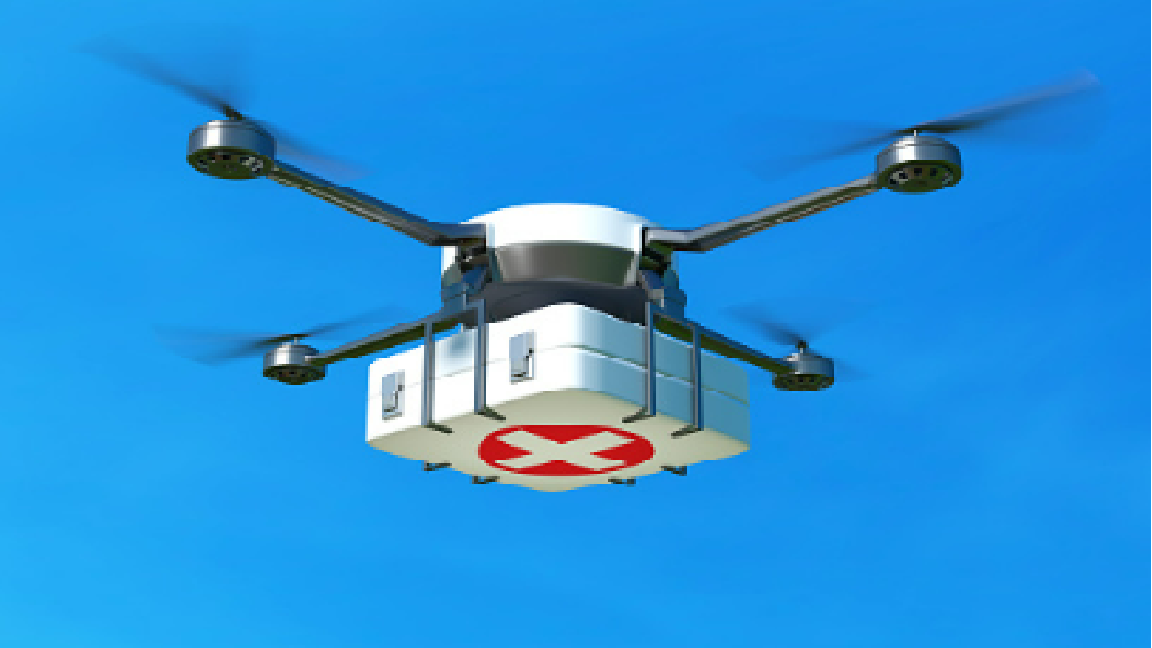
“Starting in September, if someone in Clemmons, North Carolina, calls 911 to report a cardiac arrest, the first responder on the scene may be a drone carrying an automated external defibrillator, or AED.
‘The idea is for the drone to get there several minutes before first responders,’ such as an emergency medical technician or an ambulance, said Daniel Crews, a spokesperson for the sheriff’s office in Forsyth County, where Clemmons is located” (Andrews, 2024).
“More than 356,000 people have a cardiac arrest outside of a hospital setting every year in the United States, according to the American Heart Association. Most people are at home when it happens, and about 90% die because they don’t get immediate help from first responders or bystanders. Every minute that passes without medical intervention decreases the odds of survival by 10%” (Andrews, 2024).
This is a key statistic that may drive my project. The main problem in cardiac issues is that bystanders are not able to help while first responders are able to make it to the patient.
“A 2017 study found it takes an emergency medical services unit seven minutes, on average, to arrive on the scene following a 911 call, though response times vary considerably by region, and rural wait times can be much longer. Starks said she believes the drone-delivered AEDs in the pilot study could reduce the time to treatment by four minutes compared with first responders” (Andrews, 2024).
In rural areas, drones may not be the correct solution. It would require medical staff who can deploy a drone to be always active, which in a smaller medical center may not be possible. It could also be expensive, another limitation to smaller rural healthcare centers. I may be able to come up with an intervention that does not need this extra layer of interaction, solving response times even if someone is not employed to do so all the time.
“In Florida, Tampa General Hospital, Manatee County, and Archer First Response Systems, or AFRS, began a program in May to deliver AEDs, a tourniquet, and Narcan, a nasal spray that can reverse an opioid overdose. The program initially covers a 7-square-mile area, and EMS dispatchers deploy the drones, which are monitored by drone pilots.
There were nearly 108,000 drug overdose deaths in the United States in 2022, according to the National Institute on Drug Abuse” (Andrews, 2024).
“In the United States, one hurdle for drone programs is that the Federal Aviation Administration typically requires that drones be operated within the operators’ visual line of sight. In May, when Congress passed the FAA reauthorization bill, it gave the FAA four months to issue a notice of proposed rulemaking on drone operations beyond the visual line of sight.
‘The FAA is focused on developing standard rules to make [Beyond Visual Line of Sight] operations routine, scalable, and economically viable,’ said Rick Breitenfeldt, an FAA spokesperson” (Andrews, 2024).
The FAA is another example of how this could not apply to rural communities, as drones may need to travel even further than suburban areas to deliver care. There may be an opportunity here to explore other options of delivery, even airborne ones that may be under the FAA weight limit that could still help save a life.
References
Andrews, M. (2024, July 22). Rescue from above: How drones may narrow emergency response times. Journal of Health Economics and Outcomes Research. https://jheor.org/post/2611-rescue-from-above-how-drones-may-narrow-emergency-response-times



