
Rumpke Visit
Rumpke is a family-owned waste and recycling company based in Ohio. Founded in 1932, the company has grown from a small local waste collection business into one of the largest privately owned waste and recycling companies in the country. Today, Rumpke provides residential, commercial, and industrial waste collection, recycling, and landfill services across several states, including Ohio.
During my tour of Rumpke’s recycling facility, I learned that recycling is not as simple as putting something in the recycling bin and hoping it gets recycled. Rumpke serves about 1.9 million customers and recycles more than a billion pounds of material each year. The recycling rules are also different depending on the region, rather than being the same across the entire United States. For example, Rumpke accepts polypropylene, even though this is not the standard for every recycling facility.
They also explained how important it is for materials to be clean and loose. Items like plastic bags, film, Styrofoam, and some types of plastic packaging can cause problems because they cannot be processed with the other materials. Even something as common as a Pringles can is difficult to recycle because it is made from multiple materials.
I was fascinated to learn how much material is actually recovered after it enters the facility. According to Rumpke, around 98% of the material they're able to recycle is sent to other companies to be used again, and about 12% of the total material they receive cannot be recycled and is sent to a landfill.
This helps save landfill space, which is especially important because landfills are difficult to build on after they are filled; we have to wait at least 10 years to build anything on old landfill plots. The waste underneath continues to settle, making the land difficult to develop and creating potential public health concerns.
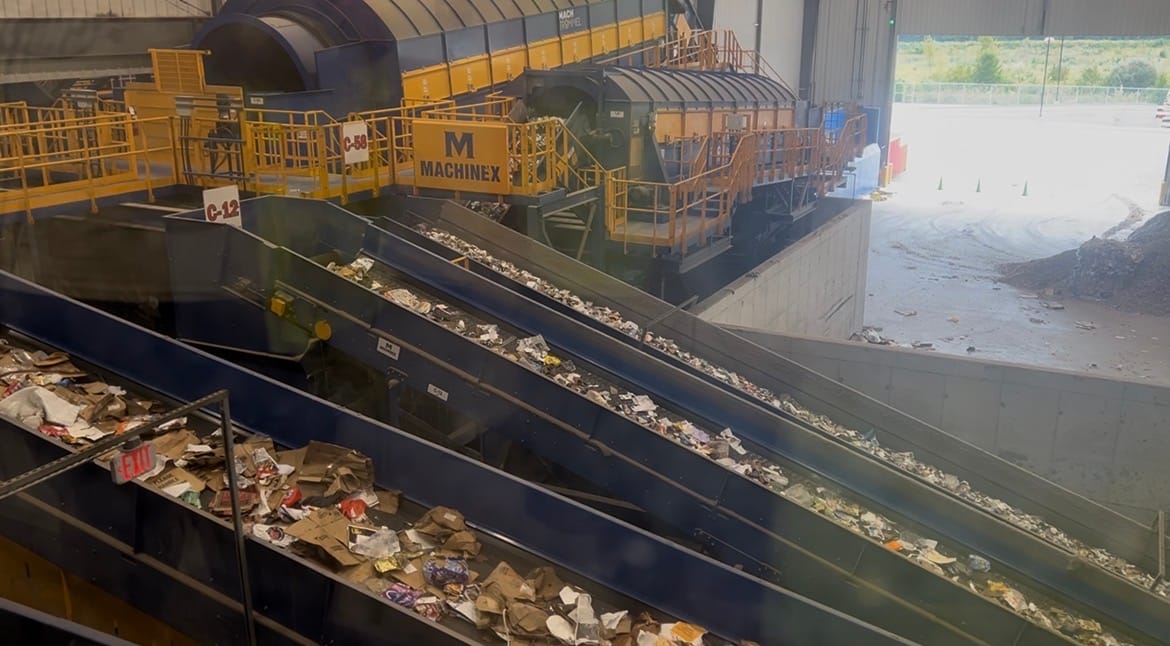
Rumpke owns and operates landfills and transfer stations, so I was able to see how recycling, waste collection, and disposal all connect to each other as part of a much larger system.
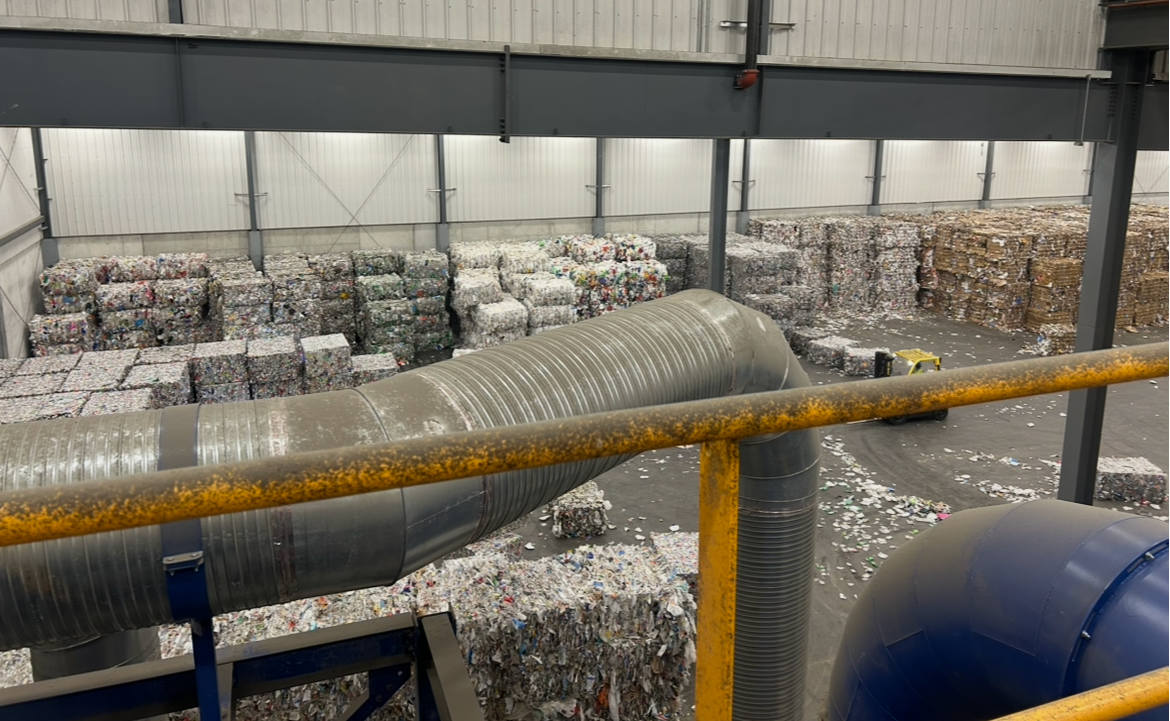
This is what recycled bales look like. They're clean, sorted, and organized plastic waste ready to be sent to other companies.
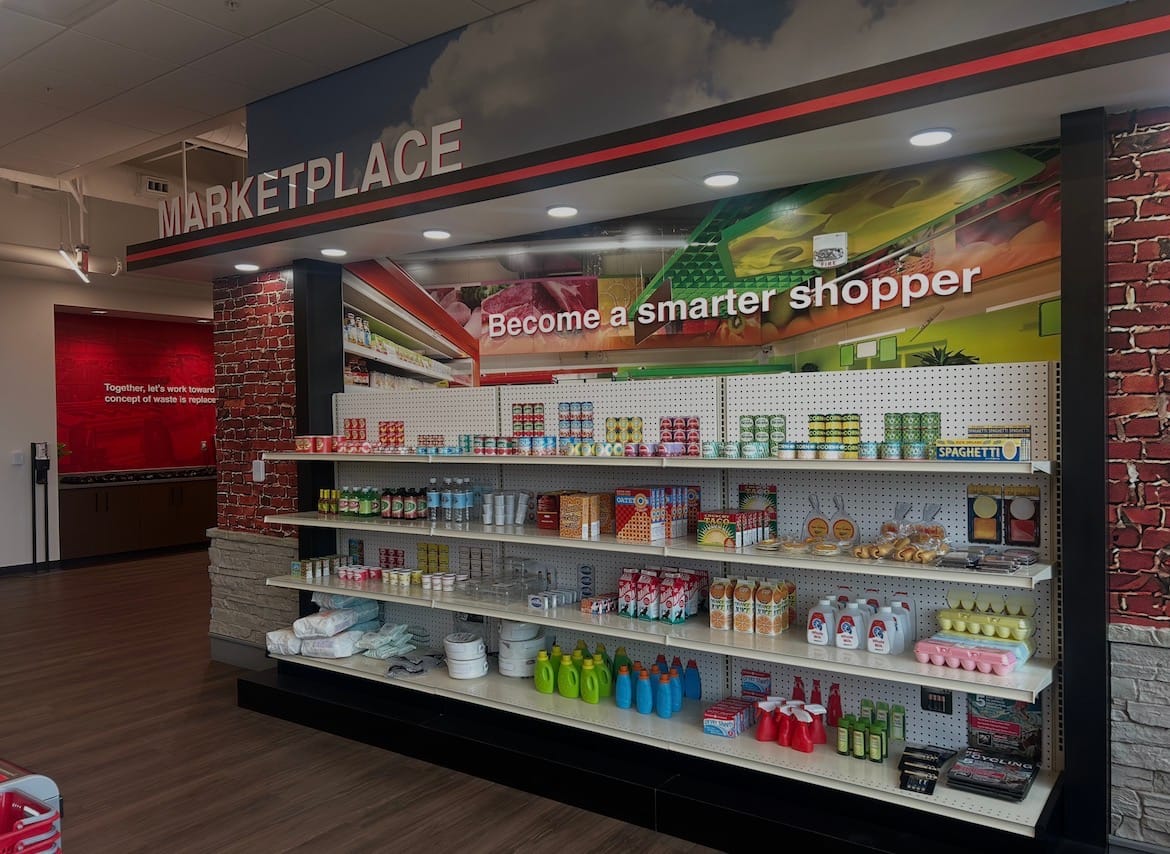
At the end of the tour, we are taken to a room with games that teach about recycling. They games are mostly informative or they question your knowledge and what can be recycled and what cannot be recycled. The game above gives you a score based on your shopping decisions. The idea is to show that recycling decisions start before something even becomes waste, they start when you choose what to buy.
Visiting Rumpke gave me a different perspective on recycling than I had before. Before the tour, I mostly thought of recycling as something that happened after I put an item in the recycling bin. Seeing the facility made me realize how much more complicated the process is. There are so many materials that look recyclable but actually cannot be processed because they are made from multiple materials, are too small, or can cause problems with the machines. The Marketplace game also made me think about how recycling starts before something even becomes waste. The products we choose to buy and the packaging they come in can affect what happens to them later.
What stood out to me most was seeing the amount of material moving through the facility and how much of it is being recovered and sent to other companies. What I was able to see is only a tiny spec in the grand scheme of things. I got to see how recycling is not a perfect system and unfortunately some materials still end up in landfills. The tour made me think less about recycling as simply putting something in a blue bin and more about the entire system behind it. I'm also now questioning how much responsibility should be placed on consumers when the materials and packaging we buy are often difficult to recycle in the first place.
Reference
Rumpke. (n.d.). Recycling Center Tours https://www.rumpke.com



