
Satellites Might Actually Brighten our Skys?
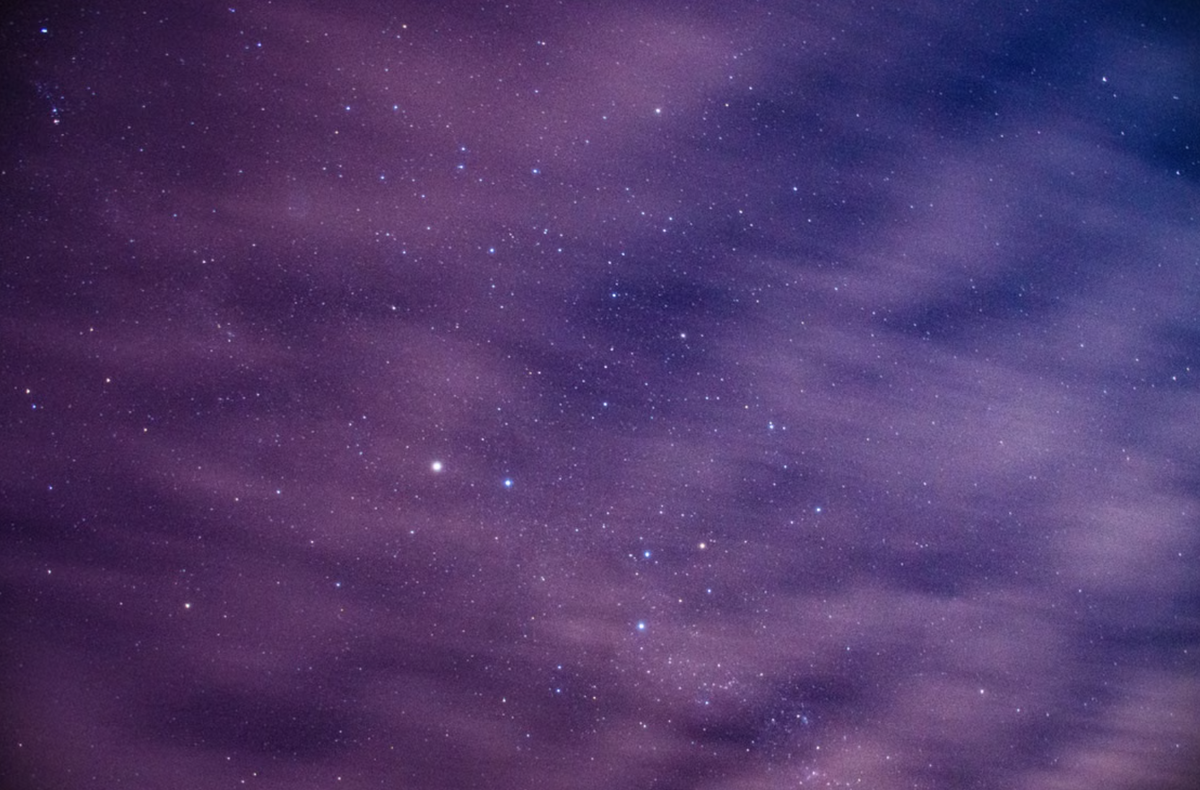
Earlier concerns about satellites focused on the light pollution they created in the night sky. They could be visible to the naked eye and interfere with long-exposure photographs used in astronomy. Although efforts have been made to reduce their brightness, the growing number of satellites in orbit presents new challenges for astronomers and the night sky.
"There appears to be nowhere left on Earth where astronomers can view the stars without light pollution from space junk and satellites, according to a new analysis... "As space gets more crowded, the magnitude of this effect will only be more, not less" (Kahn 2022).
"...the collective cloud of satellites and debris above Earth might scatter light back into the atmosphere more generally. Even if the individual objects aren't visible, could their presence add an additional background glow to the night sky in a way that would wash out the faintest reaches of the cosmos?" (Kahn 2022).
"Even at the darkest possible sites on Earth, the sky itself has a natural glow in the upper atmosphere from sources like ionized particles. But on top of that background glow, objects already in orbit may add about 10% more diffuse light, they estimate" (Kahn 2022).
"In 1979, the International Astronomical Union suggested astronomical observatories should be built only where light pollution adds less than 10% more light over natural skyglow; the new study suggests nowhere on the planet meets those standards anymore" (Kahn 2022).
"What matters most for this kind of research is not just the amount of added background glow, but how it varies across the globe—neither of which has yet been actually measured" (Kahn 2022).
The growing number of satellites and pieces of space debris in Earth’s orbit has raised concerns among astronomers and others who study the night sky. As more objects are placed into orbit, their combined effects on the brightness of the night sky are becoming an increasing concern.
Astronomers have observed that the night sky appears to be gradually becoming brighter. One concern is that increasing artificial light could make it more difficult to observe faint objects in deep space. As the sky becomes brighter, the contrast between these distant objects and the background sky can decrease, potentially making astronomical observations more difficult.
It is important to note that even the darkest places on Earth have a natural glow. However, artificial light from human activity can add to this natural brightness. Even relatively small increases in sky brightness can affect astronomical images and observations.
Although astronomers have documented changes in the brightness of the night sky, measuring the exact contribution of satellites and other sources can be difficult. More research and consistent measurements across different locations and conditions are needed to better understand how much these changes are affecting astronomical observations.
Reference
Khan, A. (2022, September 29). Study finds nowhere on Earth is safe from satellite light pollution. Science. https://www.science.org/content/article/study-finds-nowhere-earth-safe-satellite-light-pollution



