
Spinning Textile Waste into Value
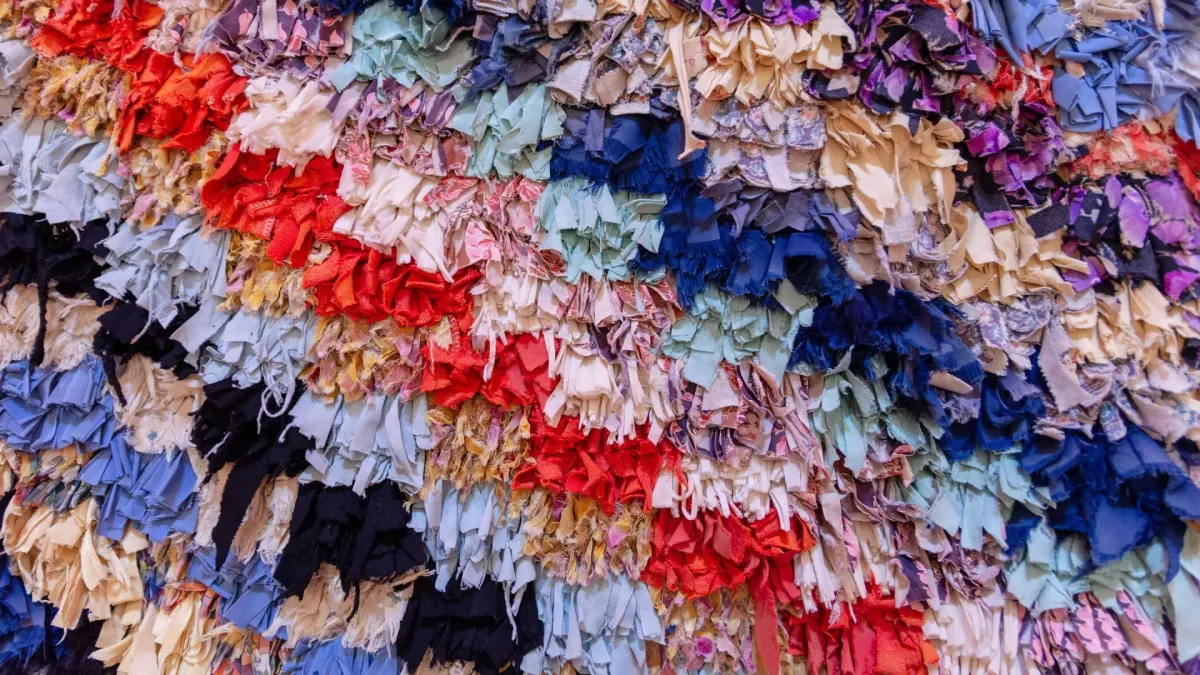
As globalization and population increase, so has our textile production. In combination with innovations in fiber production, the amount of clothing and textiles that we produce has become a huge contributor towards our global waste issue.
In 2024, discarded clothing worldwide reached 120 million metric tons—a clear indication of how dramatically fashion consumption has changed. Rising incomes, evolving trends, and shifting consumer habits mean that people buy more clothing but wear each item less frequently. As a direct result of these trends, global fiber production has more than doubled since 2000, amplifying both consumption patterns and waste.
But why has this large volume of textiles been simply discarded?
The answer to this question goes back to larger concerns with the recycling industry in general. Not only has the lack of information and access made it harder and harder for individual consumers to recycle their own clothing and textiles, and when it does end up at the correct place to be reused or recycled, the volume and complexity associated with recycling textiles often results in the clothing going to the landfill anyway.
Current textile recycling systems simply weren't designed for the immense volumes the world generates—some 120 million metric tons annually. Most collection channels primarily support resale markets, both charitable and commercial, rather than recycling initiatives. Consequently, sorting processes rely heavily on manual labor that is optimized for resale rather than recycling. These manual processes cannot efficiently categorize textiles by recyclability, fabric composition, and color, or effectively remove disruptors such as buttons and zippers.
Complex fabrics require innovating beyond current recycling capabilities. Most modern fabrics are made from blends of different fiber types—often combinations of natural and synthetic materials such as cotton, polyester, and elastane. However, most existing industrial recycling solutions, which are primarily mechanical, can handle only single-material textiles. This mismatch between waste and technology has led to an urgent need for innovative solutions that can handle a broad range of modern textile waste and deliver products that are competitive in cost and quality. Such techniques have yet to reach the scale necessary to tackle current waste volumes.
This problem space, becomes one that Boston Consulting Group promotes as being solvable by designing circularity within the textile and fashion industries. They plan to do so using 5 actionable items:
1.) Promote demand for textiles with recycled fibers.
2.) Collect more waste.
3.) Modernize sorting.
4.) Scale effective recycling solutions.
5.) Invest in innovation.
Review
I consider this list of actionable items to be slightly in it's design towards circularity. In regards to tackling the waste issue, it is more than efficient about what gaps exsist in the area. All of these things need to change within the industry to resolve the problems that created this waste issue. What is lacking however, if the emphasis on creating value for all stakeholders involved in this circular system. Earlier in the article, they did speak about the enviornmental benefits, which do benefit all stakeholders, but doesn't necessarily add incentives. In regards to the economical incentives, they focus on how recovering this material will produce economic benefits, but not in how this incentivizes businesses that produce these clothing items to also participate, especially in the face of the added costs of recovering materials.
Reference
Sajdeh, R., Martinez-Pardo, C., Meyer zum Felde, A., Lange, T., Tieri, E., & Evans, E. (2025, August 12). Spinning textile waste into value. Boston Consulting Group.



