
Numbers
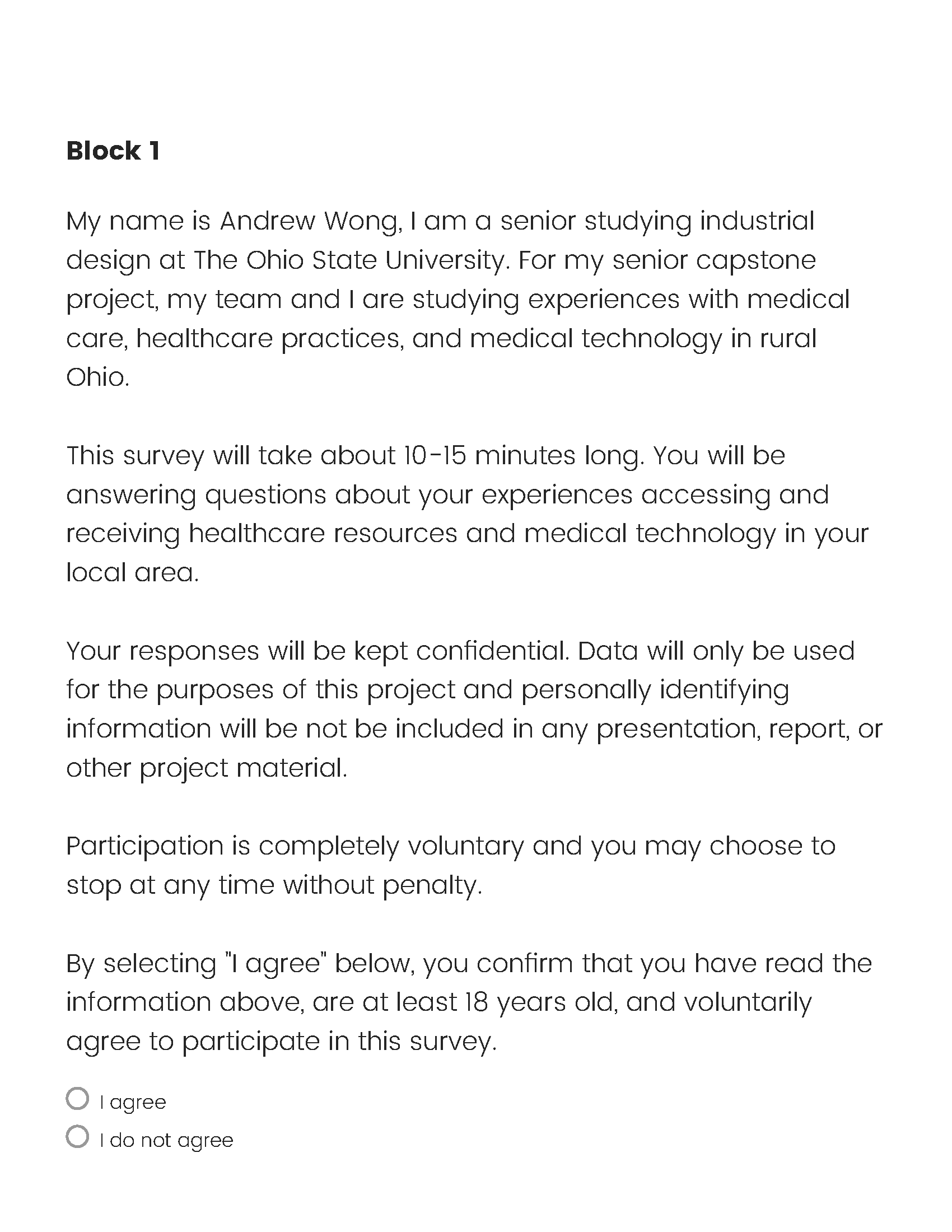
This survey was aimed at gaining insights of healthcare service and technology usage, experiences, and perceptions from Gallipolis community members. As a result, recruitment for the survey was done in public community spaces, where there was a potentially higher likelihood of encountering members of the broader community. Recruitment for this section was done on Tuesday, September 8 during the day.
The public library was selected as the first location for recruitment due to its resource accessibility and public facing access. However, no participants were successfully recruited here. Recruitment was then moved to downtown Gallipolis, due to its function as a public environment that is surrounded by a public park, local businesses, restaurants, and residential areas. This allowed me to engage a variety of everyday individuals. 34 individuals in this space were approached, with seven (7) completed survey responses. This resulted in just above a 20% response rate. The survey was distributed via QR code or emailed link.
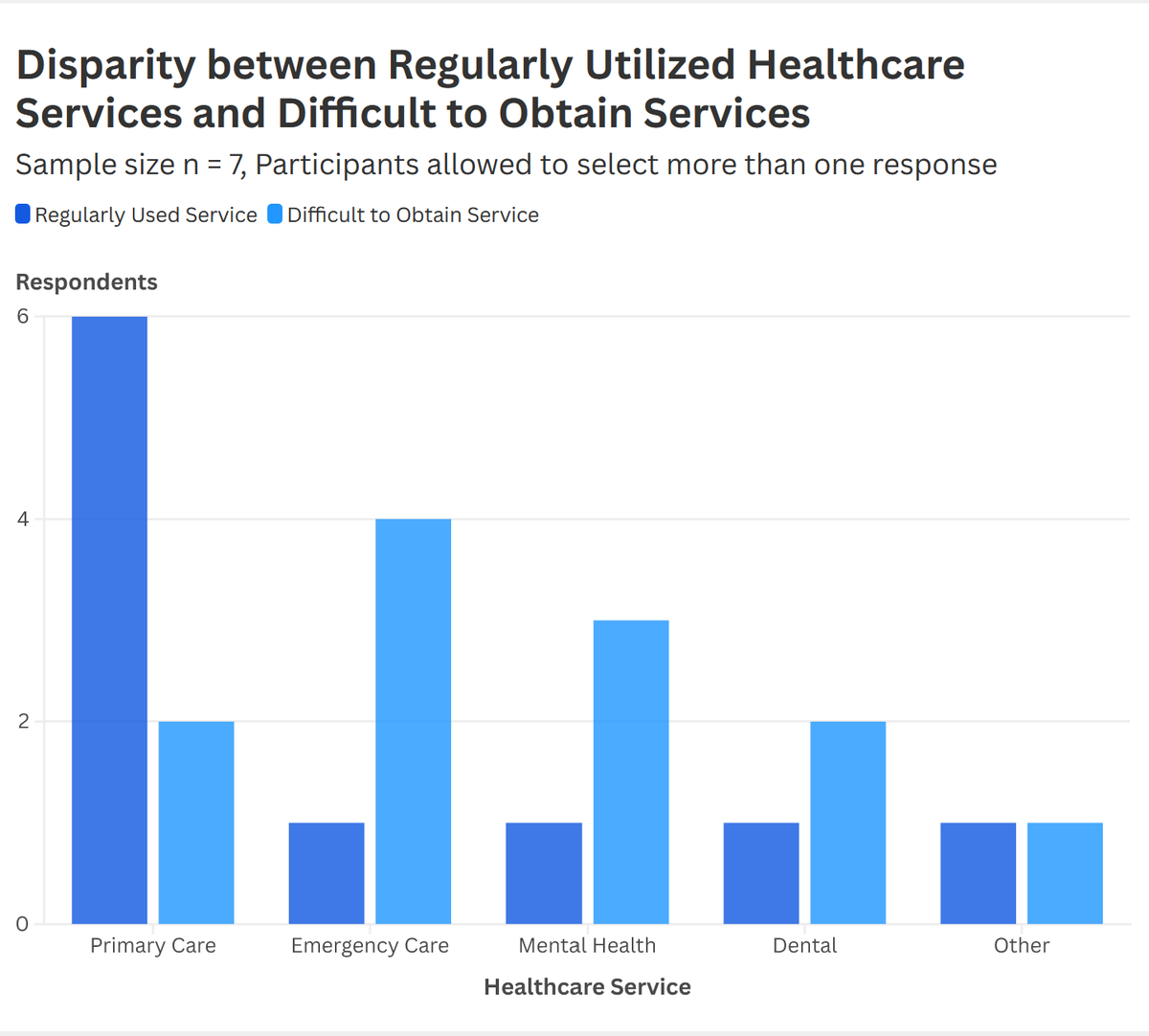
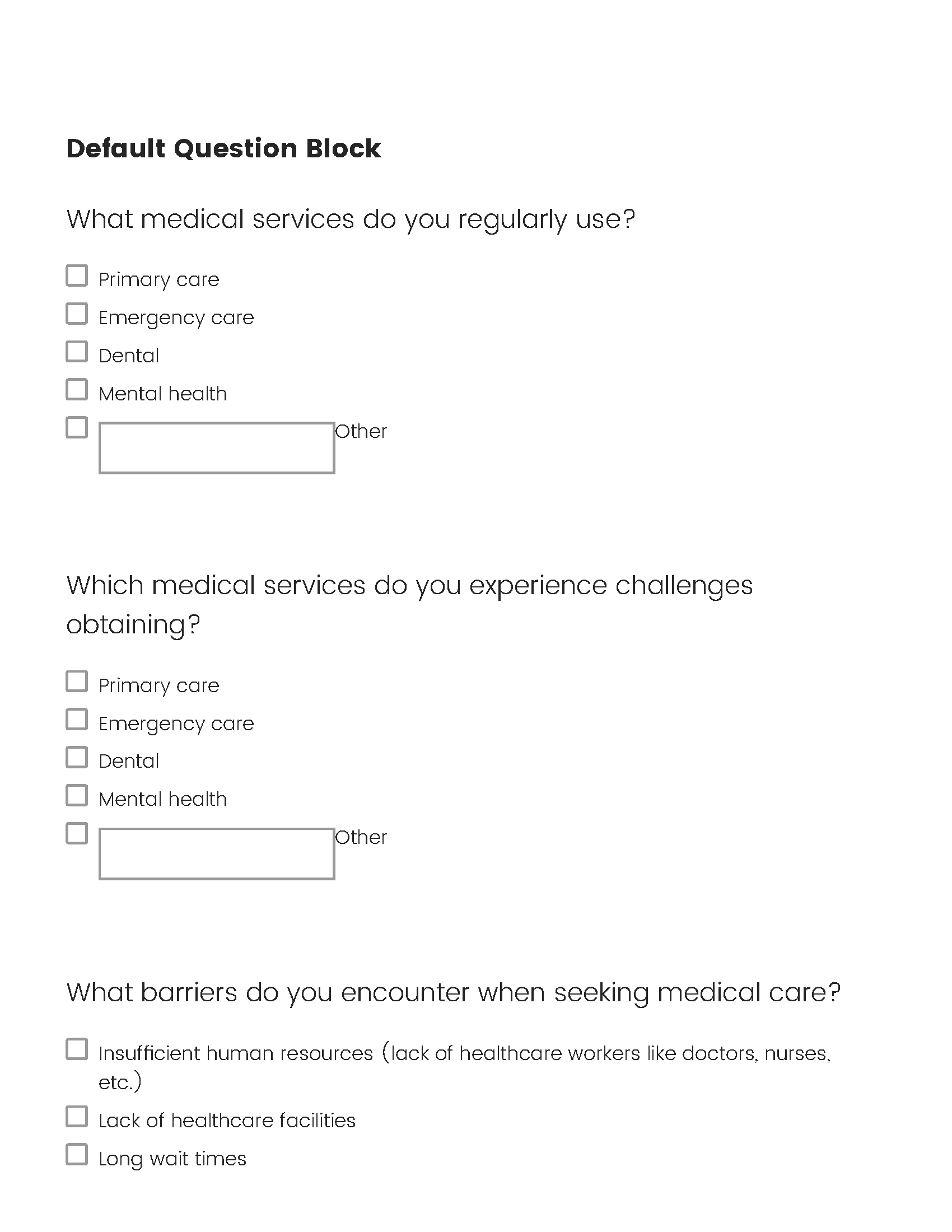
This graphic highlights the disproportionate number of individuals that struggled to obtain emergency care and mental health care compared to those that regularly used those two services. Among the seven surveyed, 57% struggled to obtain emergency care and 42% struggled to obtain mental health care, while only 14% regularly used either service.
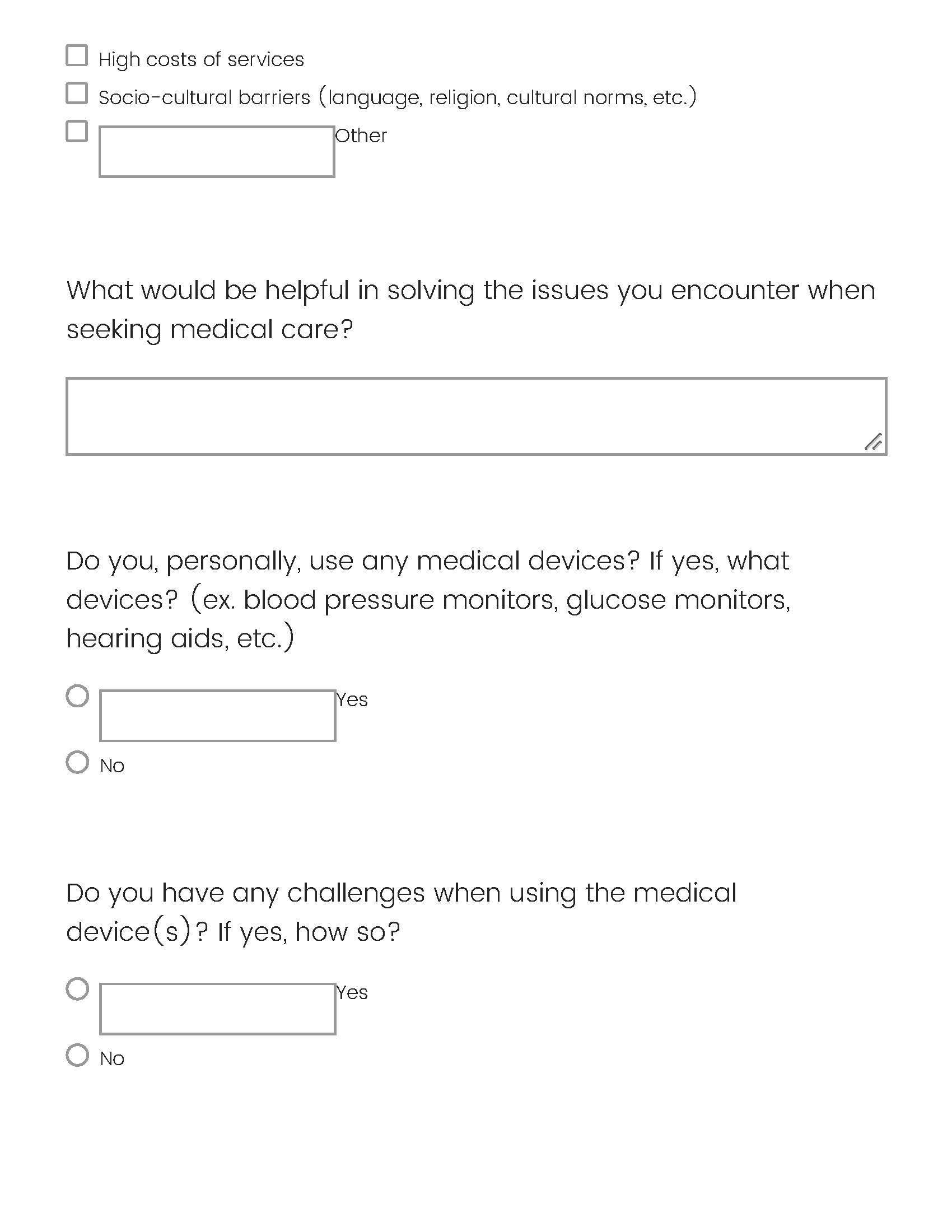
This graphic reveals that among the seven surveyed, there is a generally positive perception towards the integration of new technology into the medical field. Multiple individuals noted that it could help the medical system and providers in solving problems. With the lowest score being from one individual rating their perception as a three, due to the fact that they had “never heard of it.”
Survey

Results
Importance
The data signifies a trend that emergency and mental health care are the two services with the most barriers and are the hardest to obtain. This indicates that these could be important areas of care to consider designing for. With the overall positive perception towards the integration of new technology into the medical field, it could be inferred that relevant technological innovations that can help said individuals may be received well.
No generative AI was used in the writing of this section.



