
The Amish don't believe in insurance. Here's how they help pay everybody's medical bills
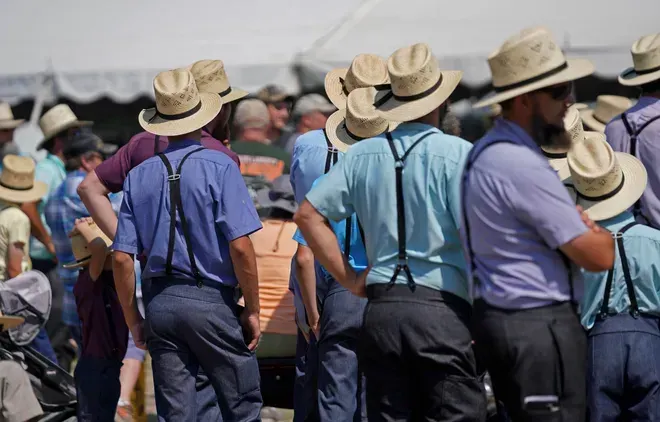
This article is exceptionally relevant to my research topic because it moves beyond describing the Amish cash-pay healthcare model in the abstract and shows what it actually costs specific families, in dollars and in grief. The Miller families' stories, two infant daughters lost, a son's medical bills nearing a million dollars, ground the financing system. I researched earlier in real consequence, and found that even a well-organized mutual aid system doesn't always fully protect a family from catastrophic loss or expense. What's most useful for my design is the detail about the Clinic for Special Children changing local attitudes toward genetic and DNA testing specifically because trust was built over three decades, a reminder that any technology or system I might design will likely need a similarly long, relationship-based trust building process rather than immediate adoption.
For the past two decades, the Dover Amish have held a public auction every May to help pay for community members’ medical expenses. Amish and non-Amish can buy pies, farming equipment, antiques, livestock, pets and even buggies.
The auctions can raise tens of thousands of dollars, all of which is dedicated to families’ hospital bills. Since the Amish do not believe in insurance, they pay for medical bills themselves. When a child becomes sick, families pool money to help cover health care expenses.
Amish views on healthcare often depend on the views of each congregation, Kraybill says. Since there are 2,400 congregations in the United States, there are about 2,400 ways to be Amish, he said.
That congregation by congregation variation helps explain why one clinic, in particular, has had such an outsized influence on Amish willingness to accept modern treatment.
In many cases, families will still insist on paying for certain services, she says. A common example is the family allowing Medicaid to cover the costs of a feeding pump, but paying for the child’s formula themselves.
What stands out most is how much this system depends on relationships rather than policy alone. The willingness to discount bills, the trust built by one specialty clinic over decades, and even informal cash handed to grieving parents by visiting community members. This is a significantly different model of "assistive" support than anything technological I've researched so far, and it raises an important design question: could any device or system I create actually integrate with this deeply relational way of handling healthcare costs and crises?
References
How Dover Amish pay their medical bills. (2018, December 13). The Times-Reporter. https://www.timesreporter.com/story/news/health/2018/12/13/how-dover-amish-pay-their-medical-bills/2189620002/



