
The Counter Companion
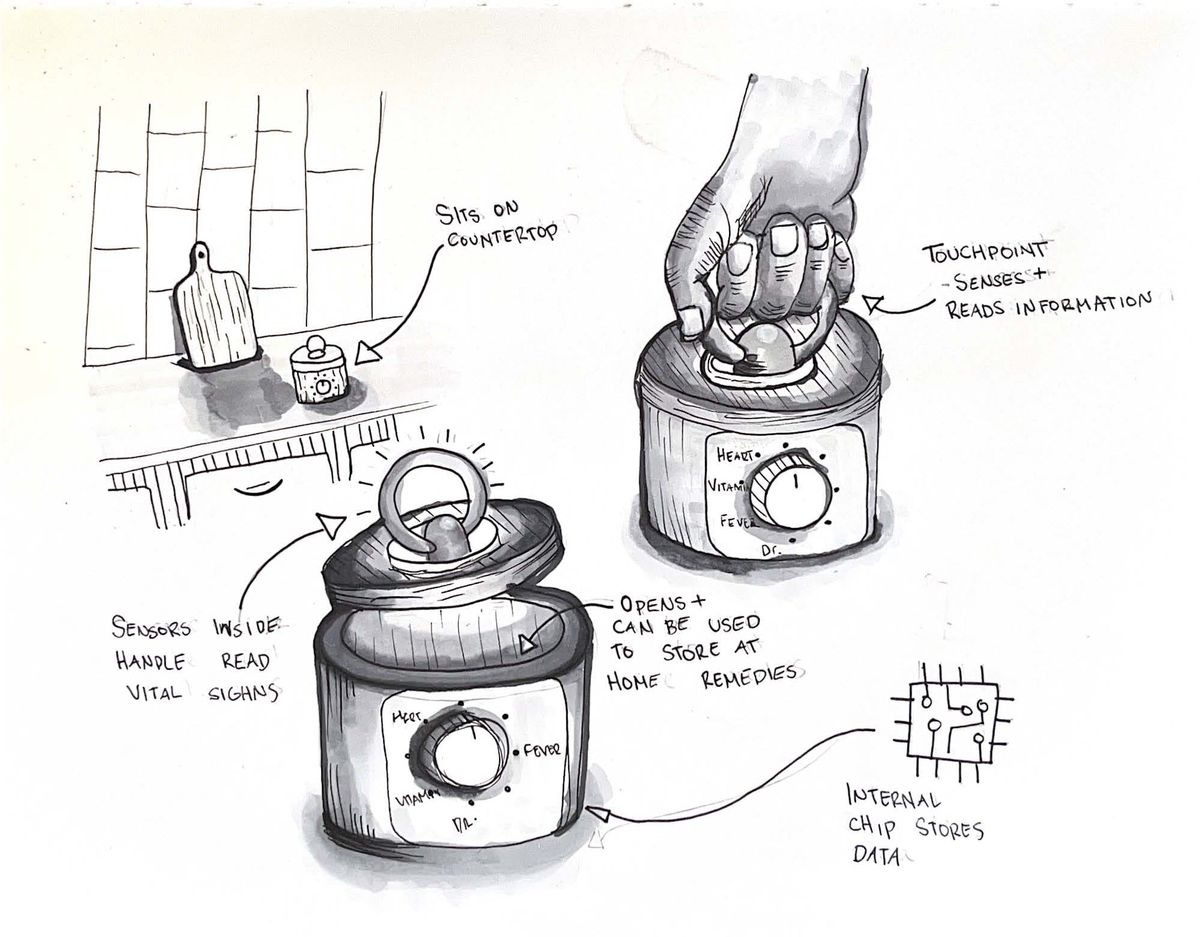
What if belonging could be designed into an assistive device before function ever is? Wright's account of 55-plus home design shows a field that has already made this shift. Trading "clinical-looking grab bars" and "walk-in tubs" for curbless showers and open, unhurried kitchens that happen to also be accessible. The device pictured above imagines that same move applied to rural assistive medicine: a diagnostic tool that sits on the counter next to the breadboard and the mason jar, not because it's disguised, but because it was never designed to look out of place to begin with.
For a rural Amish household, this isn't a stylistic preference; it's the difference between a tool that gets used daily and one that gets shoved in a drawer. The concept asks: what if accessibility features for remote care were treated the way today's 55-plus kitchens treat a grab bar, folded into the material language of the home itself, so the object never has to announce what it's for? If a device makes its user feel like a patient before it makes them feel like themselves, the form has already failed, regardless of what it can measure.



