
The Future of Emergency Medicine: 6 Technologies That Make Patients The Point-of-Care
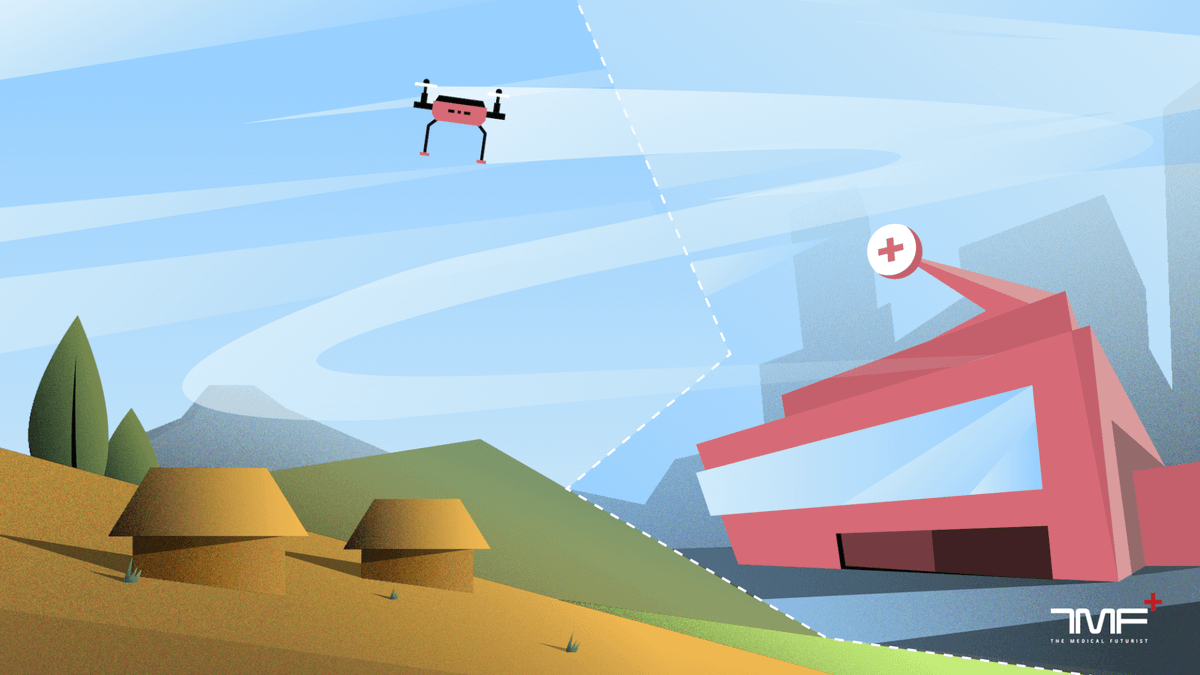
Emergency care is still a relatively new concept in healthcare, with plenty of room for growth and development. This article outlines some existing and potential applications for technology to enhance care in this sector. One thing that I found very interesting in this article was the difference in treatment practices in various parts of the world. For example, in many European countries, emergency care is primarily delivered on site as opposed to in the hospital. In Rwanda, drones are delivering medical supplies, vaccines, and drugs. The Netherlands have tested using drones as a method of delivering more timely AED care, with promising results. To truly understand and utilize technology for more effective medical applications, it is crucial to explore other perspectives. We must expand our view and begin engaging with those around us and those far away from us to push past our limited imaginations.
The software company Hexagon also introduced their AI solution for emergency services. Their HxGN OnCall Dispatch | Smart Advisor system mines and analyses operational data in real-time to detect patterns and identify major events as they happen. As anomalies are identified sooner, the insights allow emergency teams to react and coordinate faster
Utilizing automated thinking systems can help relieve some burden on the healthcare system, while allowing for more accurate preventative and responsive care to individuals.
Based in Montana in the U.S., Pulsara is the developer of a HIPAA-compliant platform for EMS, ambulance and emergency management. Its connected mobile app allows paramedics to alert an emergency department before arrival with the patient and prepare beforehand. It does so not only by calculating the estimated time of arrival based on GPS but also by allowing users to share important details like the ECG or images from the field. Some studies even report an average decreased treatment time of nearly 30% when using Pulsara.
With every second counting in these critical moments, clear and accurate communication of vital information is paramount to proper life saving interventions. The article notes that according to some analyses, up to 80% of clinical errors are a result of miscommunication between healthcare workers.
Moreover, such drones are not simple transporting machines, they can provide instructions to the bystanders on providing CPR, using the AED and they also allow the dispatch team to give feedback via its own video connection. The Swedish drone developer Everdrone announced its partnership with Karolinska Institutet to investigate emergency deliveries of medicine and equipment to critical care patients, wherever they are.
An interesting application to use drones to deliver supplies, but also guidance for interventions until responders arrive. This could have great applications.
References
Mesko, Dr. B. (2026, August 24). The Future of Emergency Medicine: 6 technologies that make patients the point-of-care. The Medical Futurist. https://medicalfuturist.com/future-emergency-medicine-innovations-making-patients-point-care
No generative AI was used in the writing of this post



