
The #WearNext campaign: New York City, A Circular Fashion Initiative
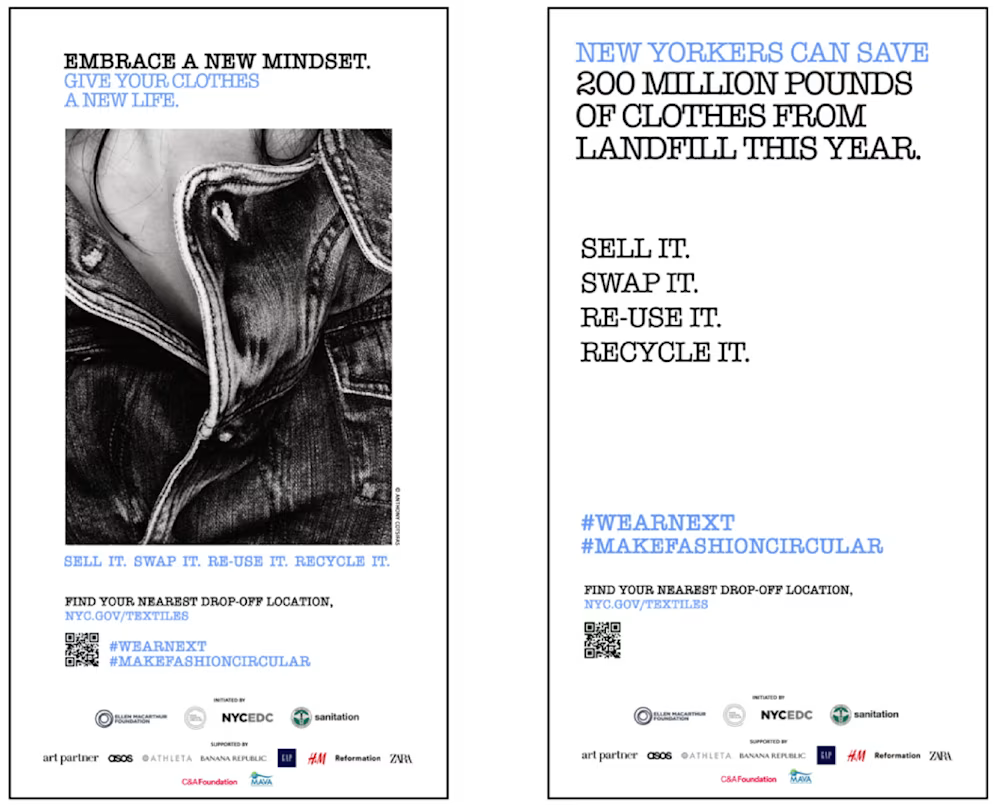
Textiles are one of the largest contributors to a growing waste problem that we deal with today. In a society that often values having things that are new and trendy, the fast fashion industry has taken over.
Each year millions of tonnes of clothes are produced, worn, and thrown away. 73% of the materials used to produce clothing are landfilled or burned at the end of their life, while less than 1% of old clothing goes on to be made into new clothing. This model, which relies heavily on landfilling, is not only damaging to the environment, but it is also hugely expensive — in New York alone, the disposal of residential waste costs taxpayers USD 300 million per year.
The #WearNext initiative, which culminated into a campaign lasting from March to June in 2019, was created by partners from DSNY, New York City Economic Development Corporation (NYCEDC) and the Ellen MacArthur Foundation’s Fashion programme, with the hope to redirect the city's nearly 200 million pounds of clothing that would otherwise end up in landfills.
This initiative to promote circularity within the New York fashion sphere, was largely successful not only because of its effort to make this large amount of waste more spoken about on social media, but by their use of pre-existing technology, for which they streamlined and promoted the use of.
To make it easier for New Yorkers to give their unwanted clothes a new life, in 2019 the City of New York’s Department of Sanitation (DSNY) created an interactive online map plotting the 1,100+ drop-off locations across the city. The #WearNext communications campaign followed, aiming to boost use of these drop-off points and also encourage New Yorkers to repair, resell or swap their old clothes instead of throwing them away.
And in doing so, they created a huge impact:
DSNY collected data on clothing donation volumes from seven different locations. Compared to the same time period in the previous year, 583 tonnes more clothing was collected, an average increase of 15%, with some recording up to 48% increase. Gap, Athleta, and Banana Republic cumulatively collected two tonnes of clothing over the two-month campaign.
Review
When looking into the subject of consumer reliant recycling efforts, we often see a sharp drop off in the volume of material collected due to 2 main factors: Knowledge and Access. Knowledge, particularly about how to recycle, where to recycle, and the materials themselves, is often not as common as we would hope. This is because rules and regulations about recycling change tremendously between regions, companies, and even neighborhoods. More importantly though, most consumers, without easy access to those recycling resources, will simply not recycle. This plays on a number of big socio-economic and psychological factors, but importantly in reviewing this initiative as a circular business model, the Stakeholders on either side both positively benefit. The organizers, such as the Department of Sanitation, benefit from more material circling back into the material economy, saving landfill space, but the individuals participating now have more widespread knowledge of and access to locations in which they can recycle. These recycling centers had already existed, but through this initiative, they had grown both knowledge and access and created lasting effects that continue to benefit all stakeholders.
Reference
Ellen MacArthur Foundation. (2021, June 16). The #WearNext campaign: New York City. https://www.ellenmacarthurfoundation.org/circular-examples/the-wearnext-campaign-new-york-city



