
Turning Plastic Bottles into Cookies
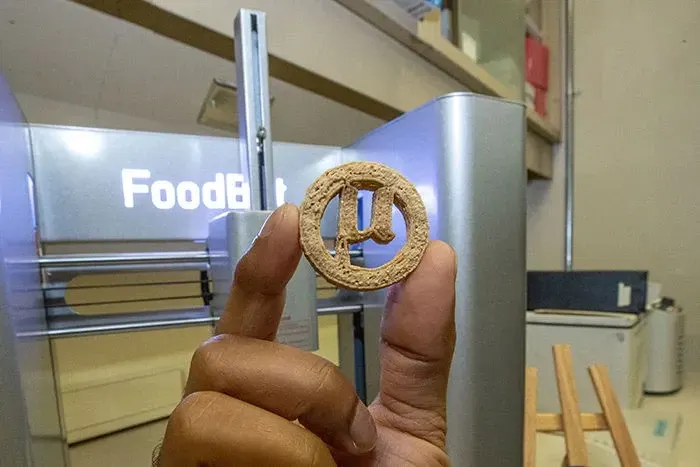
Researchers at Southern Illinois University Carbondale have found a new ingredient to make cookies: PET plastic.
“We were trying to develop technologies for plastic upcycling to make more valuable products. We thought, why not focus on making food? Because plastic is carbon and food is carbon,” explains Associate Professor Lahiru Jayakody (American Chemical Society, 2026).
µBites (Microbites) use microbes to reform broken-down chemical structures into a potentially edible foodstuff.
Scientists have long used microbes, including yeast, as miniature factories to make a variety of molecules. For example, insulin is no longer extracted from animal pancreases — now, yeast can be programmed to make it. Similarly, Jayakody and graduate student Sandhya Jayasekara programmed a variety of yeasts, including baker’s yeast, to convert molecules present in plastic and agricultural waste into proteins, vitamins, and flavorings (American Chemical Society, 2026).
The researchers took PET plastic, discarded corn plant stalks and leaves, and other biomass and put it through a proprietary process called oxidative hydrothermal dissolution. Created by SIU Carbondale Geology Professor Ken Anderson, this method uses water and oxygen at high temperature and pressure to break down tough material into microbe-accessible pieces. Then, those pieces are fed to the programmed yeasts, which reform those pieces into a variety of new food ingredients, including proteins, fats, and acids (American Chemical Society, 2026).
In the future, Jayakody and team hope to produce the main ingredients in the µBites using microbes, including the added starch, fiber, and sweetener. He also hopes µBites will be ready for public consumption within a few years and could be used both on Earth and in more extreme environments, like submarines or even colonies on the moon or Mars (American Chemical Society, 2026).
This innovation, while still highly experimental, proves that recycled material can be used for a variety of purposes. µBites use both recycled plastic and biomass, deriving ingredients from two different waste streams. While these aren't consumer products, it's interesting to think speculatively about what this technology could allow us to recycle in the future.
References
This cookie started its life as a plastic bottle. (2026). American Chemical Society. https://www.acs.org/pressroom/presspacs/2026/august/this-cookie-started-its-life-as-a-plastic-bottle.html



