
Turning Trash Into Treasure: How AI Is Revolutionizing Waste Sorting
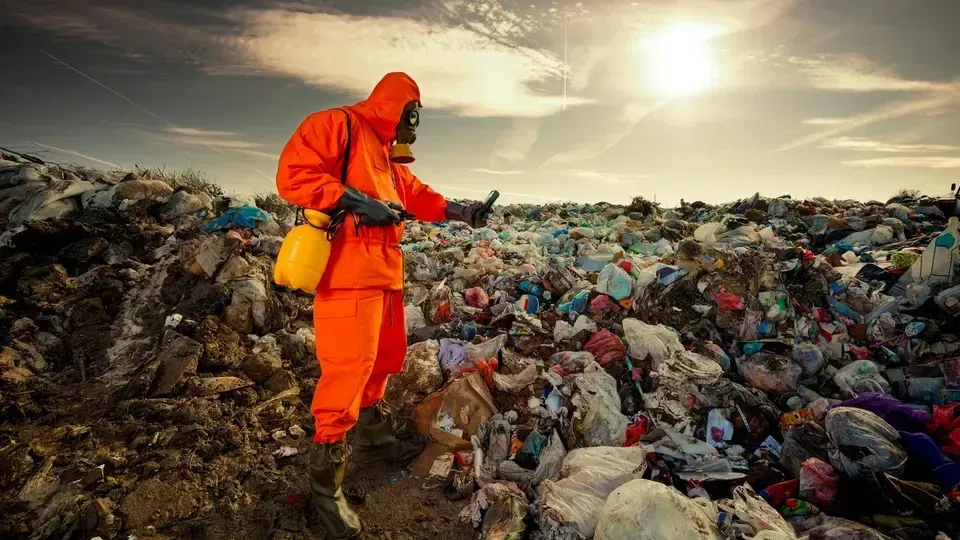
Despite what our individual perception might usually consider, the recycling process does not stop when you simply place an object into a recycling bin. From there, there is a whole infrastructure surrounding this object's journey from the recycling bin, to its eventual place in a new object.
A significant amount of the labor that goes into recycling consumer collected objects is in sorting the waste collected from recycling bins. Traditional models, including those implemented at Rumpke, start with a number of laborers who sort recyclables by hand.
This sorting process is not effective, as incorrectly classified materials contaminate the recyclables. Further, the sortation is largely manual and labor-intensive, with humans racing against time to scan and sort recyclables on a fast-moving conveyer belt.
However, there is technology in development that is looking to solve the issues related to human sorting of recyclables. EverestLabs, a company built specifically to tackle this issue, has made great strides in developing this technology. Not only are they working to reduce the amount of human effort that is needed to sort, but they are also making it a more efficient process.
Their data and robotics platform, RecycleOS, can sort objects with over 95% accuracy. “Our AI provides accurate data on the shape, size, weight, material, packaging type, commodity value, and even brand information of every recyclable flowing through the plant,” JD Ambati, founder and CEO of EverestLabs, told me.
This technological advancement, however, is not without it's caveats. With any advancement in recycling technology, we must be aware of the warm glow affect, and not let this advancement hault our efforts to also address behavioral issues regarding recycling practices.
We must remember that solving the waste management crisis requires more than just technology. Individuals must play their part by disposing of waste responsibly and adhering to the principles of reduce, reuse, and recycle. Simple actions by each of us, such as separating recyclables from general waste, composting organic materials, and reducing single-use plastics, can make a substantial difference.
Review
With anything that utilizes Artificial Technology, there will be a subset of the populace who will oppose it based on that fact alone. With the growing number of data centers, and access and implementation of Ai in everyday life, many people have questioned the role that Ai should have in our lives. Between the resources used to facilitate Ai usage, such as our freshwater supply, and the growing pushback on the implications of the development of this technology, its implementation within our waste processing becomes shaky. I myself, have my own personal thoughts about Ai that lean mostly negative. However, in this specific application, where such significant margins of recycling is made to be more viable, I have to consider if the positives outweigh the negatives. Even if you are anti-ai, in my own personal observations, I've found that using AI for creativity has created this idea that all artificial intelligence should be questioned. I have to pose the thought, though, that is true with all human advancements in technology. Will the benefit of this technology make life for humans better in the long run?
Reference
Kesari, G. (2024, May 31). Turning trash into treasure: How AI is revolutionizing waste sorting. Forbes. https://www.forbes.com/sites/ganeskesari/2024/05/31/turning-trash-into-treasure-how-ai-is-revolutionizing-waste-sorting/



