
What’s So Bad About Recycled Plastic Textiles?
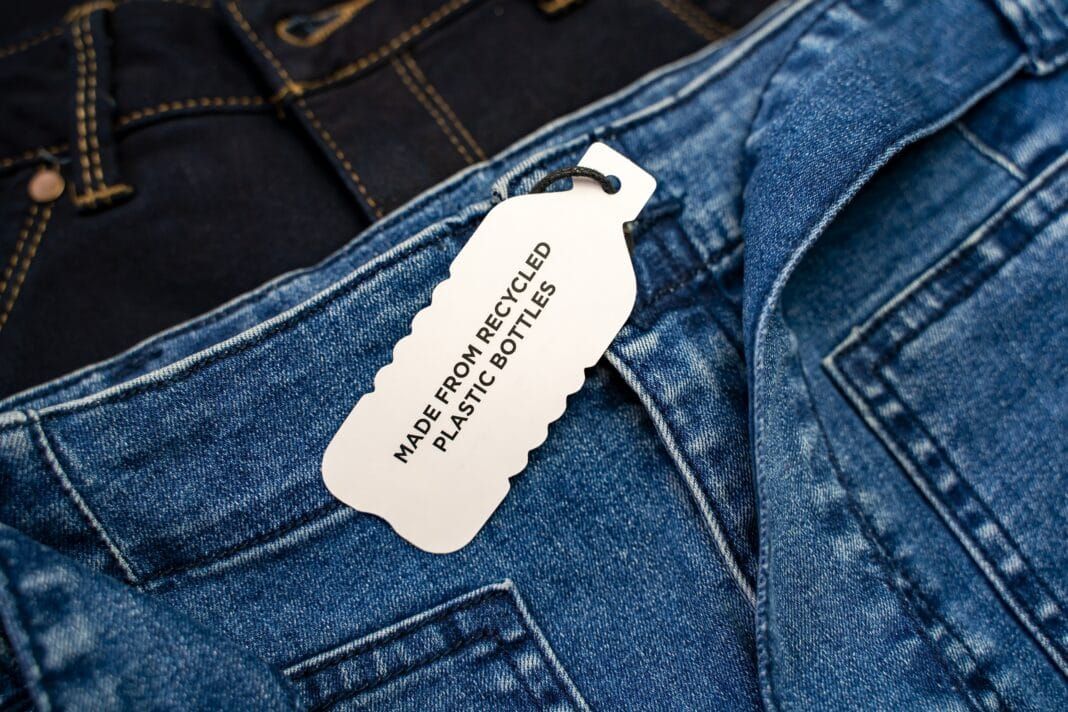
When it comes to consumer products, we tend to associate a recycled label with having a positive impact on the environment. When it comes to recycled textiles, however, and in particular, recycled polyester, this clear definition of positive environmental impact begins to blur.
Polyester fabric is created by using plastic, which is processed into small strands of fiber, which are then weaved to create a textile sheet.
In the 1930s and ’40s, scientists discovered that we could wear crude oil. Refineries heat petroleum to yield the chemicals ethylene and p-xylene, which are heated and condensed into polyethylene terephthalate, or PET, the same plastic that bottles are made of. This chemical syrup is cooled, chopped up, melted again, and squeezed through a spinneret to make threads.
Polyester, a now-ubiquitous material, is about 50% cheaper to make than cotton, and that cost difference has literally fueled textile production: Global fiber output has doubled since the turn of the millennium. Polyester makes up 59% of textile production around the world, and the material has found its way into not only clothes but also carpets, umbrellas, towels, sleeping bags, blankets, and more. Nearly 70% of the textiles manufactured worldwide are made from fibers derived from fossil fuels.
Textiles being made out of synthetic fibers, in and of itself, was a revolution to the industry. It made things cheaper, and as a material, led the way for an enhancement particularly in things like tactical gear, outdoor applications, and other heavy applications, especially those where the material was often kept for an extended period of time.
This same polyester fabric, however, when viewed in the context of fashion, and specifically the correlation between the ease of polyester production towards the Fast fashion industry, created more issues than applications of polyester in items that saw less use.
Washing and wearing synthetic textiles naturally causes the fibers to break down. In washing machines, garments shed fibers, which are then borne through pipes to waterways and the sea. These nefarious fiber fragments elude filtration systems, and no amount of optimization in the manufacturing process can entirely eliminate shedding.
Recycling actually makes the shedding problem worse. The process of turning PET plastics like bottles into polyester weakens the material’s polymer chains, which makes the resulting fibers brittle and more likely to fracture and shed.
The only real solution is to get manufacturers to cut back on virgin and recycled synthetic fibers.
Review
This article, while very insightful about how the specific application of recycled textiles have large impacts on their environmentalism, falls short in its conclusion. Their conclusion states that the only solution to this problem space is to use less synthetic fibers in new textile production. While I personally think it is a noble goal and something we should strive for as a society, it does nothing to address the situation that we are already in. There are not only obvious economic implications surrounding these large fast fashion producers like SHEIN moving from synthetic to natural fibers, but, in terms of fiber creation, we already have such a large stockpile of these synthetic fibers already existing. New fiber creation will never stop, and while we would love to see a move from synthetic to natural, how will we address the significant load of textiles that already exist? In their conclusion of moving strictly to natural fibers, this leads to the question of what will happen to this existing stock. If we remove it from circulation all together, that means that all that material is wasted and will be in a landfill anyway. Within the textile industry, there must be a more holistic conclusion to the synthetic fiber problem space than the one this article suggests.
Reference
Braden, A. (2026, July 21). What’s so bad about recycled plastic textiles? BlueDot Living. https://bluedotliving.com/whats-so-bad-about-recycled-plastic-textiles/



