
Who is Looking After the Satellites?
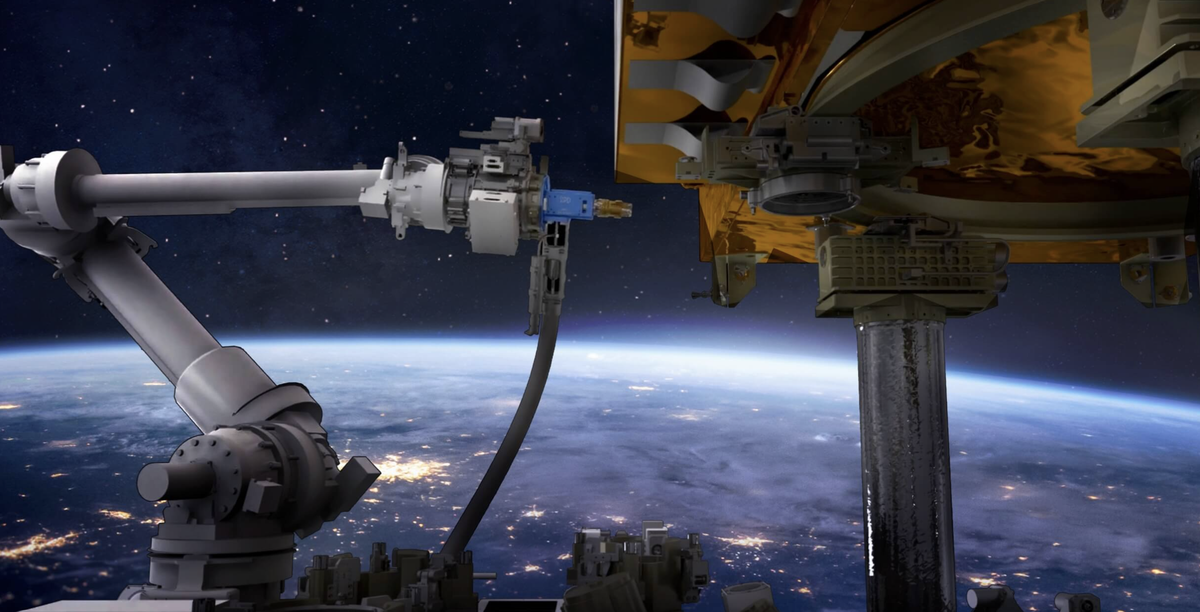
Satellites preform many tasks that assist in day to day lives of billions on earth, but as this number of satellites in orbit increases, the question of how they will be maintained and serviced becomes more and more important.
"About 16,000 satellites currently circle our planet... Dozens more are launched every few weeks. Some estimates suggest the total number of satellites could exceed 100,000 within this decade, with more conservative estimates landing on up to 60,000 satellites by 2030". (Jan 2026)
"In a worst-case scenario, space debris can cause a runaway chain reaction known as Kessler syndrome, which would ensconce Earth in a cloud of debris and render its orbit unusable, without the ability to launch satellites or any other space missions". (Jan 2026)
Because of the large number of satellites expected to be in Earth’s orbit, they face challenges beyond simply maintaining their orbital paths. These satellites also require regular maintenance and monitoring to ensure that they remain functional and operate as intended.
"Once launched, they must continue operating in an environment of intense radiation, extreme temperature changes and constant mechanical stress. Servicing missions are technically possible, but remain expensive and relatively uncommon". (Jan 2026)
"Engineers receive streams of telemetry data showing battery performance, temperatures, power consumption and the status of onboard systems. They analyze this information and look for warning signs that something may be going wrong". (Jan 2026)
Currently, engineers and operators monitor satellites to ensure they remain functional and operate as intended. However, as the number of satellites in orbit continues to increase, monitoring and managing each satellite may become more difficult.
"This is where recent advances in artificial intelligence (AI) may help. Researchers have been investigating how AI can identify early signs of satellite degradation before they become mission-threatening failures". (Jan 2026)
"In simple terms, satellites could help each other become better at recognising potential faults. Over time, this could support continuous self-monitoring across large satellite networks". (Jan 2026)
By implementing AI-based monitoring systems, satellites could be continuously monitored to help ensure that none are overlooked or left without supervision. Built-in warnings could alert operators to potential problems, allowing them to respond earlier and potentially extend the satellites’ useful lifespans.
However, AI systems would need to be extensively trained on satellite operations and conditions to perform these tasks effectively, which could require significant time and resources. As the number of satellites in orbit continues to grow, AI may become one option for managing them, but its effectiveness and the broader effects of large satellite constellations will require further research.
Reference:
Jan, T. (2026, July 21). There are already 16,000 satellites in Earth’s orbit. How will we manage the next 100,000? The Conversation. https://theconversation.com/there-are-already-16-000-satellites-in-earths-orbit-how-will-we-manage-the-next-100-000-284829



