
Why Health Care Is Harder to Access in Rural America
Health care in rural communities is a neglected issue that affects a large portion of the United States.
More than 60 million Americans—about one-fifth of the U.S. population—live in rural areas. On average, rural residents are older and generally have worse health conditions than urban residents. But while they may require more medical attention and care, they also might have more limited access to health care (U.S. Government Accountability Office [GAO], 2023).
There may be many reasons why healthcare is limited in rural areas, but the main issue is a lack of resources. Hospital closures have played a large role in this, causing a higher risk of health issues. People have been forced to turn to online means such as Telehealth; however, this is not easily accessible for most people living in rural areas.
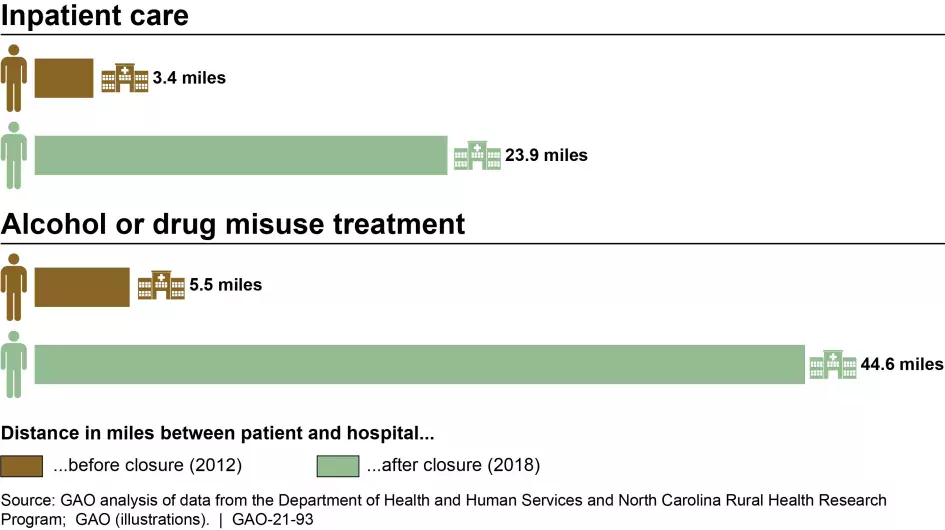
More than 100 (or 4% of) rural hospitals closed from 2013 through 2020. As a result, residents had to travel about 20 miles farther for common services like inpatient care, and 40 miles farther for less common services, such as alcohol or drug misuse treatment (GAO, 2023).
Specialists in different departments are limited for some populations, such as pregnant people and veterans. It is estimated that by 2030, OB/GYN’s will meet only 50% of demand. About one third of veterans enrolled in VHS live in rural areas and require more intensive care than those living in urban ones. The lack of health care, and more specifically, quality health care, forces residents to travel further.
This article helped me understand that rural healthcare access is not only about having a hospital or primary care provider nearby, but also having access to specialists and quality care. I was especially surprised by how limited specialized care can be for populations such as pregnant people and veterans. The fact that OB/GYN providers may only meet around 50% of the projected demand by 2030 shows how difficult it could become for some people to receive specialized care. I also found it important that many veterans live in rural areas and may require more intensive care, creating an even greater need for accessible services. This made me think about how distance can become an additional barrier to healthcare. When specialists are unavailable locally, residents may have to spend more time and money traveling for appointments, which could make it harder to receive care when they need it. This research reinforced my interest in exploring ways to bring healthcare and specialized services closer to rural communities rather than expecting residents to always travel to them.
Reference
U.S. Government Accountability Office. (2023, May 16). Why health care is harder to access in rural America. https://www.gao.gov/blog/why-health-care-harder-access-rural-america



