
Understanding Rural healthcare
Introduction:
Imagine this. You’re driving home from work when a storm starts to pick up. The roads are wet, and you’re taking a scenic route through winding roads and steep hills. A flash of lightning catches your attention, and suddenly your car slips off the road and into a ditch. You’re shaken, but you’re okay. You reach for your phone to call for help, only to realize you have no cell service. The nearest hospital is over an hour away.
For many people living in rural communities, this kind of situation is not just a hypothetical. Distance, limited transportation, unreliable connectivity, and fewer nearby healthcare services can turn an emergency into a much more complicated situation. But the challenges of rural healthcare extend beyond emergencies. A routine doctor's appointment, prescription refill, or visit with a specialist can also require significant time, travel, planning, and resources.
Healthcare may exist, but that does not always mean it is accessible. For rural communities, accessing care can depend on an entire network of people, services, and infrastructure, from patients and caregivers to healthcare providers, transportation, technology, community organizations, and government programs. Looking at these connections reveals that rural healthcare access is not simply about whether a healthcare facility exists, but about how easily people can navigate the system surrounding it.
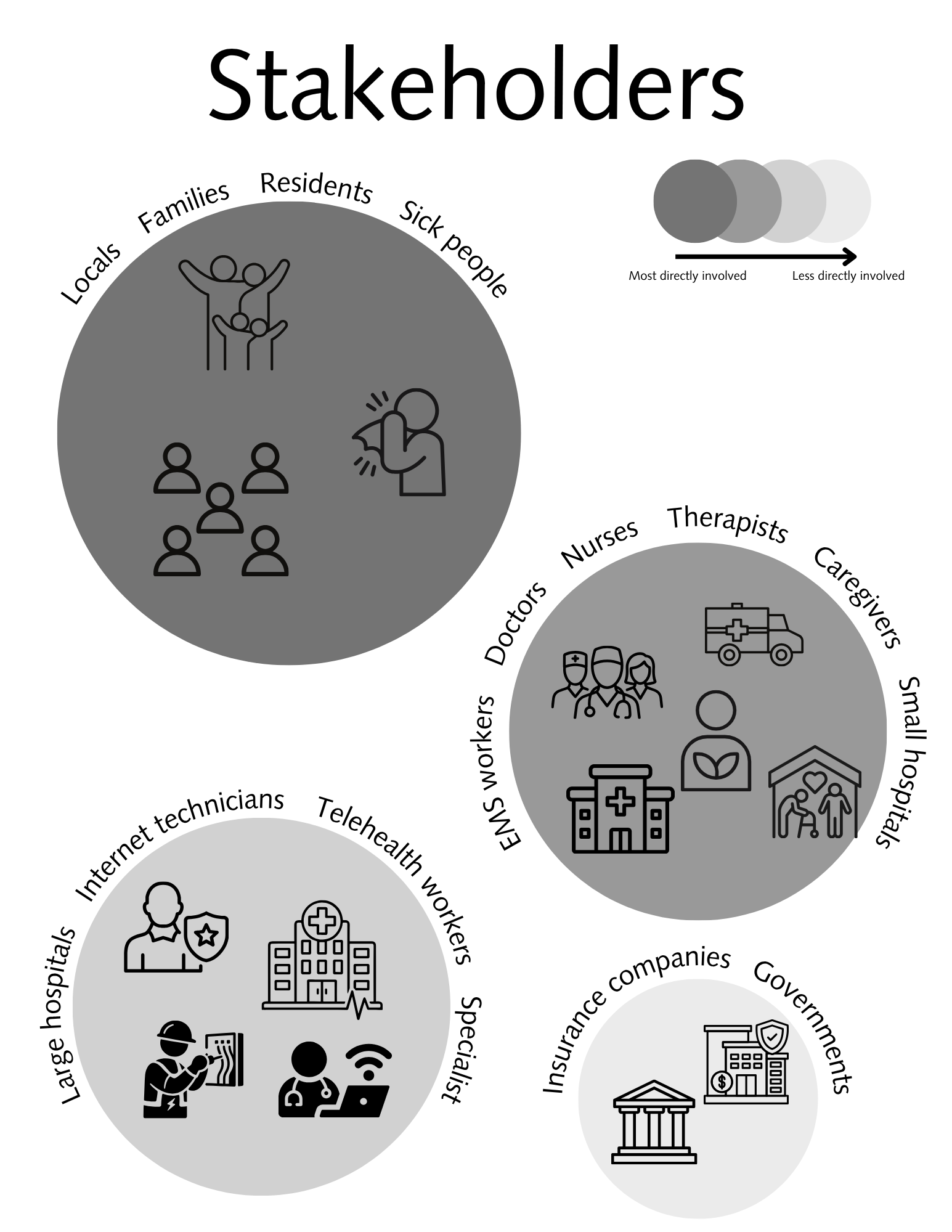
This stakeholder map illustrates the different people, organizations, and systems involved in rural healthcare and how directly they interact with the healthcare experience. The darkest circle represents those most directly affected, including locals, families, residents, and sick individuals. The circles become lighter as stakeholders become less directly involved, moving outward to healthcare providers, larger healthcare systems, technology and telehealth, insurance companies, and government. This shows that rural healthcare access is not dependent on one group alone, but on a connected network of stakeholders. A gap in one area, such as transportation, internet access, or available specialists, can affect the patient's ability to access care.
My research, conducted as part of my Capstone project in partnership with Battelle, explores the challenges surrounding rural healthcare. It draws from a range of sources, including broad and focused articles, blogs, primary research, and exploratory design concepts, to better understand how rural healthcare is impacted and the different ways people and organizations are working to address these challenges.
The Problem: Getting persepctive
Through my primary research survey, I collected data on how people living in rural areas feel about handling healthcare emergencies. The main trends I identified focused on participants’ levels of confidence and experience. Narrowing my research to a specific neighborhood in Springboro, Ohio, I found that while people may feel confident in their ability to help during a medical emergency, they may not necessarily know what actions to take or have access to the proper tools and resources to respond.
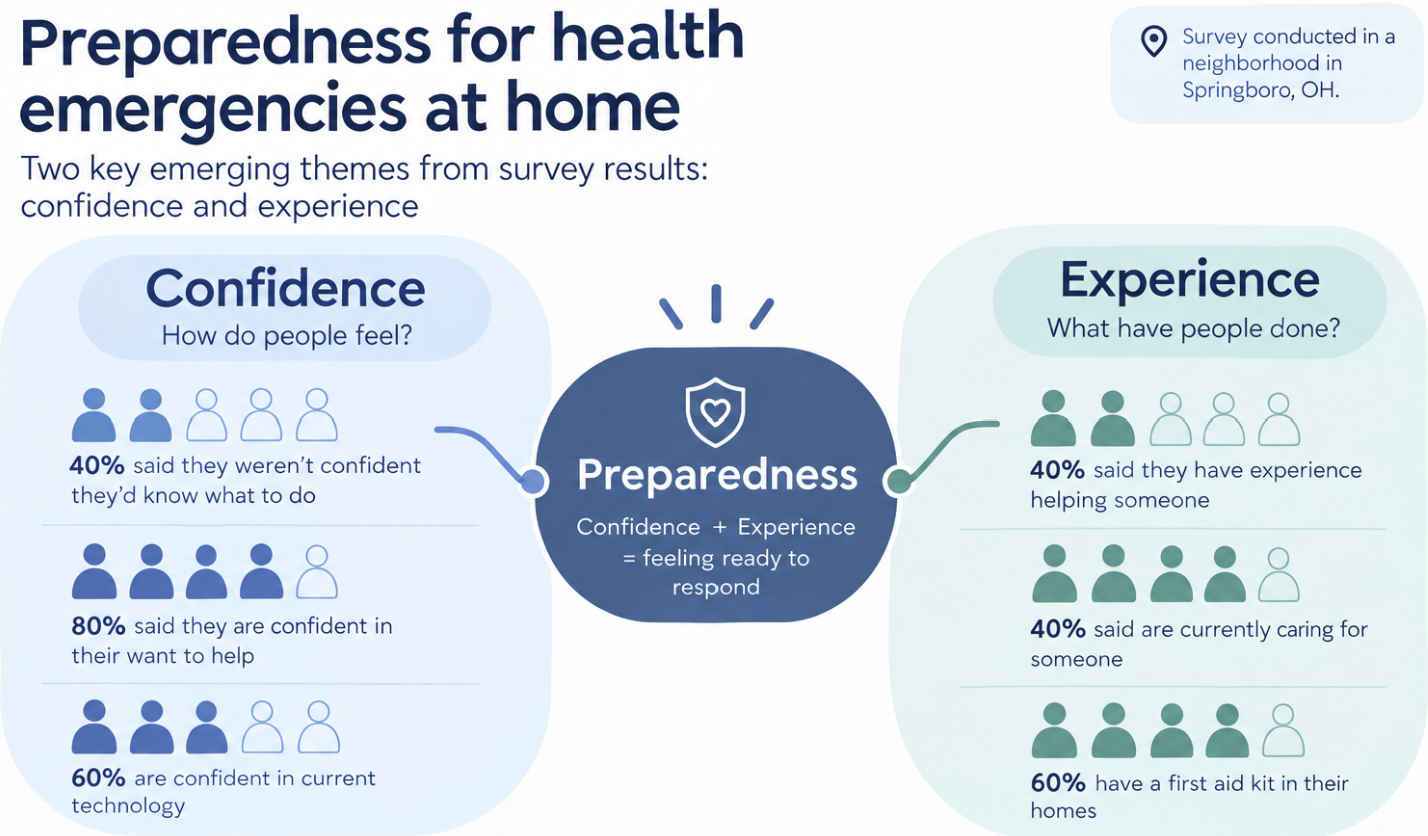
This survey consists of results from five participants that show that the majority of people want to help but wouldn't necessarily know how to. Most have a basic first aid kit in their homes, yet they rarely use it. (Survey)
My team member, Arieal Broussi, and I also visited some rural communities and spoke with the locals. We interviewed a librarian and two EMS departments in Hocking County. Through these interviews, we found insightful information about how their department works and the main issues they face:
EMS 1: So we work for Hocking County EMS. So Hawking County is 424 square miles. So we have three stations and four trucks that cover the entire county. We are EMS only. There's a lot of places, like especially in Columbus, where it's EMS and Fire together.
EMS 1: So out here, there are a lot of people who don't have a car. And so they, you know, call us 'cause they need to go to the hospital, you know? Or they, um, they, a lot of people also don't have primary care providers. And so they use the ER as their primary care provider.
EMS 2: Yeah. We get a lot of, like, trauma in our area, mostly, like, car accidents because we have the highway. We have 664, which is very, you know, curvy and up and down, left and right. Yeah, and it's hard for people, you know, if you don't drive that very often. Yeah, it's very difficult.
EMS 2: Yeah, they've put a tower out at Hawking Hills. Okay, yeah. to try to alleviate that, because that's where most of the problems would be is, you know, down in the caves, hey, I tripped and twisted my ankle or I broke my leg or something along this line. Get out on your cell phone, or... Yeah, our radios wouldn't talk too much. down in the bottom? Well, here. You couldn't get older dispatcher anyway. Mm hmm. But it has gotten better. Yeah. We put a few towers out in that area. Because, like, I guess one of the problems we would have is, like, okay, somebody, like I said, crashed her car when they were down at the bottom of this road, and somebody had to run up. So now the dispatcher is asking questions, like, is the patient breathing? Are they dead? They mangled? Like, can they get out of the car? Well, now they're over here and they're like, I don't know. They're down there, but I can't leave because of the surface.
These interviews gave a lot of insight that guided more of my secondary research. Learning about how difficult transportation is for rural residents was something I didn't think of. Whether it's road problems or a lack of vehicles, this was highlighted as a major factor in healthcare limitations.
Conceptual Research
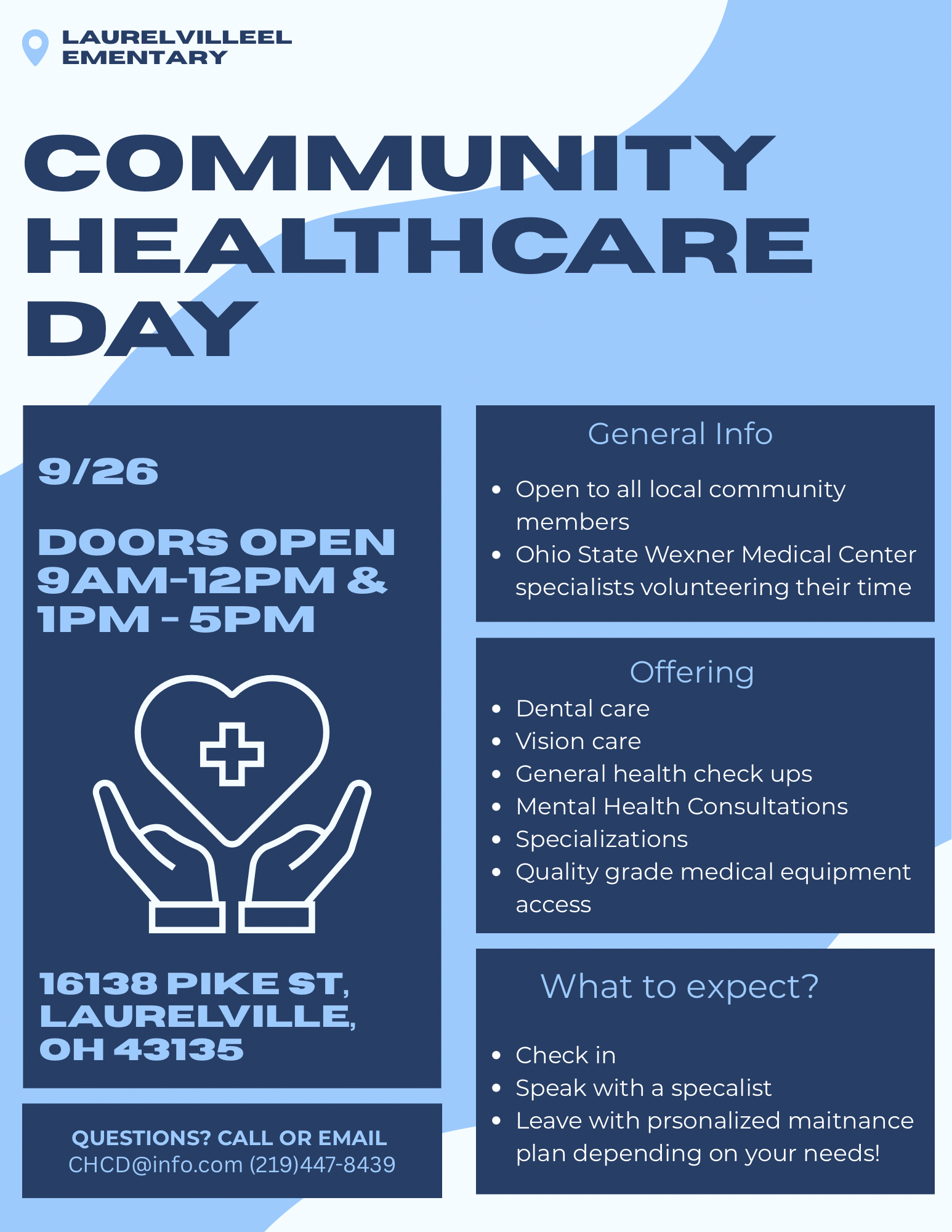
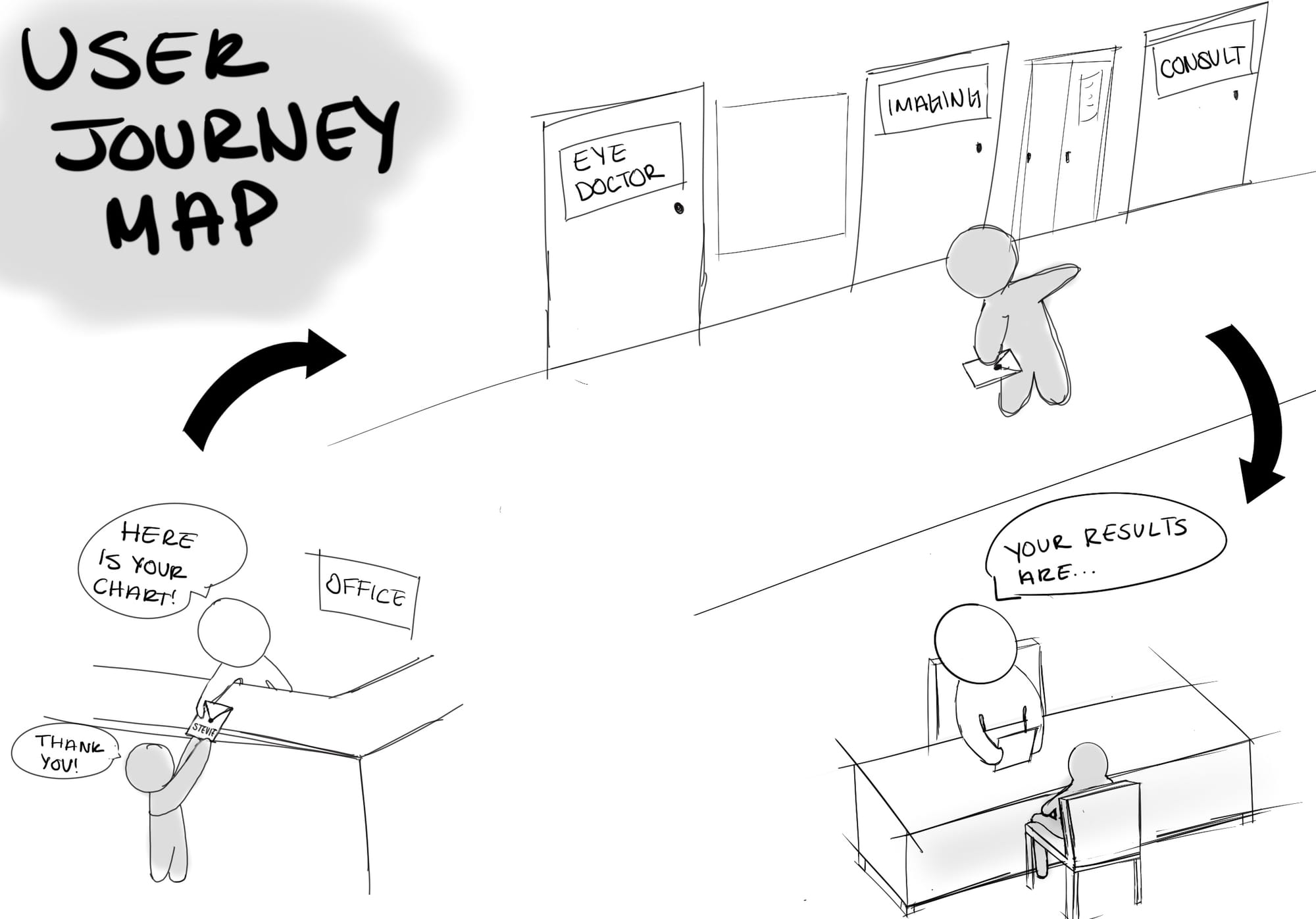
While conducting both primary and secondry research, I created a miniture design project to help explore ideas and ocncepts. One of the projects I created is an experience design called Community Healthcare Day. The idea plays on utilizing existing buildings in rural communities to bring healthcare to them. It is inspired by an article about the role of school nurses and how schools can connect students, families, and communities with healthcare resources. The article, Role of School Nurses in the Health and Education of Children, talks about the large role that school nurses play in helping children stay healthy while not having much support (Dickson et al., 2025). Many nurses are underfunded, educated, or unequipt to deal with current-day health issues (Dickson et al., 2025).
In theory, medical specialists would volunteer their time and potentially equipment to attend the event. The event could support school nurses when they encounter health concerns outside of their training, resources, or equipment by giving them a way to connect students and families with more specialized care. The event would then be open to other community members seeking healthcare advice, screenings, or information about available services. Running the event for most of the day would allow providers to serve as many people as possible while also helping community members better understand the many responsibilities school nurses already take on. By bringing nurses and other healthcare professionals together, Community Healthcare Day could highlight the nurse’s role as an important connection between students, families, and healthcare while providing additional support when their resources are limited.
One limitation of Community Healthcare Day is that it would require significant coordination, funding, and participation from healthcare professionals. Rural communities may have limited providers, making it difficult to staff the event and provide enough services. Schools would also need space, equipment, and staff to support the event. These challenges would affect how often the event could occur and which services could realistically be offered.
Conclusion
Through my primary and secondary research, I found that rural healthcare access is influenced by much more than the availability of healthcare facilities. Transportation, distance, internet connectivity, emergency response, healthcare providers, and community resources all play a role in how easily people can receive care. My survey showed a gap between people’s confidence and their preparedness to respond to medical emergencies, while interviews with rural EMS departments highlighted how transportation and connectivity can create additional challenges. These findings helped me understand that improving rural healthcare may require looking beyond traditional healthcare settings and finding ways to bring resources closer to the communities that need them. My conceptual research, including Community Healthcare Day, allowed me to explore how existing community spaces and resources could be used to improve access. Moving forward, I want to continue exploring how design can connect people with the information, tools, and healthcare resources they need while considering the limitations that make rural communities unique.
References
Collins, J. (2016, May 20). The rural healthcare crisis: Why Obamacare needs to cure itself…and soon. In These Times. https://inthesetimes.com/article/rural-healthcare-why-obamacare-needs-to-cure-itself-and-soon
Dickson, E., Cogan, R., & Gonzalez-Guarda, R. M. (2025). Role of school nurses in the health and education of children. JAMA Health Forum, 6(1), e250116. https://doi.org/10.1001/jamahealthforum.2025.0116
Thielman, A. (2026, September 23). Community Healthcare Day. Capstone News. https://capstone-news.ghost.io/community-healthcare-day/
Thielman, A. (2026, September 23). Getting perspective: How do people feel about at-home healthcare? Capstone News. https://capstone-news.ghost.io/getting/
Thielman, A. (2026, September 23). Primary research. Capstone News. https://capstone-news.ghost.io/primary-research-11/



